  1. Home
  2. Computing
  3. News

Razer’s new Kiyo Pro webcam uses surveillance camera tech to improve lighting

Add as a preferred source on Google

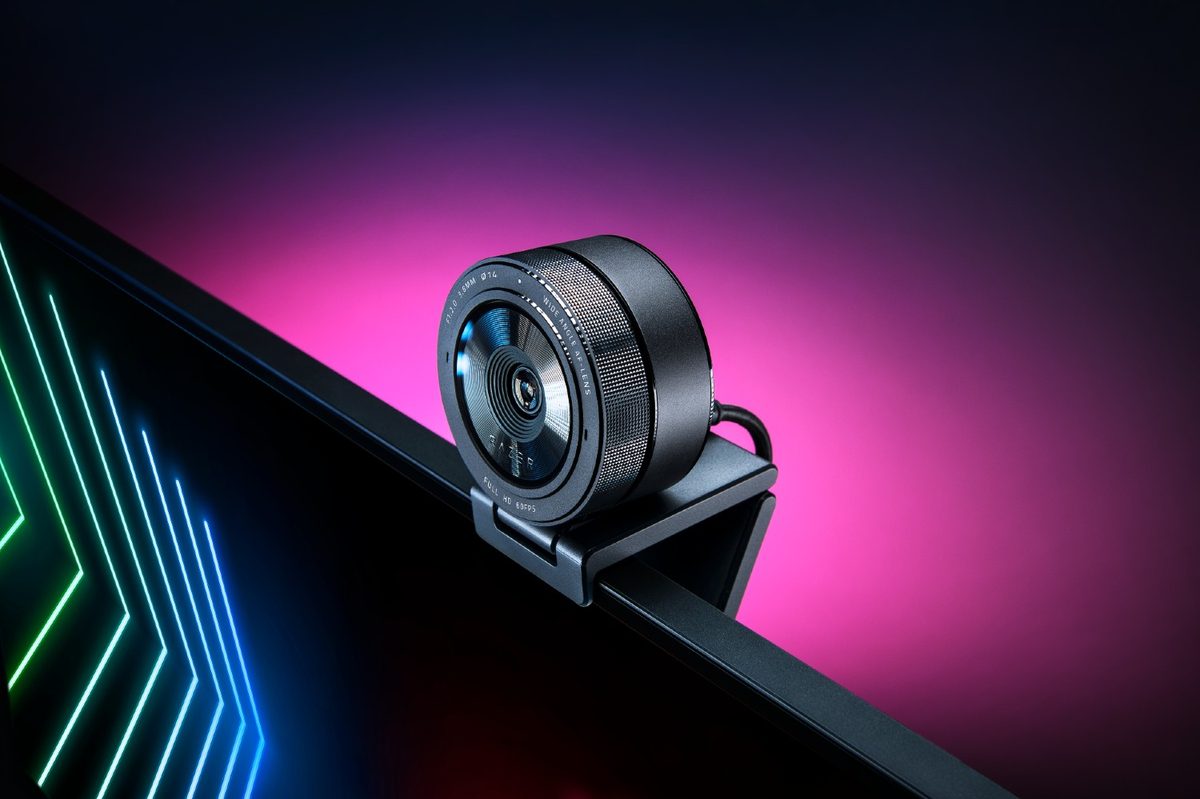
Webcams have never been more important, and Razer has a new option that’s geared toward both streamers and remote workers. The Kiyo Pro, which costs $199, is a spruced-up version of the company’s popular Kiyo webcam, though some significant changes have been made to earn the “Pro” designation.

Most notably, the Kiyo Pro doesn’t include a built-in ring light like the Kiyo does. Instead, it uses a new “adaptive light sensor” technology, which Razer says negates the need for a direct light to brighten up your face during video calls.
Razer
The image sensor, called the Sony IMX327 CMOS with Starvis Technology, is the star of the show. It is currently used in security and surveillance cameras for the purpose of operating in extreme lowlight scenarios. It’s not hard to see how that could benefit the makeshift offices your co-workers occupy these days.
Recommended Videos

Razer showed off comparison photos between the Kiyo Pro and competitors like the Logitech Brio and Logitech StreamCam. Across the board, the Kiyo Pro appears to give a more nuanced and balanced picture, rather than blowing out whites.

Razer representatives also made special note of the more accurate and lifelike colors represented in the Kiyo Pro’s camera. In some of the comparisons, such as the one below, the Logitech StreamCam (bottom right), provides a brighter image that Razer admitted some might prefer. Fortunately, the lighting is adjustable in Razer’s Synapse software, so you can save profiles and select between different presets.
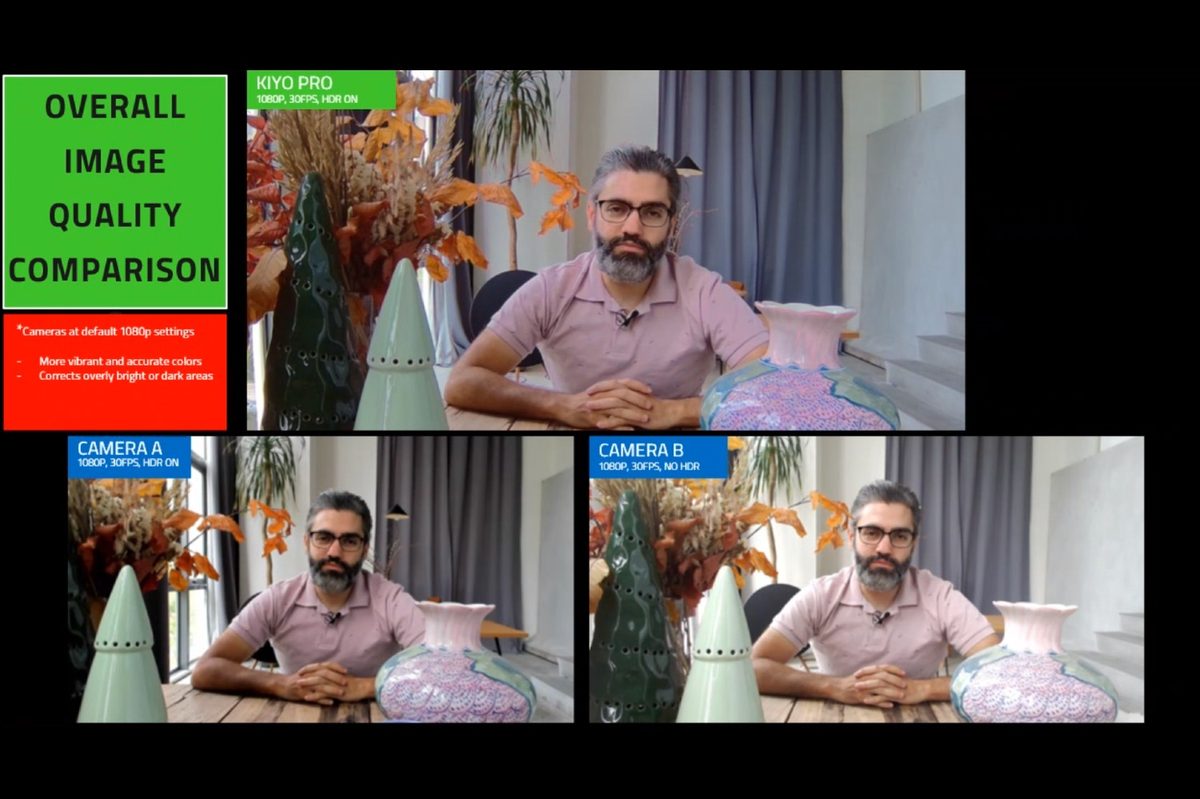
Image used with permission by copyright holder

The Kiyo Pro shoots in 1080p at 60 frames per second (fps), compared to the 30 fps of the original Kiyo. The Logitech Brio costs the same amount, though it can also shoot in 4K at 30 fps. The $170 Logitech StreamCam, meanwhile, matches the Kiyo Pro in resolution and frame rate.

The Kiyo Pro also features an adjustable field of view, ranging from 80 degrees to 100 degrees. This can be adjusted within Razer Synapse.

Razer says the Kiyo Pro has some unique tuning and customization for streamers as well. The camera better handles harsh background lights often found in streamer setups. And, of course, the emphasis is always on making sure faces and skin tones appear crisp and bright in the frame.


Luke Larsen
Former Senior Editor, Computing
Luke Larsen is the Senior Editor of Computing, managing all content covering laptops, monitors, PC hardware, Macs, and more.
Meta’s Ray-Ban Display now types messages from your finger movements
Neural Handwriting is a really cool feature, but Meta opening the Ray-Ban Display to developers is the quiet announcement that turns a clever wearable into a platform with immense possibilities.
Meta Ray-Ban Display and EMG Band.

Six months into its life, the Meta Ray-Ban Display is starting to look less like an experiment, thanks to what is arguably the most significant update Meta has ever pushed for the device. 

The headline feature is Neural Handwriting, which is now available to every Ray-Ban Display owner, having spent its early months in limited access for Messenger and WhatsApp users. 

Read more
Asus unveils the 320W ROG Strix Scar 18 with RTX 5090, but it’s the CPU that steals the show
Asus extracting 81% more CPU wattage from the 2026 Strix SCAR 18 while Nvidia keeps the GPU locked at 175W is the most interesting story in this spec sheet.
Computer, Electronics, Laptop

Asus has announced a new gaming laptop, the ROG Strix Scar 18 (2026), with a claim that it’s the most powerful gaming laptop the company has ever built. 

The main highlight of the device is the 320W of total system power: 145W to the Intel Core Ultra 9 290HX Plus and 175W to the Nvidia GeForce RTX 5090 laptop GPU. While the CPU offers a meaningful upgrade over the 2025 model, the GPU has been borrowed unchanged. 

Read more
ChatGPT will now dole out finance tips if you connect your bank account. I won’t.
ChatGPT can now access your bank account to offer spending analysis and financial planning.
chatgpt-personal-finance

ChatGPT already knows a lot about you. OpenAI now wants to add your finances to that list. The company has launched a personal finance feature for ChatGPT, currently in preview for Pro subscribers in the US at $200 a month. OpenAI says it will expand to Plus users after gathering feedback from this early rollout.

It lets you connect your financial accounts through Plaid, a platform that bridges bank apps with third-party services and works with over 12,000 institutions, including Chase, Fidelity, Schwab, American Express, and more.

Read more