  1. Home
  2. Computing
  3. News

List price for RTX 50-series GPUs might be officially dead

Add as a preferred source on Google
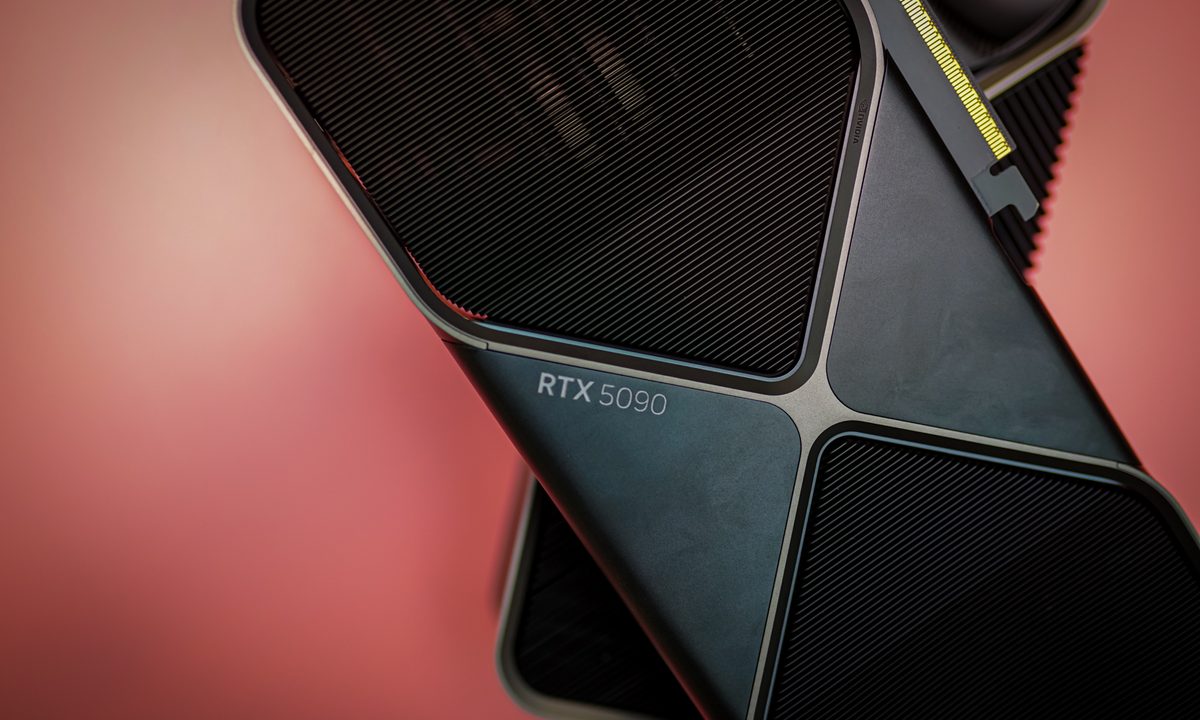
RTX 5090.
Jacob Roach / Digital Trends

There’s no doubt that Nvidia’s new RTX 50-series GPUs are expensive, despite ranking among some of the best graphics cards you can buy. It’s looking like prices will remain high in the immediate future. Both MSI and Asus have introduced price increases for their RTX 50-series models, with MSI completely doing away with cards at list price, as reported by VideoCardz.

The new RTX 5090 and RTX 5080 are sold out everywhere, but MSI and Asus are two brands that still list official prices online. You can’t buy these cards, but it’s a look inside where prices are headed once cards become available again. MSI has completely done away with models at MSRP, with its most inexpensive card, the RTX 5080 Ventus, now listed for $1,140. Most of MSI’s RTX 5080 offerings range from $1,300 to $1,500, marking anywhere from a $300 to $500 increase over list price.

Recommended Videos

The situation isn’t better for the RTX 5090. MSI’s most inexpensive model is $2,380, which is $380 over list price, and all of its other offerings are north of $2,580.

Asus has one model available at list price, the Prime RTX 5080, at $1,000, but it’s currently on sale despite being out of stock. The official price is $1,265. For the RTX 5090, Asus is offering it at $2,750, with its flagship liquid-cooled ROG Astral model clocking in at $3,410.

Although prices have gone up at retailers as demand outweighs supply, these are the prices being handed down from Nvidia’s board partners. In other words, they’re official price increases, not simply retailers capitalizing on demand.

It’s going to be a rough couple of years

I wouldn’t hold out hope for getting an RTX 50-series GPU at list price. It’s not going to happen, particularly for the high-end models. We saw this play out in the previous generation with the RTX 4090, and even with the RTX 4080 Super. Despite Nvidia announcing a price reduction for the RTX 4080 Super, the card still commonly sold for $300 to $500 over list price. Even today, you won’t find an RTX 4080 Super at list price.

We’ll probably see that play out again for the RTX 5090 and RTX 5080. If you weren’t lucky enough to score one at list price when the cards were released last week, you probably won’t have another chance to get one. That’s not just due to overwhelming demand, either.

For starters, rumor has it that the RTX 5090 may not be back in stock for four months. When the card becomes available again, we’ll probably see a replay of release day with the new models selling out in minutes, just at prices slightly higher than MSRP. On top of that, there aren’t any alternatives to the RTX 5090 and RTX 5080. AMD isn’t releasing a flagship GPU this generation, and Nvidia’s last-gen offerings have been out of stock for months.

It doesn’t look like the pricing situation will change unless, for some reason, demand completely falls off a cliff and retailers are left with RTX 5090 and RTX 5080 models they can’t sell — and I doubt that’ll happen. If you weren’t among the lucky few to buy one of these cards at list price, I’d recommend saving up your pennies or exercising some patience so that you’ll be able to catch up in the next generation.

Jacob Roach
Former Lead Reporter, PC Hardware
Jacob Roach is the lead reporter for PC hardware at Digital Trends. In addition to covering the latest PC components, from…
The US government just hit the brakes on Anthropic’s most powerful AI models
Anthropic disables Fable 5 and Mythos 5 after US government directive
Laptop running Claude Fable

Anthropic’s troubles with the US government do not seem to be easing. The company has now been ordered to suspend access to Fable 5 and Mythos 5 for all foreign nationals, including foreign national Anthropic employees working inside the United States.

Anthropic said it received the directive on June 12 and is disabling the two models for all customers to comply. Other Anthropic models are not affected. The government has not publicly explained the full national security concern, but Anthropic says it understands the order is linked to a reported method for bypassing, or jailbreaking, Fable 5’s safeguards.

Read more
Nvidia’s RTX Spark made me hate content creation a little less
Adobe's AI-powered demos showed me a future where masking, rotoscoping, and scene detection might finally stop being a chore.
NVIDIA RTX Spark for Creators Image Generation Demo Computex 2026

Every video editor has a list of tasks they'd happily outsource to someone else. Exporting isn't one of them anymore because modern laptops are already plenty fast. The real-time sinks are the boring bits: manually masking subjects, finding scene cuts in long recordings, rotoscoping frame by frame, or wrestling with tedious edits that require more patience than creativity.

That's exactly why NVIDIA's RTX Spark demo at Computex 2026 caught me by surprise. I walked into the booth expecting another presentation full of AI buzzwords and benchmark charts. Instead, I walked out thinking that for the first time in years, hardware might actually be changing the editing experience itself, rather than simply making renders finish a little sooner.

Read more
I tried Acer’s new 5K MiniLED Gaming monitor, and OLED kept popping into my head
After seeing it in action at Computex, I finally understand where MiniLED shines and where OLED still wins.
MiniLED vs OLED Hands On Computex 2026

If Computex 2026 taught me one thing, it's that monitor makers are no longer interested in building one-trick ponies. They want displays that can wear multiple hats, seamlessly switching between work and play without making users choose. Acer's new Nitro XV345CKR P is perhaps the best example of that philosophy, and after spending time with it on the show floor, I walked away impressed by its ambition while also questioning whether MiniLED is really the future for gaming monitors.

I've always had a slightly complicated relationship with MiniLED. On a massive living room TV, it works wonders because you're sitting several feet away, and the local dimming zones blend beautifully. Put the same technology on a monitor that's sitting barely two feet from your face, however, and suddenly you're no longer admiring the display, you're inspecting the physics behind it.

Read more