
We get it, everyone. The Mac Pro is expensive. $6,000 is a huge amount of money to spend on a new computer and monitor combo. If you max it out at over $50,000, it boggles the mind.
But there’s a big difference between expensive and overpriced. And when you dig into the details, it’s plain as day. Apple is offering something you can’t find anywhere else, and the people Apple is targeting will probably love it.
Changing perceptions
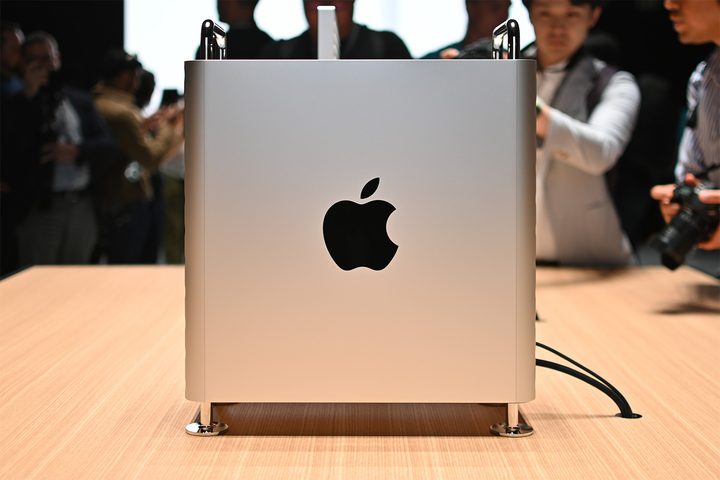
Apple is known for its consumer-oriented products like the iPhone and iPad. I doubt Apple would complain that, but there is a downside. Anytime it releases a product for professionals, everyone judges the company on the consumer criteria. Apple doesn’t work like its various Android and PC rivals in that it doesn’t make products for a platform that someone else has created. It owns the platform that all its products are made for, which means it’s the same Apple that provides products for wildly different audiences.
Part of this is Apple’s own fault for throwing the label “Pro” around so carelessly. The Mac Pro is not a “pro” product in the same the iPhone 11 Pro or iPad Pro are. It’s something more niche — but far more unique. The audience the Mac Pro is designed for isn’t too concerned with price.
Does anyone really believe the likes of James Cameron or Steven Spielberg make their films on a Chromebook or MacBook Air? Of course not, they have incredibly powerful equipment at their disposal. At that level, the price is not a concern — getting your expensive, important work done is. The more powerful, the better.
That’s exactly what the Mac Pro aims for. It is Apple’s attempt to meet the needs of people like Ridley Scott and Calvin Harris. Yes, it’s expensive, but if you needed a 28-core computer with 1.5TB of RAM, would you really be quibbling on the price?
A truly unique offering
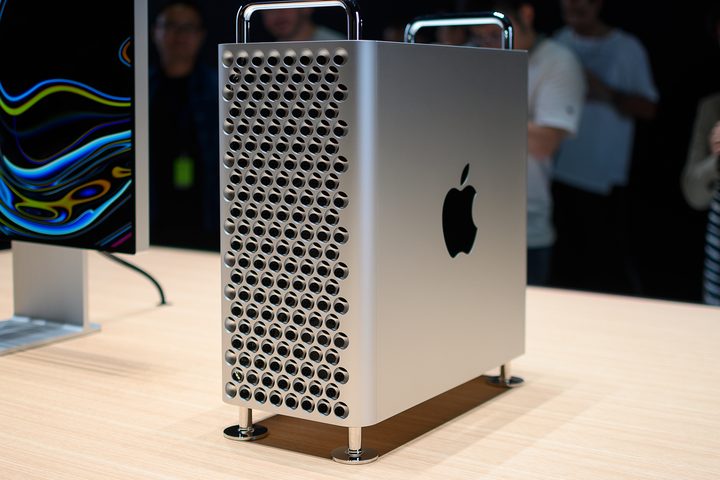
That’s not all. The Mac Pro doesn’t attempt to compete with a standard PC workstation. It offers something unique.
When you’re a company of Apple’s stature, you have a lot of bargaining power with your suppliers. If you come to them with a proposal for a custom component in your top-secret project, they’re going to listen. And that kind of unique, custom component is what the Mac Pro is all about.
Take, for example, the ProRes accelerator cards. These are custom components that can radically speed up video-editing tasks in apps like Final Cut Pro X. Apple says each of these PCIe x16 cards can “decode up to three streams of 8K ProRes RAW video and 12 streams of 4K ProRes RAW video in real time.” That’s something you won’t get in any other computer. While high-end camera maker Red used to offer the Rocket-X accelerator card, that’s now been discontinued — and it cost $6,750. That’s more than the entire base model Mac Pro.
Or how about the Mac Pro’s MPX Modules? Each Mac Pro has two, which allow you to add in additional components to augment the computer’s already impressive power. For example, you can add in two AMD Radeon Pro Vega II Duo units, each of which houses two graphics cards, giving you four GPUs for graphics-heavy work. Or you can add a 32TB RAID storage MPX Module, massively ramping up your storage space.
Each MPX Module carries 500W of power and offers Thunderbolt integration. Each offers PCIe x16 gen 3 bandwidth for graphics, PCIe x8 gen 3 bandwidth for Thunderbolt, and DisplayPort video routing. These are powerful expansion options that bring something unique to the table.
So yes, it has an unprecedented price tag.
If this were another trash can Mac Pro, I’d be singing a different tune. But the extreme power, customization, and optimization offered by the Mac Pro feels like a truly unique offering. It might not be made for you, but it was never supposed to be.


