
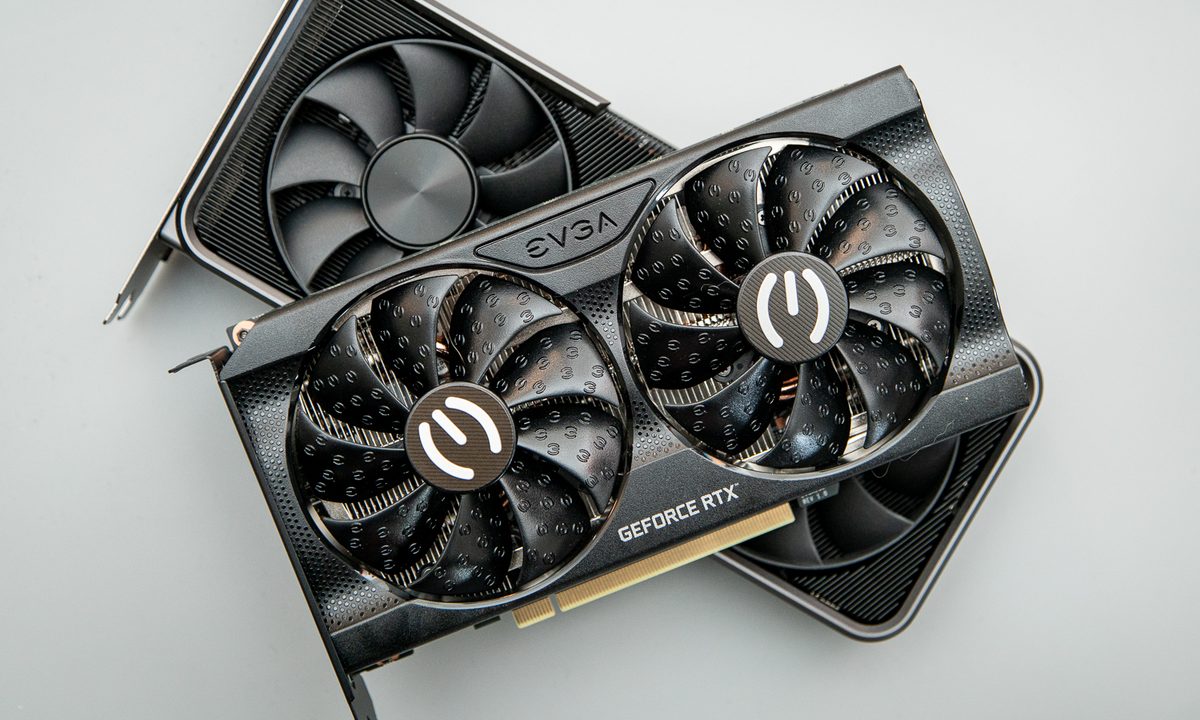
When Nvidia launched the RTX 3050 back in 2022, it was meant to fill a long-standing gap in the company’s lineup. A budget-friendly GPU that could handle modern gaming with support for ray tracing and DLSS to a certain extent. It didn’t break any performance records, but in a market still recovering from pandemic-era shortages and inflated prices, it made sense.
What no one expected was that the RTX 3050 would still have some sort of relevance more than three years later. The latest version of GPU-Z has added support for a new RTX 3050 A variant. This would make it to be the fifth version of the GPU since its debut in 2022, making it one of the most frequently revised GPUs in Nvidia’s recent history.
Too many variants?
Nvidia initially launched the RTX 3050 4GB (GA107) and 8GB (GA106) models in 2022, followed by another 8GB variant using the GA107 GPU. The most recent revision arrived last year as a 6GB model, bringing the total to four distinct configurations under the same name.
As for the RTX 3050 A, this variant was initially spotted on a PCI ID database under the name GeForce RTX 3050 A Laptop GPU in 2024. During the time, Nvidia had confirmed that the card would use its Ada Lovelace architecture, specifically the AD106 GPU, replacing the older Ampere-based GA107 chip used in earlier models.
| RTX 3050 A (Rumored) | RTX 3050 (6GB) | RTX 3050 (8GB) | RTX 3050 (4GB) | RTX 3050 (8GB) | |
| GPU | AD106 | GA107 | GA107 | GA107 | GA106 |
| Architecture | Ada Lovelace | Ampere | Ampere | Ampere | Ampere |
| Process | TSMC 4N FinFET | Samsung 8N | Samsung 8N | Samsung 8N | Samsung 8N |
| CUDA cores | NA | 2,304 | 2,560 | 2,048 | 2,560 |
| VRAM | NA | 6GB GDDR6 | 8GB GDDR6 | 4GB GDDR6 | 8GB GDDR6 |
| Memory interface | NA | 96-bit | 128-bit | 128-bit | 128-bit |
| Transistor count | 22.9 billion | 8.7 billion | 8.7 billion | 8.7 billion | 12 billion |
With the latest GPU-Z changelog now explicitly mentioning a new RTX 3050 A, there seems to be a possibility that Nvidia might be relaunching the budget GPU. More importantly, it is unclear whether this version is intended for laptops, desktops, or both.
Unlike its predecessors, the RTX 3050 A is expected to feature the AD106 GPU, based on Nvidia’s Ada Lovelace architecture. This is the same silicon used in the RTX 4060 series and some RTX 4070 mobile GPUs. Notably the AD106 GPU is physically smaller than the earlier GA107 and GA106 chips, but since it is built using TSMC’s 4N FinFET process, it offers higher transistor density and improved efficiency.
Why is Nvidia doing this?
There’s no official statement from Nvidia, but the continued development of a new RTX 3050 variant suggests the company sees sustained demand for entry-level graphics cards. For anyone looking for a sub-$200 GPU from Nvidia, your options will be limited to older or cut-down Ampere cards. An 8GB RTX 3050 based on AD106 could plug that hole, offering good enough performance for 1080p gaming while leveraging Ada Lovelace’s power efficiency gains.
Critics might scoff at the idea of dragging out a three-year-old GPU name across five hardware variants. I would too. It completely messes with the product differentiation and is going to confuse buyers who assume all RTX 3050s are the same. But Nvidia has long leaned into broad product ranges under single branding umbrellas.
The real story here might be less about nomenclature and more about how Nvidia continues to repurpose its GPU lineup to cover gaps in its stack, especially in the wake of rising GPU costs and growing pressure from integrated graphics solutions like AMD’s Ryzen APUs or Apple’s M-series chips.
Nvidia did the same earlier this year when it silently launched the RTX 5050 which is essentially a slightly repackaged GPU priced at $250. Despite being based on the latest Blackwell architecture that powers the latest RTX 50 series GPUs, its specs aren’t meaningfully improved over what we’ve already seen from the many variants of the RTX 3050. Rather than offering a fresh, purpose-built GPU for entry-level gamers, Nvidia seems content rebadging older silicon and pushing it into a new generation.
In some ways, Nvidia has launched a next-gen budget card without actually moving the needle forward, leaving consumers to pay more for what is functionally a product that could’ve launched two years ago. While this strategy might help Nvidia pad its lineup and target price-sensitive markets, it does little to inspire confidence that the company is serious about innovation at the low end.


