  1. Home
  2. Computing
  3. News

Microsoft warns of important Windows 11 update deadline

Add as a preferred source on Google
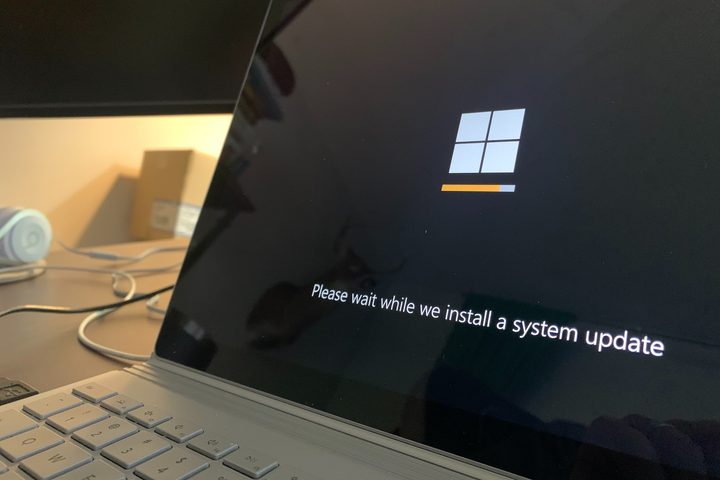
Windows Update running on a laptop.
Clint Patterson / Unsplash

There’s been a lot of talk about the upcoming Windows 10 end-of-life date, and Microsoft’s attempts to encourage people to update to Windows 11. Now, the tech giant is announcing that an older version of Windows 11 will reach its end-of-service date too, as mentioned in a blog post on Monday.

If you’re still on Windows 11 22H2, which came out in October 2022, you will stop receiving security and preview updates as of October 8, 2024. However, you can continue to get those security updates if you update your Windows 11 computer to the 23H2 version you should now have as a pending update.

Recommended Videos

The warning applies to Windows Home, Pro, and Business (or education) users. However, Microsoft will also automatically update non-managed business computers, so they get the latest updates. You have 90 days to update to the latest Windows version, and if you’re willing to update now and have an eligible PC, you can do so by going to Settings > Windows Update > Check updates.

There are also unconfirmed rumors that users could also see a Windows 11 24H2 version in October since it was first rumored to be released in September. Remember that it’s risky to hold off to see if you can upgrade directly to version 24H2. If you hold off on the update, you put your PC at risk for cyberattacks, malware, and viruses (among other things).

If you’re already on Windows 11, updating to the most recent version shouldn’t be a problem. But if you’re on Windows 10, ensure your PC meets the necessary system requirements such as 4GB of RAM or more; Trusted Platform Module (TPM) version 2.0; 1GHz or faster CPU on a compatible 64-bit processor or system on chip (SoC); 64GB or more of storage; compatible GPU with DirectX 12 or later with WDDM 2.0 driver; and 720p display that’s larger than 9 inches diagonally and has 8 bits per color channel.

Judy Sanhz
Computing Writer
Judy Sanhz is a Digital Trends computing writer covering all computing news. Loves all operating systems and devices.
Google wants your app code so badly, it’s willing to pay for it
Google is paying for app code, and the reason is exactly what you think.
Google Logo

Google has been quietly reaching out to Android developers with an offer to buy access to their code. As reported by 404 Media, the company sent emails to a select group of Google Play developers, inviting them to join what it calls a "confidential content offer pilot." 

The email frames it as a revenue opportunity, saying developers can "get paid for sharing the code powering your apps, as well as your archived projects." Google adds that developers retain their intellectual property rights and that the license is non-exclusive.

Read more
Nvidia confirms more RTX Spark processors are coming with N2X and N3 series lined up
Huang confirming a multi-generation roadmap before the first device has even shipped is the clearest signal yet that this is a decade-long commitment.
nvidia-rtx-spark

The PC and laptop industry has run on Intel and AMD silicon so long that most people don’t even question whether these are the only options. 

Nvidia just answered that question at Computex 2026, in the form of the RTX Spark superchip, and Jensen Huang’s comments about what comes next suggest that it wasn’t a one-time experiment. 

Read more
AI fitness coach senses the muscle mechanics as you exercise and prevents rookie injuries
Most fitness apps offer encouragement dressed up as coaching, but BioCoach offers anatomy-specific corrections, and I could see it becoming a smartphone app real soon.
Woman exercises with her Apple Watch and Dexcom G7.

During the pandemic, the US Consumer Product Safety Commission recorded a 48% spike in at-home exercise injuries. You might think that the culprit was bad equipment, but it was bad form. People had no coach around to correct it.  

Researchers at Drexel University and Michigan State University have built a prototype that addresses exactly that problem, in real time, using your phone camera, and there’s real potential for it to become a legitimate fitness app in future (via Tech Xplore).

Read more