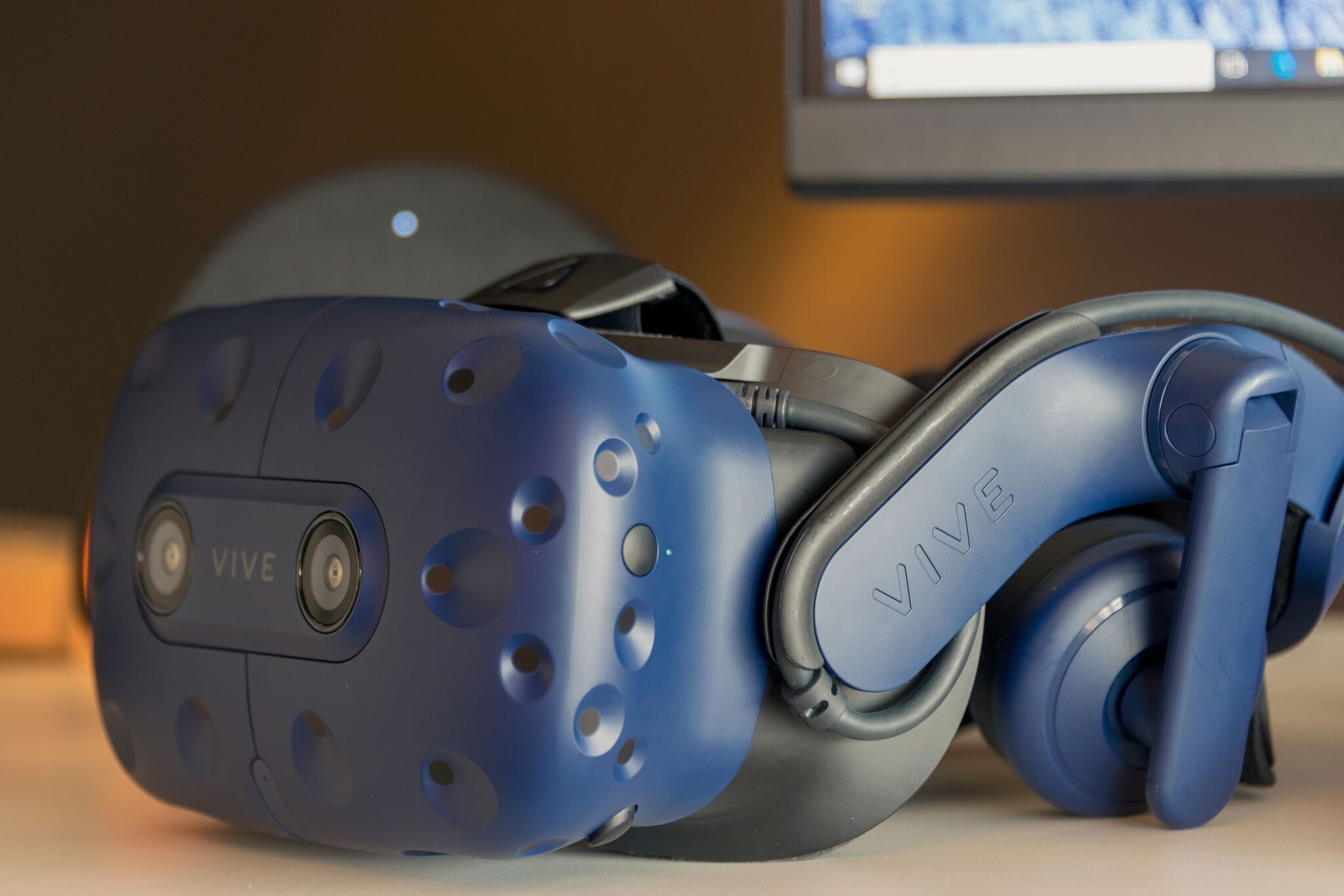
The Vive Pro has a lot riding on its tiny shoulders. Or strap, or whichever part of it is the shoulders. Anyway, it’s important for a couple reasons, not least of which because it’s the first second-generation virtual reality headset to hit the market. If the original Vive and the Oculus Rift were the proof of concept for modern VR, then the Vive Pro and upcoming Oculus headsets will be the foundation for the future. The thing is, with each passing month, Oculus and HTC have less and less become direct competitors. To make the VR revolution a reality and not just a passing fad, they need each other.
First, let’s talk about the Vive Pro. As we mentioned in our review, it’s a unique product for a unique market. It’s not really for most people, and that’s by design. It’s a high-end gadget that fills the same kind of niche that those giant TVs at Best Buy fill. You know the ones, the massive 4K HDR TVs that take up a whole wall with price tags north of a couple thousand bucks?
Think of the Vive Pro like that. It’s expensive, it requires a very powerful gaming PC (and a whole room set aside for VR) but it’s currently the best VR headset on the market. HTC, with its expensive accessories and hardware caters to the VR audience by promising unbelievable detail and high-fidelity graphics. Oculus is doing something entirely different, but no less important.
The Oculus Go and Santa Cruz headsets are not going to be competing with the Vive Pro. They’re not built for delivering the sharpest, richest, most detailed, high-def VR experience money can buy. They’re built to put VR into as many hands as possible, and not just OK VR like the Samsung Gear VR.
The Oculus Go, for instance, is a stand-alone device not unlike the Google Daydream or Gear VR, but by all accounts, it delivers a surprisingly robust VR experience. Using clever software tricks to dynamically change the resolution and detail so only objects you’re looking at are fully rendered, it can offer high-quality visuals without requiring any external graphical horsepower. It doesn’t require you tuck a phone into it, or plug it into a powerful gaming PC, it just works on its own, and it will hit the market at about $200. That us the important part.
The Oculus lineup will serve as the entry point to VR that the market needs. These technologies are hard to fully describe without the benefit of first-hand knowledge, and the Oculus Go will provide that. So, if that’s true, where does the Vive Pro come in? Right where it is, at the top-end. The Oculus Go is the entry point, it’s a game console. The Vive Pro on the other hand, it’s the big powerful — finicky and not always elegant — LED-bedazzled gaming PC.
In the long run, that’s a very good thing because if VR is going to survive and thrive, it’s going to need both.