

Bitcoin mining is far removed from the average Bitcoin owner these days, but that doesn’t change how important it is. It’s the process that helps the cryptocurrency function as intended and what continues to introduce new Bitcoins to digital wallets all over the world.
Collecting cryptocurrency can be boiled down to a simple premise: “Miners,” as they are known, purchase powerful computing chips designed for the process and use them to run specifically crafted software day and night. That software forces the system to complete complicated calculations — imagine them digging through layers of digital rock. If all goes to plan, the miners are rewarded with some Bitcoin at the end of their toils.
Why do we need mining?
Bitcoin works differently from traditional currencies. Where dollars, pounds, and euros, for instance, are handled by banks and financial institutions that collectively confirm when transactions occur, Bitcoin operates on the basis of a public ledger system. In order for transactions to be confirmed — to avoid the same Bitcoin from being spent twice, for example — a number of Bitcoin nodes, operated by miners around the world, need to give it their seal of approval.
For that, they are rewarded the transaction fees paid by those conducting them, and while there are still new Bitcoins to be made — there are currently more than 18.3 million of a maximum 21 million — a separate reward too, in order to incentivize the practice. In taking part in mining, miners create new Bitcoins to add to the general circulation, while facilitating the very transactions that make Bitcoin a functional cryptocurrency.
Mining is a risky process though. It not only takes heavy lifting from the mining chips themselves, but boatloads of electricity, powerful cooling, and a strong network connection. The reward at the end isn’t even guaranteed either, so it should never be entered into lightly.
How it works
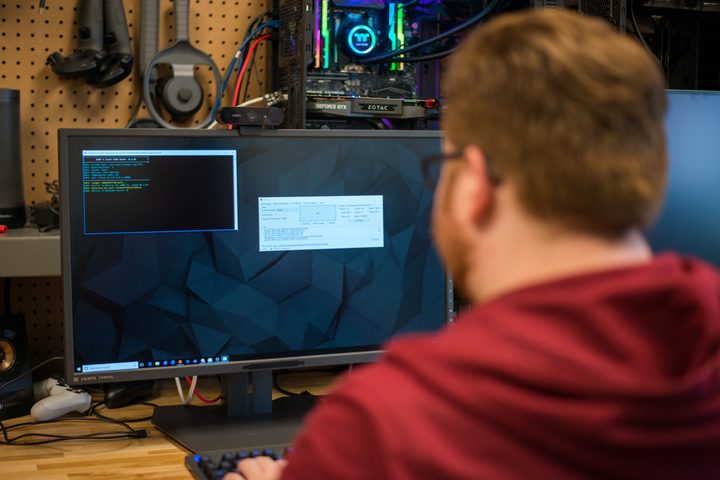
The reason it’s called mining isn’t that it involves a physical act of digging. Bitcoin are entirely digital tokens that don’t require explosive excavation or panning streams, but they do have their own form of prospecting and recovery, which is where the “mining” nomenclature comes from.
Prospective miners download and run bespoke mining software — of which there are several popular options — and often join a pool of other miners doing the same thing. Together or alone, the software compiles recent Bitcoin transactions into blocks and proves their validity by calculating a “proof of work,” which covers all of the data in those blocks. That involves the mining hardware taking a huge number of guesses at a particular integer over and over until they find the correct one.
It’s a computationally intense process that is further hampered by deliberate increases in difficulty as more and more miners attempt to create the next block in the chain. That’s why people join pools and why only the most powerful of application specific integrated circuit (ASIC) mining hardware is effective at mining Bitcoins today.
The individual miner or pool that is the first to create the proof of work for a block is rewarded with transaction fees for those confirmed transactions and a subsidy of Bitcoin. That subsidy is made up of new Bitcoin, which are generated through the process of mining. That will continue to happen until all 21 million have been mined.
There is no guarantee that any one miner or mining pool will generate the correct integer needed to confirm a block and thereby earn the reward. That’s precisely why miners join pools. Although their reward is far smaller should they mine the next block since it’s shared among all members of the pool, the chances of earning such a reward are far greater as a collective and a return on any investment much more likely.
The future of mining
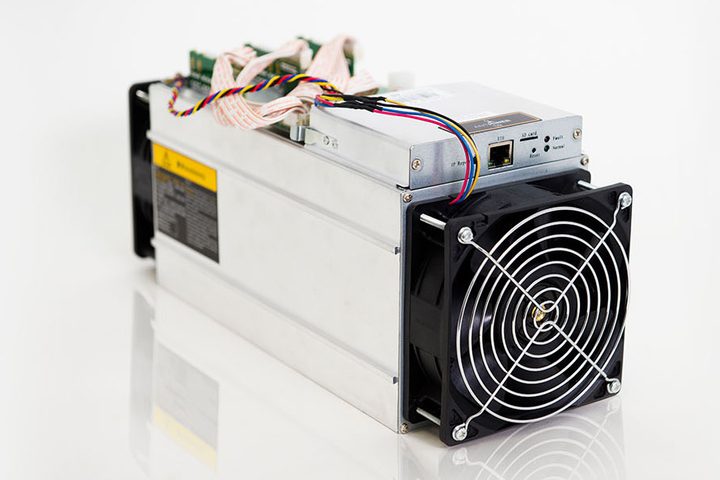
Bitcoin was originally designed to allow anyone to take part in the mining process with a home computer and thereby enjoy the process of mining themselves, receiving a reward on occasion for their service. ASIC miners have made that impossible for anyone unable to invest thousands of dollars and use cheap and plentiful electricity. That’s why cloud mining has become so popular, recently entering the news cycle as a Nintendo Switch title, Cooking Mama: Cookstar, was rumored to include secret cryptocurrency mining software written into the code.
Although hardware has pushed many miners out of the practice though, there are safeguards in place that prevent all remaining Bitcoins from being mined in a short period of time.
The first of those is a (likely) ever-increasing difficulty in the mining calculations that must be made. Every 2,016 blocks — at a rate of six blocks an hour, roughly every two weeks — the mining difficulty is recalculated. Mostly it increases as more miners and mining hardware join the network, but if the overall mining power were to reduce, then the difficulty would decrease to maintain a roughly 10-minute block-generation time.
The purpose of that relatively hard 10-minute time is because that way the number of Bitcoins being generated by the process will be slow and steady, and thereby mostly controlled. This is compounded by the reduction in reward for blocks mined every 210,000 blocks. Each time that threshold is reached, the reward is halved. In early 2020, mining a block rewards 12.5 Bitcoins, which is worth around $80,000.
In the future, as mining rewards decrease, the transaction rewarded to miners will make up a larger percentage of miner income. At the rate with which Bitcoin mining difficulty is increasing, mining hardware development is progressing, and rewards are decreasing, projections for the final Bitcoins being mined edge into the 22nd century.


