
With the arrival of Intel’s 12th-generation Alder Lake CPUs in October 2021, the chip maker officially introduced support for PCIexpress (PCIe) 5.0. On the other hand, AMD is also set to adopt the latest standard with its Ryzen 7000 series CPUs when they launch in September 2022. But what exactly is PCIe 5.0, and is it worth the upgrade?
What is PCIe?
Before we talk about PCIe 5.0, let us first understand what PCIexpress is, commonly abbreviated as PCIe. Short for Peripheral Component Interconnect Express, PCIe is an important interface standard that lets you connect various devices to your motherboard to communicate with the CPU. These include graphics cards, solid-state drives (SSDs), sound cards, capture cards, USB hubs, and various other components. They’re the elongated slots on your motherboard that run parallel to one another.
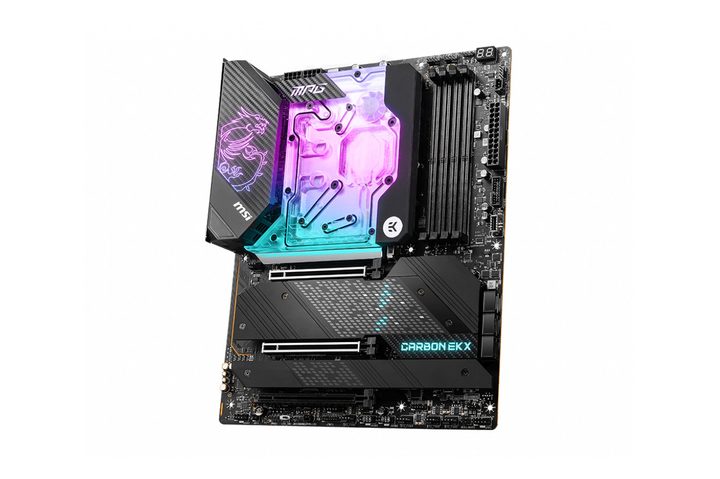
The first PCIe standard was announced in 2003 and was released as a replacement for older standards like PCI, PCI-X, and APG. Over the years, the standard has seen updates and a significant increase in speed and bandwidth. Here’s a look at all the PCIe generations that have been announced so far:
| PCIe Generations | Bandwidth | Gigatransfer | Frequency |
| PCIe 1.0 | 8GBps | 2.5GTps | 2.5GHz |
| PCIe 2.0 | 16GBps | 5GTps | 5GHz |
| PCIe 3.0 | 32GBps | 8GTps | 8GHz |
| PCIe 4.0 | 64GBps | 16GTps | 16GHz |
| PCIe 5.0 | 128GBps | 32GTps | 32GHz |
To cater to a range of devices, the PCIe connector or slot on your motherboard comes in different sizes and is defined by the number of lanes. These lanes are denoted by x1, x2, x4, x8, x16, and x32 and determine the total bandwidth a particular slot can offer.
For instance, a PCIe 4.0 x16 slot offers a bandwidth of approximately 64GBps, which is the most currently available at the time of writing and gives plenty of scope for making the most of the fastest possible graphics cards. More modest configurations, like x4 slots, are typically utilized by M.2 and PCIe SSDs, while x1 PCIe slots are used for USB hubs, Ethernet ports, and similar lower-bandwidth devices.
You can get PCIe slots with up to x32 lanes, but they are not used in consumer-grade electronics and are very expensive. It is also important to note that the bandwidth of a lane is divided into sending and receiving data. Thus in the above example, the slot can send 16GBps and receive 16GBps of data simultaneously.
What is PCIe 5.0?
Currently, PCIe 4.0 is the most common and widely used standard. Like all the previous versions, it is backward compatible and offers up to 16GTps (gigatransfers per second) speeds and a bandwidth of 64GBps. PCIe 5.0 is an update to the PCIe 4.0 standard, where the bandwidth, gigatransfer, and frequency are all doubled. Essentially, PCIe 5.0 will offer 32GTps of transfer speeds, a 128GBps bandwidth in an x16 configuration, and a frequency of 32GHz.
Can I upgrade to PCIe 5.0?
As mentioned before, Intel’s 12th-gen Alder Lake processors and the upcoming AMD Ryzen 7000 processors both support PCIe 5.0. While there are a few compatible motherboards, components like GPUs, storage, and other add-on cards that support PCIe 5.0 are yet to hit the markets. It is expected that the first wave of devices that can fully take the advantage of PCIe 5.0 will arrive later this year. The new standard will be a lot more useful for machine learning and artificial intelligence, data centers, and other high-performance computing environments, thanks to the increase in speeds and bandwidth.
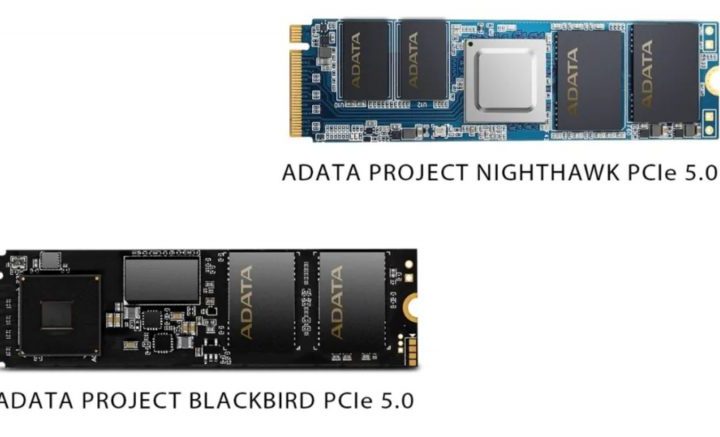
Essentially, common consumer and gaming-grade PCs don’t need such high speeds and should work perfectly well with PCIe 4.0 or even the older PCIe 3.0 standard. If you are interested, check out our comparison of PCIe 4.0 with PCIe 3.0, where we found that a graphics card like the Nvidia GeForce RTX 2080 Ti doesn’t make full use of the bandwidth available in a PCIe Gen 3 x16 slot yet. This means PCIe 5.0 is definitely going to be overkill for most gamers.
Is PCIe 5.0 worth it?
The PCIe 5.0 standard is a worthy upgrade when compared to Gen 4 in terms of transfer speeds and bandwidth. Not only does it allow devices to communicate faster with the CPU, but it also enables the transfer of large chunks of data with less latency. The benefits are definitely in favor of PCIe 5.0, but it is important to understand that these benefits are mostly on paper, and outside of large transfers of many files, there isn’t much real-world performance improvement between PCIe 4 and 5, or even between PCIe 3 and 4.
The shift to PCIe 5.0 will not bring a huge improvement in graphics performance, at least until we have GPUs that fully make use of the standard. The current generation of graphics cards from Nvidia and AMD typically don’t consume the entire bandwidth of PCIe 4.0.
If you are concerned about future-proofing your PC with the latest standard, we suggest that you hold on to your money, especially since PCIe 5.0-based devices and peripherals like SSDs and GPUs are yet to see wide availability.


