

I was delighted when I first heard that the M2 MacBook Pro 13-inch was being replaced by the M3 MacBook Pro 14-inch. Finally, an entry-level MacBook Pro that actually felt “pro,” thanks to the screen, ports, and premium design.
But after considering it, I have to admit that even the M3 MacBook Pro 14-inch remains bewildering. Sitting in-between the Air and Pro, it will undoubtedly make some buyers curious due to its name. But as far as I can suss out, it’s hard to deduce just who exactly this laptop is for. Peel back the layers, though, and you’ll see a product that’s always been key to Apple’s strategy and branding.
A performance mismatch

Here’s the problem. The chassis of the MacBook Pro 14-inch is extremely premium. Build quality and design are top-notch, but it’s the quality of life changes that make it feel extra premium. The screen is not only high resolution and colorful, but it’s the best mini-LED HDR panel on a laptop — the same exact screen that’s on the M3 Max models, with a 120Hz dynamic refresh rate. The same is true for the speakers, which are loud and robust. Again, they’re the best you can get in a laptop — outside of the 16-inch MacBook Pro, of course.
In terms of performance, though, the M3 MacBook Pro isn’t all that “pro.” It’s not that the M3 isn’t a very capable chip. It’s extremely efficient, and the GPU improvements in this generation are notable. But let’s remember: Apple literally has a chip called the “M3 Pro,” making the base M3 the non-Pro configuration. Even by name alone, this isn’t a “pro” chip. Right now, the MacBook Pro is the only laptop in the lineup that can be configured with the M3 — since the MacBook Air still hasn’t moved up from the M2. But according to the latest reports, that upgrade to the M3 will be here by the spring of next year. In other words, this MacBook Pro will soon perform similar to a MacBook Air.
The 8GB memory option, though, is where things really get strange. I won’t rehash the whole debacle, but Apple has defended its choice to offer 8GB of its unified memory as the starting configuration of a MacBook Pro, saying that on a Mac, 8GB is equivalent to 16GB on other systems. Of course, this isn’t really true. Being able to share memory between the GPU and CPU is a big deal, but it’s still fairly easy to use up 8GB of memory with a rather simple setup of browser tabs and light applications.
So, while anyone would appreciate the improvements that the MacBook Pro 14-inch offers, without the performance, they become quality of life enhancements rather than necessary features.
The hobbyist and aspirer demographic

Let’s not forget what the M3 MacBook Pro is replacing — the 13-inch MacBook Pro is dead and gone. It’s a laptop that has always had an interesting place in the lineup, even before the transition to Apple Silicon. In the Intel era, the 13-inch MacBook Pro didn’t have discrete graphics like the 15-inch model (or later, the 16-inch). It had a slightly higher-powered Intel processor over the 13-inch MacBook Air, but it wasn’t a super-noticeable difference.
Instead, what you got was the feeling of owning and using a more powerful laptop. It had the looks. The screen. The speakers. It came in Space Gray. It resembles a laptop that YouTubers, music producers, designers, and photographers could get some real work done on — even if it struggled to actually do that in practice. The professionals at the time knew that the 15-inch MacBook Pro was the only serious option — and even there, you were better off with an iMac.
But the hobbyist or aspiring creator has always been an important part of Apple’s Mac philosophy. Don’t forget — turning normal, everyday people into “creators” has always been a part of the Mac ethos. Handing creative tools to amateurs and students is what helped transform the whole perception of the PC into something more friendly and accessible, while also convincing an entire generation that Mac was the go-to platform for young creatives. In other words, these types of devices have always played an important role in the psychology of Apple’s marketing.
And the 14-inch M3 MacBook Pro fits that mold exactly. It’s a steppingstone — perhaps a tool that’s meant more to inspire than to satisfy. Get too serious about your hobby and you’ll run up against the limitations of the hardware. But if you’re dabbling in the world of video production, graphic design, or coding? I think if you asked Apple, that’s who it would say this machine is for.
But my job isn’t to repeat Apple’s marketing lines, and the question remains whether or not this laptop is actually worth buying for the audience it is claimed to be for.
Who the M3 MacBook Pro is really for
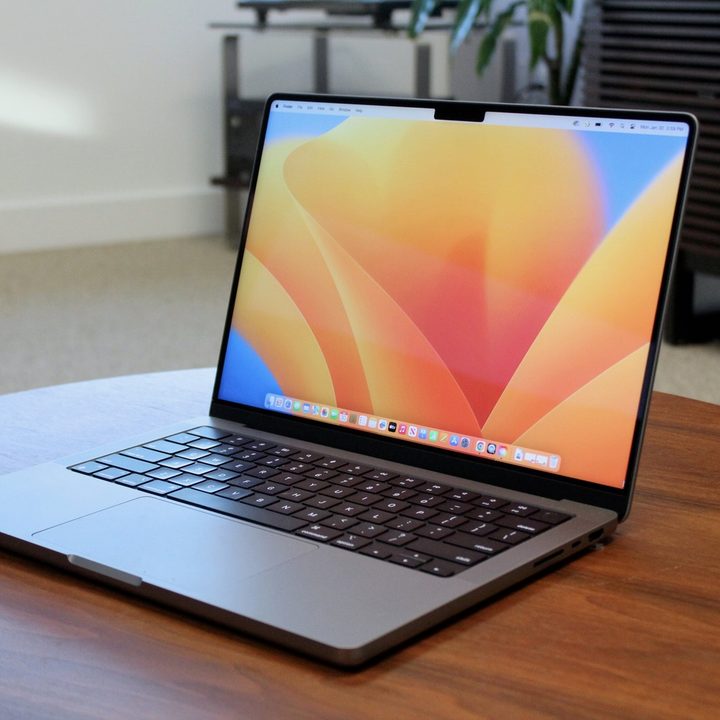
Based on my own testing, the 14-inch M3 MacBook Pro isn’t actually worth buying for that aspiring creative. It won’t give you the upper hand you think you need. A 15-inch MacBook Air will probably be more than powerful enough, especially if you can wait until the M3 models come out in early 2024. If you’re just dabbling in using these more intensive applications, it’ll be plenty powerful enough, provided you configure it with enough memory.
When it comes down to it, there’s really only one audience that the M3 MacBook Pro feels justified for — someone who’s willing to pay for those quality of life updates. It’s for someone who might not need the extra performance of a true pro machine, but has some extra money to shell out for a better screen, speakers, and extra ports. Look — it’s a killer laptop for watching movies or shows, and even just listening to music on is it fantastic. Meanwhile, if you occasionally want access to the SD card slot or HDMI port, it’s handy for that reason too.
Is it worth an extra $100 and some extra weight and thickness that comes with the 14-inch MacBook Pro? Tough call. For some, absolutely. But the majority of people will be more than happy with a MacBook Air, especially since you can find some killer deals on them right now.


