If you’ve been planning a PC build or even browsing pre-built systems, you’ve likely run into the same issue: RAM prices are unusually high. In some cases, costs have increased by as much as 500%, pushing up overall system prices and making builds harder to justify.
This isn’t a short-term fluctuation. It’s the result of multiple shifts happening at the same time, most of which are tied to how quickly demand for memory has changed.
AI demand is the biggest driver behind rising RAM prices
The rapid growth of AI, particularly large language models, has significantly increased demand for memory. These systems rely on RAM for both training and inference. Training benefits from faster data access compared to traditional storage, while inference requires memory to hold ongoing conversations and context in real time.
Each user interaction with an AI model requires memory allocation, even if it’s temporary. When that demand scales across millions of users, the total memory requirement increases dramatically.
Larger AI models are increasing memory requirements even further
Demand isn’t just growing because more people are using AI. It’s also increasing because the models themselves require more memory.
Context windows, which determine how much information a model can process at once, have expanded significantly. Where high-end systems once operated around 200,000 tokens, newer models are now pushing beyond one million. That shift directly increases the amount of memory needed per interaction.
Consumer RAM is competing with AI infrastructure
Although consumer PCs don’t use the same type of memory as AI data centers, they rely on the same production ecosystem.
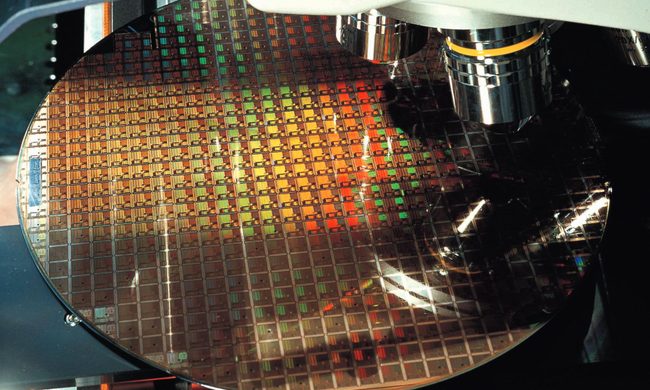
AI systems use high bandwidth memory (HBM), which is faster and designed for large-scale workloads. However, HBM still depends on the same silicon wafers, manufacturing facilities, and supply chains used to produce standard DRAM for consumer RAM modules.
Because AI companies are willing to pay more, manufacturers are prioritizing that demand, which reduces availability for consumer products.
Supply constraints are tightening the market
On the supply side, there are only three major players: Micron, SK Hynix, and Samsung. That concentration limits how quickly production can scale.

Micron has already shifted its focus away from consumer RAM by shutting down its Crucial brand, reallocating resources toward AI demand. At the same time, SK Hynix has reportedly sold out its production capacity for 2026, further restricting supply.
These constraints create a clear supply-demand imbalance, which continues to push prices upward.
Why RAM prices may not drop soon
Even though manufacturers are planning to expand production capacity, those changes take time. New fabrication plants require years to build and bring online.
Current expectations suggest that meaningful increases in supply may not reach consumers until 2027 or 2028. In the meantime, some projections indicate that prices could rise further, potentially by another 100% from current levels.
This makes the short-term outlook uncertain for buyers hoping for quick relief.
There are early signs that demand could ease
Some developments could reduce pressure on the market, but they are still early.
Google has introduced a technique called TurboQuant AI compression, which aims to reduce the memory requirements of AI models by up to six times. If similar approaches are adopted more widely, they could lower overall demand for memory in data centers.
Market reactions to this announcement suggest that manufacturers are paying attention, although the long-term impact remains unclear.
What PC builders should do right now
For buyers, the decision depends on priorities and timing.

If cost is the main concern, building around older platforms that use DDR4 memory is currently the most practical option. DDR4 remains more affordable and is still widely available, particularly in the used market.
For those planning a high-end build with the latest hardware, waiting may not lead to better pricing in the near term. In fact, prices could increase further before stabilizing, making it harder to predict an ideal time to buy.
Will RAM prices ever go back down?
Even when supply improves, RAM prices may not return to previous lows.
Markets tend to reset after sustained demand spikes, especially when higher pricing becomes normalized across both manufacturers and consumers. With AI continuing to drive large-scale demand and companies prioritizing higher-margin enterprise customers, the baseline cost of memory is likely to remain elevated compared to earlier years.
Prices may ease from current extremes as new production capacity comes online, but a full return to pre-surge levels looks unlikely in the near term.