  1. Home
  2. Computing
  3. News

Windows 11 widgets could soon rival those on iOS, Android

Add as a preferred source on Google

Microsoft is making moves to bring a big improvement to one of the highlight experiences in Windows 11, which might bring it closer to what is already available on iOS and Android.

Shared on Twitter by reliable leaker FireCube, a supposed screenshot of code in Windows 11 points to users soon being able to download third-party widgets and updates for those widgets from the Microsoft store. This would be a big change, as all of Windows 11’s current widgets are ones that are only available from Microsoft, like sports, weather, or traffic.
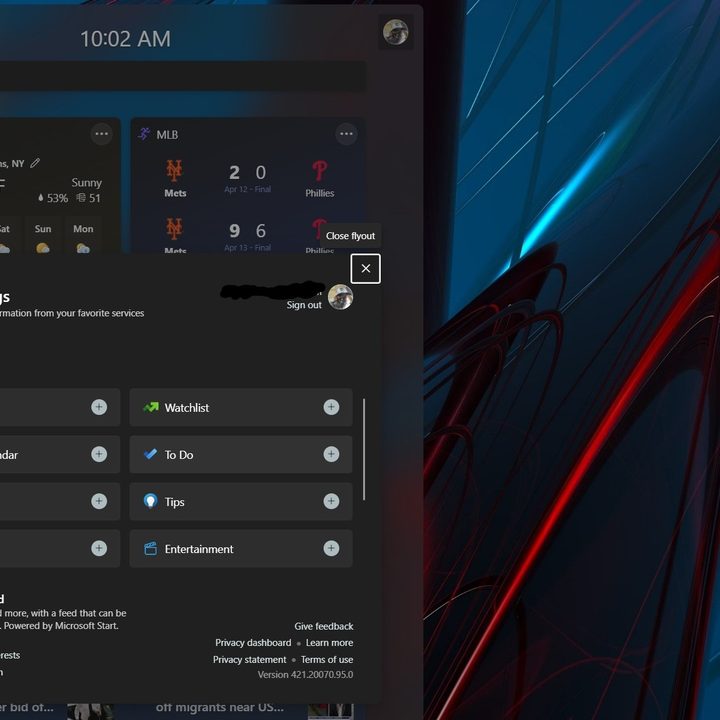
The widgets experience in Windows 11.
Arif Bacchus/ Digital Trends

This has actually been rumored to be on the way for some time, but this tweet shows one of the first times that live code in Windows 11 points to it coming soon. Digital Trends can’t verify the authenticity of the code, but the leaker mentions “widget manifest update shows more evidence of being able to download third-party widgets and updates.” Microsoft also has yet to confirm or announce the feature, but Windows Central had reported that developers were already briefed on how third-party widgets might work.

Recommended Videos

If this holds up to be true, then widgets on Windows 11 could be a lot like what you already can get on iOS and Android. Meaning, that if you have a third-party app installed on your PC from a developer who opts to make a widget available, there could be a new option to add it when you enter Windows 11’s widget experience with Windows Key and W. 

On the iOS and Android mobile operating systems, select installed apps can give you a home-screen widget, so you can peek at the app without having to open it all the time. Examples on iOS include Flipboard, countdown and battery widgets, Pedometer++, and several others. On Android, there’s Google Keep, Battery Widget Reborn, 1Weather, and more.

Microsoft’s annual Build developer conference is coming up from May 24-26, so there is a chance this improvement to widgets might be announced then. Yet, also rumored to be announced for Windows 11’s widgets is a full-screen experience, where widgets take up the entire screen, rather than just one corner. Screenshots for this were recently spotted during a breakout session at Microsoft’s Windows Powers the Future of Hybrid Work event.

Arif Bacchus
Arif Bacchus is a native New Yorker and a fan of all things technology. Arif works as a freelance writer at Digital Trends…
Your hard drive is giving away your browsing habits and websites can see it
A new attack called FROST lets malicious websites spy on your open tabs and apps by tracking your SSD activity.
An SSD data port.

Your browsing habits may not be as private as you think, even with all the right precautions in place. According to Ars Technica, security researchers have uncovered a new attack technique that lets a malicious website figure out which other sites and apps you have open. You do not need to click anything, download anything, or grant any permission; just visiting the page is enough.

How can websites spy on your browsing activity through hard drive?

Read more
iOS 27 leak shows off Siri’s minimalist redesign and new tricks within a dedicated app
Bloomberg's iOS 27 leak reveals the most ambitious Siri redesign in the assistant's history.
Electronics, Mobile Phone, Phone

Apple’s biggest Siri overhaul in nearly 15 years is taking shape ahead of WWDC 2026 on June 8, 2026, and the first detailed look at what the revamped assistant might look like comes from Bloomberg. 

These aren’t official images or promotional materials, but renders based on the information that the outlet has collected from its sources. Furthermore, Apple often tests multiple designs and versions before releasing the final version of a product, so it could still differ. 

Read more
Qualcomm’s Snapdragon C chip eyes dirt-cheap laptops as MacBook Neo redraws budget lines
A $300 laptop that actually works? Qualcomm thinks it has the answer.
Qualcomm Snapdragon C

Budget laptops have always been a compromise. You either get a machine that struggles to keep up with your browser tabs or one that dies before lunch. And almost all of them feature a cheap plastic body. Qualcomm wants to change that with its new Snapdragon C Platform, a chip built specifically for entry-level laptops starting at $300.

Qualcomm says that the Snapdragon C is designed for students, families, and small businesses that need a reliable, everyday machine without breaking the bank. Devices powered by this chip will handle web browsing, video streaming, productivity apps, and video calls without a hitch. 

Read more