  1. Home
  2. Emerging Tech
  3. News

Amazon Leo will challenge Musk’s Starlink with in-flight Wi-Fi for Delta airlines

Add as a preferred source on Google
Aircraft, Flight, Transportation
Amazon

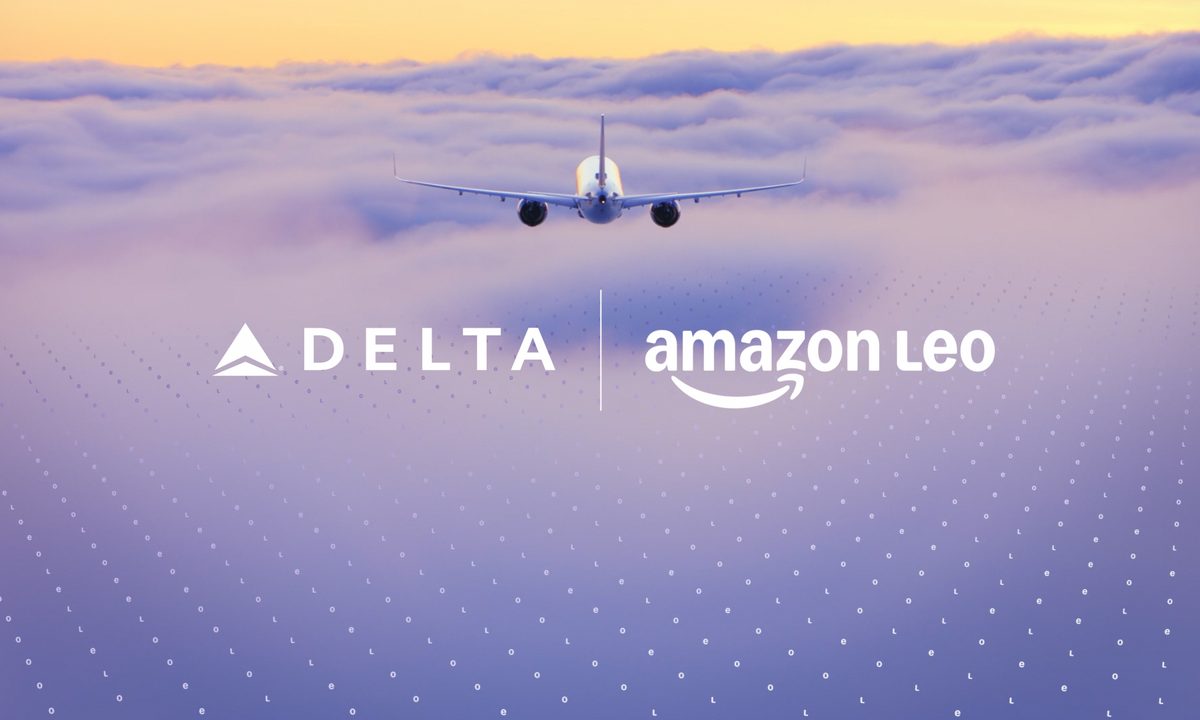
Amazon is clearly done watching from the sidelines. With its latest deal with Delta Air Lines, the company is bringing its Leo satellite network into the skies, and yes, this puts it in direct competition with Elon Musk’s Starlink. Starting 2028, Delta will begin equipping around 500 aircraft with Amazon Leo-powered connectivity. The promise is simple but ambitious: fast, reliable, low-latency Wi-Fi that actually works from gate to gate. And like Delta’s current approach, it will remain free for SkyMiles members.

Finally, in-flight Wi-Fi that might actually work

Now, if you’ve ever tried using in-flight Wi-Fi, you already know the reality. It’s slow, inconsistent, and often just about good enough for sending a text, if that. Amazon is trying to change that by using low Earth orbit satellites, which sit much closer to the planet than traditional systems. That shorter distance means lower delay and better speeds, at least on paper.

Recommended Videos

Delta says passengers could see download speeds up to 1 Gbps, which, if it holds up in real-world use, would make streaming, uploading, and even working mid-air feel far less frustrating than they do today. But this isn’t just about faster internet on planes. It’s also about Amazon expanding its footprint. Delta already relies heavily on Amazon Web Services for its backend systems, and this new agreement deepens that relationship. The two companies are also talking about bringing in AI and other Amazon tools to improve the overall travel experience, not just what happens once you’re on the plane.

The Starlink rivalry is getting interesting

At the same time, it’s hard to ignore the bigger picture. Starlink has already been making moves in aviation, and Amazon’s entry with Leo makes this space much more competitive. It’s now more about who can make in-flight connectivity actually usable. For us passengers, if this works the way Amazon and Delta say it will, flying might finally come with internet that doesn’t feel like a compromise.

Shimul Sood
Shimul is a contributor at Digital Trends, with over five years of experience in the tech space.
Microsoft’s newest AI agent wants to take entire projects off your plate
Microsoft

Microsoft is expanding its ambitions for workplace AI with the general availability of Copilot Cowork, an agentic system designed to handle complex tasks from start to finish rather than simply offering suggestions.

After spending three months in Microsoft’s Frontier preview program, the company says Copilot Cowork is already used by more than half of the Fortune 500, alongside organizations such as Accenture, Zurich Insurance, Capital Group, and others. The rollout marks one of the fastest-growing launches in the history of Microsoft’s Frontier program, according to the company.

Read more
Online payments are dimming the charm of one of America’s top tourist attractions
One of America's last analog tourist traditions just joined the cashless economy.
Photography, Binoculars, Camera

We all know those heavy, coin-operated binoculars perched on every scenic overlook in America, the ones you’ll find everywhere from the Empire State Building to the Grand Canyon. Turns out, they’ll soon start accepting tap-to-pay payments. 

This is great news, as you’ll no longer need to carry a quarter anymore, and making payments with your smartphone is much more convenient. However, I’d argue that the quarter was kind of the whole point.

Read more
The FBI secretly built an entire fake town just to practice cyberattacks
Hidden inside a warehouse in Alabama, the Kinetic Cyber Range recreates real-world digital attacks from start to finish.
FBI Kinetic Cyber Range Featured

While Hollywood has fake cities for filming movies, the FBI apparently has one for getting hacked. The agency has pulled back the curtain on its Kinetic Cyber Range, a 22,000-square-foot replica small town hidden inside its Huntsville, Alabama campus. But instead of training officers for shootouts or hostage rescues, the facility is designed to simulate realistic cyberattacks on homes, businesses, and critical infrastructure so investigators can practice responding to them in a controlled environment.

The FBI built an entire town just to simulate cybercrime

Read more