  1. Home
  2. Emerging Tech
  3. News

Want to link two screens as a single display? A new Apple patent may allow it

Add as a preferred source on Google
 

A new Apple patent envisions bringing together two or more devices to act as one large, seamless display through sensor technology.

Recommended Videos

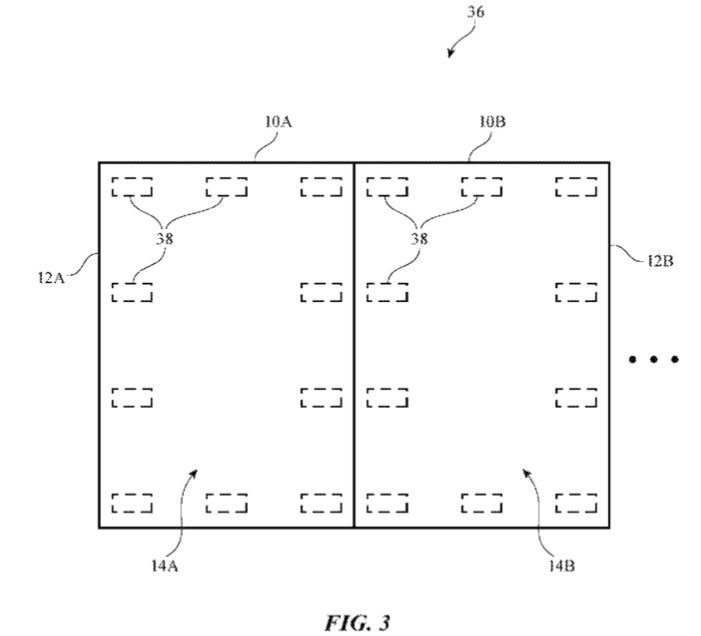
The patent, first reported by Patently Apple, is titled System With Multiple Electronic Devices and was initially submitted in June 2017 and published on March 10. The patent describes seamlessly dividing one image into two separate displays between separate devices, which the patent calls “joint operating mode.” 

“In the joint operating mode, images may extend across displays in the devices, speakers in respective devices may be used to play different channels of an audio track, cameras and sensors in different devices may be used in cooperation with each other, and other resources may be shared,” the patent reads. 
Apple

It’s a feature that the Microsoft Duo and Neo have, which enlarges one image to go over both of a device’s screens when unfolded. However, it appears that Apple’s patent looks to use the technology across separate devices. Essentially, two separate devices could come together and attach as one, creating one larger device that would allow seamless image display between both of the devices. Apple’s patent describes using magnets and sensors to connect to devices. 

“The electronic devices may use sensor measurements and other information to detect when an edge of a first device is adjacent to an edge of a second electronic device,” the patent continues. 

Apple envisions the joint operating mode to be able to connect to all of its devices, from smartphones to iPads and even to Macbooks. 

“[Both may] be cellular telephones, both may be wristwatch devices, both may be tablet computers, both may be laptop computers, both may be desktop computers, etc,” continues the patent, “[or they] may be different types of devices. For example … a tablet computer and … a cellular telephone,” explains the patent. 

All of this is still only a patent, so we may never actually this type of device in action. Digital Trends reached out to Apple to comment on the patent, and we will update this story when we hear back. 

Apple’s possibly related interest in foldable devices isn’t anything new. Last month, the company published a patent that featured a sophisticated hinge mechanism. Apple called the mechanism “movable flaps,” which would prevent the display from being creased when folded — a common flaw found on folding machines most manufacturers like Samsung still haven’t been able to overcome.

Allison Matyus
Former Digital Trends Contributor
Allison Matyus is a general news reporter at Digital Trends. She covers any and all tech news, including issues around social…
This new video editor lets Claude organize, generate, and edit right on your timeline
Laptop running Claude Fable

For years, AI video tools have mostly lived outside the editing process. You generate a clip, download it, import it into your editor, and continue working. A new app called Palmier Pro aims to eliminate some of those extra steps by bringing AI directly into the video timeline.

The newly launched software, available for macOS, is being marketed as a video editor that Claude can use. Instead of treating AI as a separate chatbot or content generator, Palmier is designed to let an AI assistant interact with an active video project and make changes within it.

Read more
MIT experts just made a special memory. When humans forget, robots will just fetch the lost item
MIT’s new robot memory could make lost keys your robot’s problem
A robotic arm.

Robots may be the new best friend for forgetful humans. MIT researchers have developed a long-term memory framework for robots that can help them build a detailed mental model of large, complicated spaces. The system is called DAAAM, short for Describe Anything, Anywhere, Anytime, at Any Moment, and the goal is to let robots remember objects, locations, and details over time.

This might not sound headline-grabbing, though robots are still surprisingly bad at something humans do casually. You may remember that your keys were on the kitchen counter last night, or that a half-finished part was left in a factory bin. However, a robot working beside you would struggle to connect that object and location in a useful way.

Read more
A strange little electric nose may be the missing piece for smart fridges
The carbon nanotube chip detects food, allergens, and spoilage signals at room temperature.
Electronics, Hardware, Printed Circuit Board

UC Berkeley researchers have built an electric nose that can detect gases tied to spoiled food and common allergens more consistently than a human sniff test. The device uses a 16-sensor gas sensor chip that turns reactions with food-related gases into electrical signals.

Kitchen judgment can get messy because food doesn't always look or smell risky before it becomes a problem. Milk, eggs, chicken, fruit, and nuts release different chemical signatures, and people usually have to decide with whatever their nose catches in the moment.

Read more