
Unless you’ve been in the dark the past few months, you’ve probably heard about the solar eclipse headed our way. On Monday, a solar eclipse will be visible across North America, and individuals along a nearly 70-mile-wide stretch of land — known as “path of totality” — will be able to gaze upon a total solar eclipse for nearly three minutes.
As the moon passes directly between the Earth and the sun, our star will be momentarily blotted out of the sky, with only the star’s outer atmosphere clearly visible to onlookers. As one can imagine, however, peering directly at the sun can cause irreparable damage to your eyes (even during the eclipse). Thankfully, the best solar eclipse glasses on the market can protect your eyes during the astronomical event.
To prevent optical injury (temporary or permanent) NASA recently released a catalog of safety information to consider before viewing the eclipse. The agency recommends using glasses that meet the ISO 12312-2 international standard for solar eclipse optics. Sadly, not all sunglasses claiming to be eclipse-certified meet these rigorous safety standards. Amazon even recently announced a massive recall on potentially hazardous models. The manufacturers listed below are currently producing solar eclipse sunglasses and handheld solar viewers that have been approved by NASA’s partner, the American Astronomical Society, to meet the international standard.
In the coming the days, nearly 5,000 libraries and other organizations across the country will also be distributing some 2,000,000 sunglasses. However, with nearly 100 million humans living within 200 miles of the path of totality, and troves of so-called “eclipse chasers” around the country already on the move for the event, there may not be enough free shades for everyone. In fact, many online retailers have already sold out of shades well in advance of the event. That’s why we’ve rounded up some of the better offerings still available.
Note: We will be updating this article in the days leading up to the eclipse, adding and removing manufacturers according to their inventory.
American Paper Products Eclipse Glasses ($100 for 25)
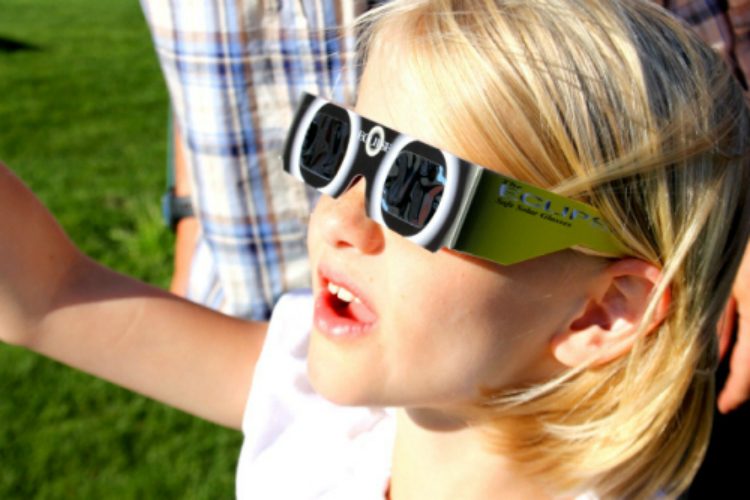
The American Paper Products disposable model is only sold in larger quantities, which may be of little use for individuals seeking an individual pair for the upcoming eclipse. However, those attempting to buy shades for a larger group, organization, or workplace will be hard pressed to top this offer, especially if one of the other manufacturers on this list is sold out in the weeks prior to the event. Unfortunately, due to high demand the company recently reduced its minimum order to 25 glasses.
Other things to consider…
- NASA suggests people verify the authenticity of their eclipse sunglasses beforehand. This means making sure the manufacturers name and address is printed somewhere on the product.
- The agency also recommends checking the certification number on the sunglasses to ensure the model meets ISO 12312-2 international standards.
- Under no circumstances whatsoever should individuals use traditional, non-solar certified eyewear or sunglasses to view a full or partial solar eclipse.
- NASA also suggests replacing your current solar sunglasses if the model has scratched and/or wrinkled lenses.
- The agency also encourages individuals to replace solar eclipse sunglasses that are more than three year sold.
- Oh, and be careful with all of those solar selfies, the rays can also damage your expensive camera accessories. Thankfully, there’s a lens to protect your hardware during the eclipse.
If you need to whet your astronomical whistle in the weeks prior to the eclipse, feel free to feast your eyes on our list of the best space photos or maybe take a virtual tour of the International Space Station. NASA will also stream a live event called Eclipse Across America: Through the Eyes of NASA, for individuals who would prefer to enjoy coverage of the celestial event indoors.


