  1. Home
  2. Emerging Tech
  3. News

Boeing Starliner valve mapping error could have brought down the spacecraft

Add as a preferred source on Google
 

Boeing’s first orbital test of its Starliner capsule in December last year did not go as planned, with a timing issue causing the craft to not reach the correct orbit. But it turns out the timing wasn’t the only problem: This week, NASA and Boeing announced that there was a second issue uncovered in the investigation of the problems during the test.

Recommended Videos

The first issue, which was reported on in the days after the failed test flight, was a timing anomaly. The craft’s computers registered the incorrect time from the rocket, which meant that the craft’s autonomous systems thought they were at a different point in the mission than they actually were. This meant engineers on the ground had to work quickly to correct the timing issue, and by the time they had corrected it they had used too much fuel to make it to the International Space Station (ISS) as planned.
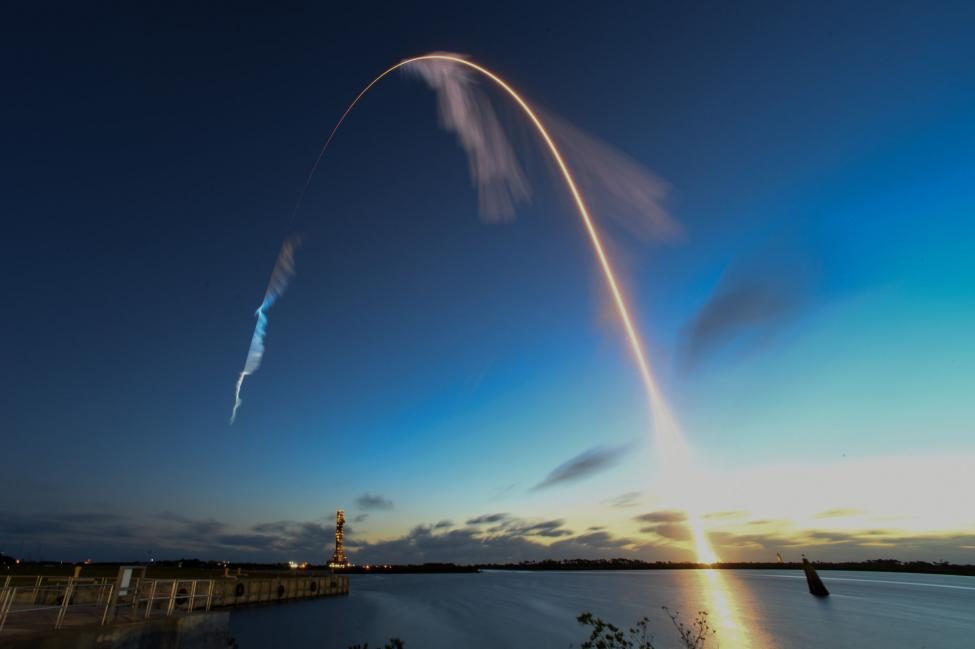
Image used with permission by copyright holder

Now, NASA and Boeing have disclosed they discovered another issue that occurred during the test flight. A “valve mapping error” occurred in the software controlling the separation of the crew module and the service module. These sections are important for landing the capsule, as during landing the crew stays in the crew module, while the service module completes the deorbit burn before splitting off to land in the ocean.

The two different configurations of the craft, one with crew and service modules together and one with them separated, require two different mappings for the thrusters. But during the orbital test flight, both conditions were mistakenly assigned the same mapping.

The engineers involved in the test flight were able to spot and correct this issue before it came time for separation, so everything worked out for the landing. However, if they had not caught this issue, the two different modules could have bumped together during separation, which could have knocked the crew module off course and could have caused serious problems or even destroyed the craft.

NASA expressed concern about the potential severity of both of the issues, saying in a blog post that “both errors could have led to risk of spacecraft loss” and that “there were numerous instances where the Boeing software quality processes either should have or could have uncovered the defects.”

Before making plans to move forward with more Starliner testing, NASA says it intends to perform a further investigation into the root cause of the issues and expects a decision on its review to be available in the next few weeks.

Georgina Torbet
Georgina has been the space writer at Digital Trends space writer for six years, covering human space exploration, planetary…
Google wants Gemini to help build the next big scientific breakthrough
Gemini for Science pushes agentic AI deeper into real research workflows
gemini for science

Google is building Gemini deeper into the research workflow, starting with ideas, tests, and scientific literature.

At Google I/O 2026, the company announced Gemini for Science, an experimental suite built around agentic AI science. It targets the manual work behind discovery, including hypothesis building, computational testing, and literature review.

Read more
You can now walk through AI versions of real places with Google’s Project Genie
Text, Logo

Google is pushing its experimental AI world-building project into surprisingly realistic territory. The company announced that Project Genie can now use real-world imagery from Google Street View to generate interactive virtual environments, blending real locations with imaginative AI-generated styles.

At its core, Genie is what Google calls a “world model” — an AI system capable of creating explorable digital environments where AI agents, robots, or even users can interact naturally. Until now, those worlds were mostly synthetic. But with this new update, Genie can anchor itself to real places pulled directly from Street View imagery. This is actually where things start feeling like a glimpse into the future of simulation.

Read more
Google wants to reinvent your TV remote with Gemini and pointer controls
Computer Hardware, Electronics, Hardware

Google is making a bigger play for the living room, and this time, it is not just about what you watch — it is also about how you interact with your TV. At Google I/O 2026, the company revealed a fresh batch of updates for Google TV and Android TV developers, all centered around one idea: TVs are no longer passive screens sitting in the corner of your house. With more than 300 million monthly active devices across Google TV and Android TV, Google clearly sees the television as its next major AI battleground. And Gemini is now at the center of that strategy.

The company says Gemini is already helping users discover content through natural voice interactions. But Google now wants the experience to feel more dynamic and conversational, almost like searching the web — except on your couch. Instead of only surfacing static results, Gemini on Google TV can now respond with a combination of visuals, videos, and text snippets to answer queries. So if someone asks for a thriller with a strong female lead or a documentary about space exploration, Gemini pulls contextual recommendations directly from streaming apps and their metadata.

Read more