


Google is making a bigger play for the living room, and this time, it is not just about what you watch — it is also about how you interact with your TV. At Google I/O 2026, the company revealed a fresh batch of updates for Google TV and Android TV developers, all centered around one idea: TVs are no longer passive screens sitting in the corner of your house. With more than 300 million monthly active devices across Google TV and Android TV, Google clearly sees the television as its next major AI battleground. And Gemini is now at the center of that strategy.
The company says Gemini is already helping users discover content through natural voice interactions. But Google now wants the experience to feel more dynamic and conversational, almost like searching the web — except on your couch. Instead of only surfacing static results, Gemini on Google TV can now respond with a combination of visuals, videos, and text snippets to answer queries. So if someone asks for a thriller with a strong female lead or a documentary about space exploration, Gemini pulls contextual recommendations directly from streaming apps and their metadata.
For streaming platforms, that is a massive shift. Discovery on TVs has historically been messy, fragmented, and heavily dependent on whichever app you opened first. Google seems to be positioning Gemini as the layer that sits above all of that, acting as an intelligent content guide rather than a basic search tool.
Your TV remote is evolving
Interestingly, Google’s bigger announcement may not actually be Gemini itself. It is the remote control. The company says future Google TV devices will increasingly support “pointer remotes,” which bring motion and cursor-based navigation to televisions. Think of it as a halfway point between a traditional TV remote and a computer mouse. That might sound minor, but it changes how TV apps need to work.
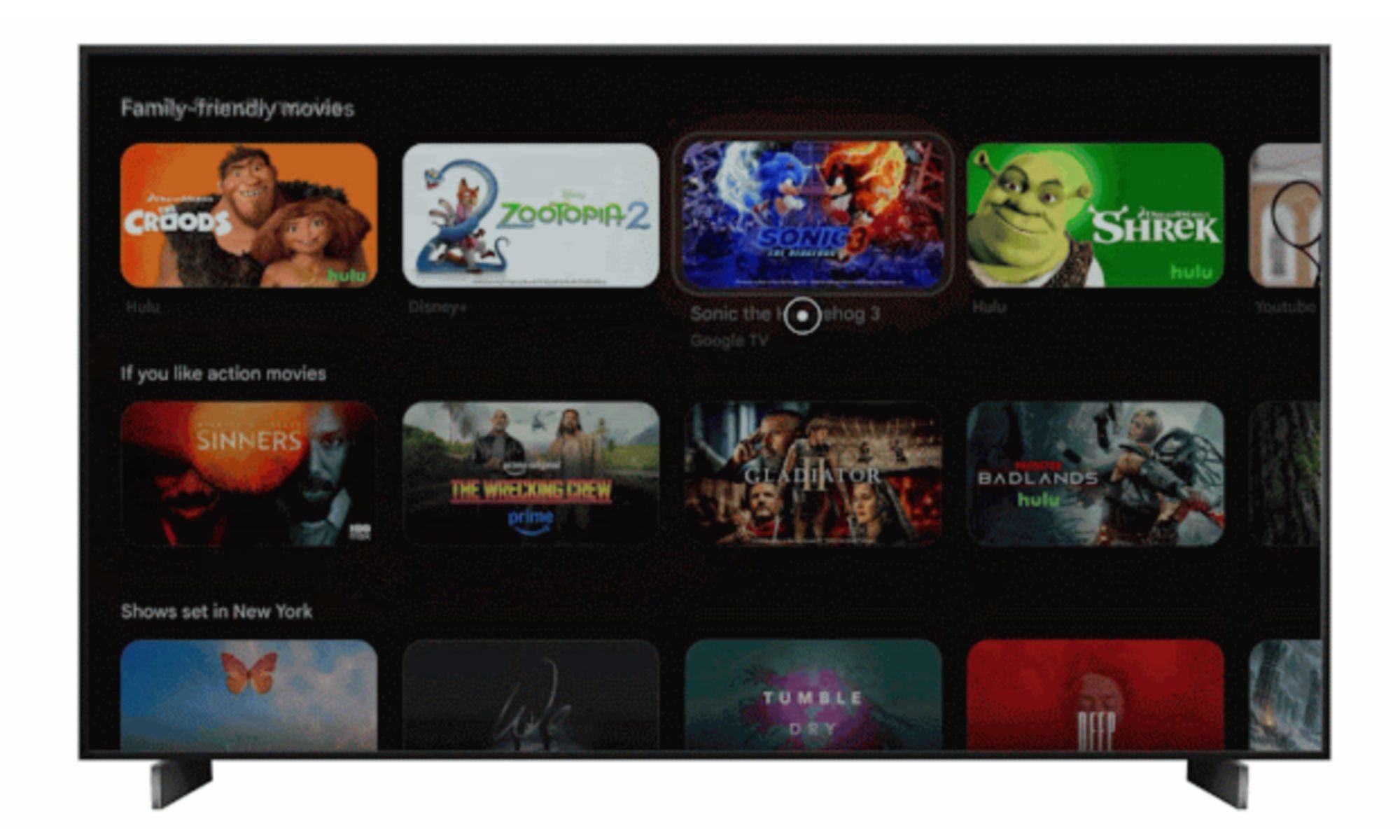
Most TV interfaces today are designed around rigid D-pad navigation — up, down, left, right, select. Pointer controls introduce hovering, free-form movement, touchpad scrolling, and cursor clicks. Suddenly, TV apps have to behave more like desktop or tablet interfaces. Google is now asking developers to start preparing their apps for this transition. That includes adding hover states to buttons and UI elements, supporting smoother scrolling interactions, and ensuring apps can properly respond to cursor-based clicks instead of only directional focus controls.
And honestly, this feels overdue. TV interfaces have remained surprisingly clunky for years, especially compared to how fluid smartphones and tablets have become. Streaming apps often feel slow, restrictive, and awkward to navigate when you are browsing massive content libraries. Pointer-based interaction could make that experience significantly faster — assuming developers properly optimize their apps.
Google is pushing developers to prepare now
To help developers adapt, Google says apps built with Jetpack Compose already have an easier path forward because many modern interaction models are supported natively. The company is also encouraging developers to test these new interactions today using standard Bluetooth or wired mice connected to Google TV devices. That way, they can better understand how hover effects, scrolling behavior, and cursor inputs work on large-screen interfaces. Google notes, however, that pointer remotes are naturally less precise than an actual mouse because users are typically sitting several feet away from the television and making rough gestures from the couch. To compensate, developers are being advised to create larger interactive targets and more forgiving UI layouts.

Finally, developers can now officially declare pointer remote support on Google Play, making compatible TV apps easier for users with newer remotes to discover. All of this paints a fairly clear picture of where Google TV is heading next. TVs are slowly turning into more active, AI-driven computing platforms rather than simple streaming boxes. Gemini handles discovery, pointer remotes modernize navigation, and developers are being nudged to rethink the decade-old TV app experience altogether. Whether users actually embrace waving remotes around their living rooms is another question entirely. But Google clearly believes the future of TV interaction needs to feel smarter, faster, and a lot less dependent on endlessly clicking directional buttons.


