  1. Home
  2. Emerging Tech
  3. Outdoors
  4. News

If Apple designed a scooter, it would probably look a lot like The Eagle

Add as a preferred source on Google

Apple’s Jony Ive doesn’t design scooters, but if he did we’re imagining they may well be along the lines of The Eagle, a forthcoming ultra-thin carbon fiber electric scooter created by Swiss and Lithuanian startup Citybirds. Recently shown off at the ISPO trade expo in Munich, Germany, The Eagle promises to join the ranks of best escooters when it finally hits the streets.

The scooter is described by its creators as the thinnest and lightest electric scooter concept on Earth, with a folded thickness of just 30mm. This makes it perfect for both storing in your home and office, and any commute that requires you to fold it up for space saving. It features a 36-volt motor that will grant you a top speed of around 25 kilometers per hour (approximately 16 mph) and a battery that will give you a range of 15 kilometers (nine miles) or double that with an extra battery.

Recommended Videos

In addition to this, it will boast both plug-in and inductive charging, and a pop-up display in the handlebars, which will offer turn-by-turn directions, as well as the possibility of acting as another external display for information like media notifications.
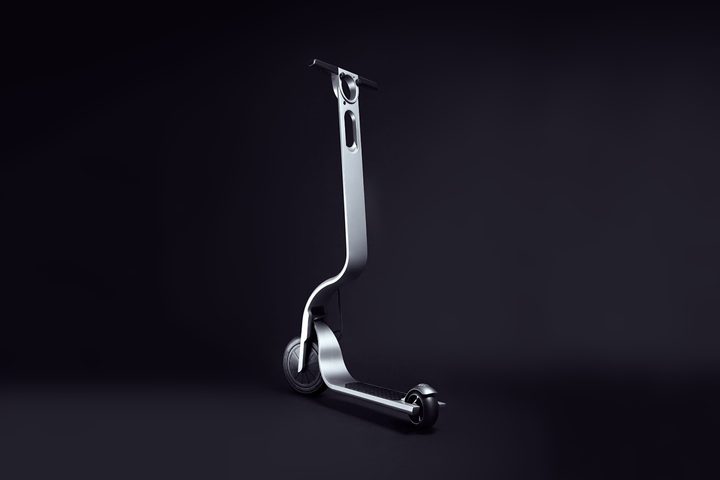
Image used with permission by copyright holder

“We started designing Citybirds scooters in 2014, when the first iconic non-electric Pigeon scooter design appeared on Kickstarter,” CEO and designer Ignas Survila told Digital Trends. This was followed by the newer Raven scooter before the team turned its attention to creating the sleekly impressive Eagle e-scooter.

Don’t expect it to be here in time for this summer, though. “We present it not as a finished product, but as a concept that will only appear on the market in 2020,” Survila said. There are no more details at present about the exact availability of the scooter, nor its planned market price. However, Survila said it won’t be prohibitively expensive. “For sure it won’t be more than 1,500 euros,” he said.

While the equivalent of $1,840 isn’t exactly cheap, it’s also not in the upper echelons of escooter prices. Given the chic design and promise of some nifty smart features, it seems a pretty fair price. Now we guess we should better get saving some extra cash.

Luke Dormehl
I'm a UK-based tech writer covering Cool Tech at Digital Trends. I've also written for Fast Company, Wired, the Guardian…
This new video editor lets Claude organize, generate, and edit right on your timeline
Laptop running Claude Fable

For years, AI video tools have mostly lived outside the editing process. You generate a clip, download it, import it into your editor, and continue working. A new app called Palmier Pro aims to eliminate some of those extra steps by bringing AI directly into the video timeline.

The newly launched software, available for macOS, is being marketed as a video editor that Claude can use. Instead of treating AI as a separate chatbot or content generator, Palmier is designed to let an AI assistant interact with an active video project and make changes within it.

Read more
MIT experts just made a special memory. When humans forget, robots will just fetch the lost item
MIT’s new robot memory could make lost keys your robot’s problem
A robotic arm.

Robots may be the new best friend for forgetful humans. MIT researchers have developed a long-term memory framework for robots that can help them build a detailed mental model of large, complicated spaces. The system is called DAAAM, short for Describe Anything, Anywhere, Anytime, at Any Moment, and the goal is to let robots remember objects, locations, and details over time.

This might not sound headline-grabbing, though robots are still surprisingly bad at something humans do casually. You may remember that your keys were on the kitchen counter last night, or that a half-finished part was left in a factory bin. However, a robot working beside you would struggle to connect that object and location in a useful way.

Read more
A strange little electric nose may be the missing piece for smart fridges
The carbon nanotube chip detects food, allergens, and spoilage signals at room temperature.
Electronics, Hardware, Printed Circuit Board

UC Berkeley researchers have built an electric nose that can detect gases tied to spoiled food and common allergens more consistently than a human sniff test. The device uses a 16-sensor gas sensor chip that turns reactions with food-related gases into electrical signals.

Kitchen judgment can get messy because food doesn't always look or smell risky before it becomes a problem. Milk, eggs, chicken, fruit, and nuts release different chemical signatures, and people usually have to decide with whatever their nose catches in the moment.

Read more