1. Home
  2. Emerging Tech
  3. News

How to move a mole: NASA scientists design rescue operation for Mars lander

Add as a preferred source on Google
NASA InSight: A Plan to Get the Mole Moving Again

NASA’s InSight lander is facing some challenges as it investigates the Red Planet. Earlier this year it deployed its drilling instrument, the Heat Flow and Physical Properties Package (HP3) to learn about temperature variations within the Martian soil. But a part of the instrument called the mole got stuck while drilling.

Recommended Videos

Since then scientists have been trying to figure out what caused the problem —  and what to do next. They believe the mole is stuck because there is not enough friction in the soil. In other areas of Mars, the friction in the soil is higher, so the mole was designed to let loose soil flow around it and hold it in place. But in this particular area, they think the soil may have become compacted and created a gap around the mole. The mole therefore has nothing to grab onto and can’t move.

Alternatively, the mole could have hit a rock and gotten stuck.
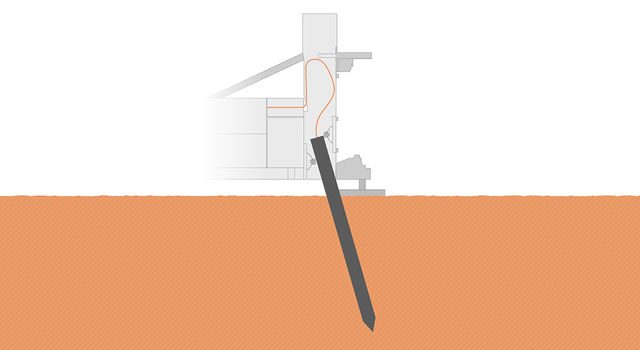
The self-hammering mole, part of the Heat Flow and Physical Properties Package (HP3) on NASA’s InSight lander, was only partially buried in the soil of Mars as of early June 2019, as shown in this illustration. NASA/JPL-Caltech/DLR

The proposed solution is to move the mole’s support structure. If the mole can be moved, this could potentially solve either problem.

If the mole has just hit a small rock, moving to another area will allow it to dig again. And if the problem is the low density soil, then InSight could use its arm to compact the soil before digging begins to create more friction. “Moving the support structure will give the team a better idea of what’s happening,” HP3 Principal Investigator Tilman Spohn of the German Aerospace Center (DLR) explained in a statement. “But it could also let us test a possible solution. We plan to use InSight’s robotic arm to press on the ground. Our calculations have shown this should add friction to the soil near the mole.”

The plan does have risks. The mole will stay in place while the support structure is moved around it in three steps over the course of a week. Then it comes time to move the mole itself. Once the mole is taken out of the soil, it may not be possible to get it back in.
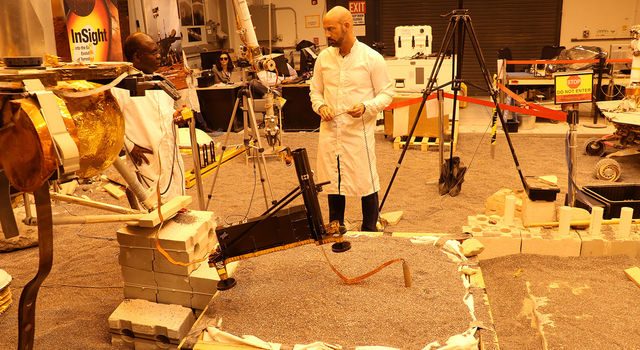
Engineers in a Mars-like test area at NASA’s Jet Propulsion Laboratory try possible strategies to aid the Heat Flow and Physical Properties Package (HP3) on NASA’s InSight lander, using engineering models of the lander, robotic arm and instrument. NASA/JPL-Caltech

The team hopes to start moving the support structure by the end of June and to have the mole in its new position by mid-July. For more information, the InSight team has answered questions about their efforts to save the mole on NASA’s website.

Georgina Torbet
Georgina has been the space writer at Digital Trends space writer for six years, covering human space exploration, planetary…
Edge browser on mobile gets a huge upgrade that makes it a worthy pick over Chrome
Edge mobile gets smarter just before Chrome’s big Gemini moment
Microsoft Edge on a phone

Chrome is still the default browser for many smartphone users, but Microsoft’s latest Edge update gives them a practical reason to try something else.

Microsoft has announced a major Copilot update for Edge across desktop and mobile. The rollout comes ahead of Google’s Gemini-powered Chrome upgrade for Android, which is expected in June, giving Edge a chance to stand out on phones before Chrome’s next big AI push.

Read more
After flubbing with Siri, Apple plans to host AI agents on the App Store
One problem is about money Apple won't commit to not charging. The other is about AI agents Apple can't figure out how to control. WWDC needs to solve both.
Electronics, Mobile Phone, Phone

Apple is currently facing a Siri problem that has nothing to do with Siri at all. With WWDC 2026 just weeks away, The Information reports the company is actively courting developers to integrate their apps with the new Siri coming in iOS 27. 

The mechanism powering the overhauled Siri, App Intents, is an API that lets Siri execute actions inside third-party apps without you actively opening them, which sounds quite useful, I’d say. However, some of the world’s largest developers are dragging their feet on it, not because it’s tough, but because Apple left the door open on charging for it later.

Read more
EV batteries just need some AI top-up nudge, and they get a big 23% life boost, finds research
Charging fast and lasting long seemed impossible. A new AI trick says otherwise.
EV Charging

EV battery charging technology has always had to find the right balance between charging speed and battery longevity. If the charging speed is too fast, it wears down the battery. If the charging is too slow, nobody is happy. 

Researchers Meng Yuan from Victoria University of Wellington and Changfu Zou from Chalmers University of Technology in Sweden may have cracked this long-standing problem using an AI technique called deep reinforcement learning, and the results are pretty encouraging.

Read more