  1. Home
  2. Emerging Tech
  3. Mobile
  4. Legacy Archives

Jackery Fit portable battery offers fast mobile device charging

Add as a preferred source on Google

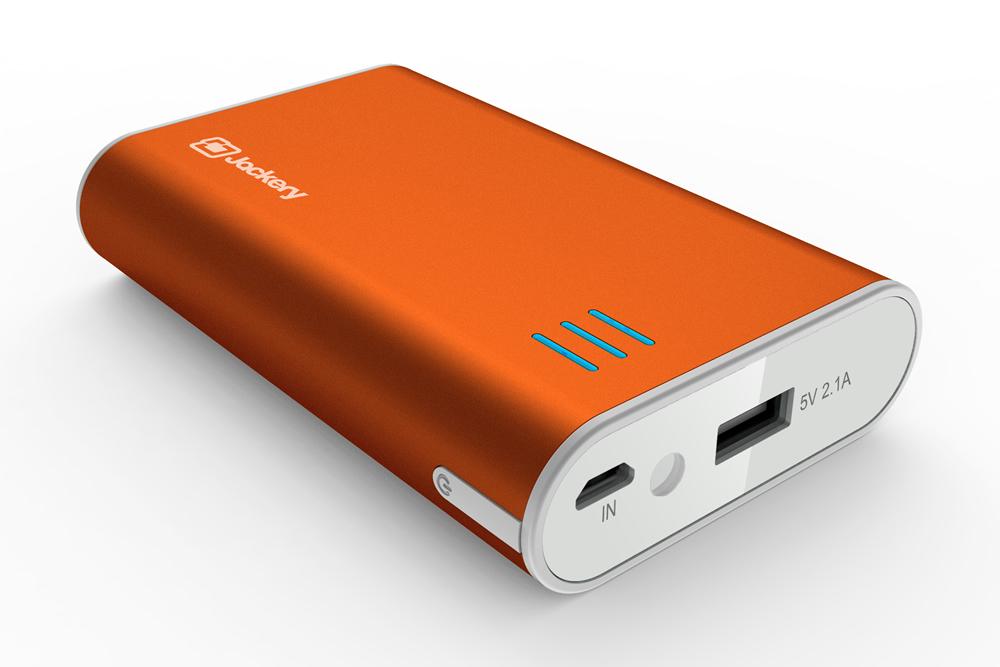
Announced recently on the official Jackery site, the portable battery manufacturer is expanding the company’s product line with the quick-charging Jackery Fit. Outfitted with 2.1A output at 5V, the battery is similar to Apple’s iPad charger. This makes the Jackery Fit ideal for smaller devices like smartphones, like the iPhone 5 and Samsung Galaxy S4, as well as various tablets, MP3 players and portable gaming devices. As long as the mobile device has a charging cable with a USB connection, the Jackery Fit should be able to charge it.

Ideal for heavy travelers, the Jackery Fit comes equipped with a 7800mAh power capacity and can hold a charge for up to six months. These types of batteries are particularly useful during flights as portable electronics can continue to charge while the user watches movies or television shows on the device. On the front of the Jackery Fit, users will find three blue LED bars that indicate how much battery life is left in the unit. This can be viewed by pressing the power button along the side of the Jackery Fit one time. 
jackery-fit
Image used with permission by copyright holder

Tapping the button twice activates an additional white LED light on the top of the battery. This is a handy flashlight feature that’s easier to get to than fumbling through menus on a smartphone. According to Jackery, that flashlight feature could remain active for 450 hours on a single charge of the battery. Jackery also estimates that the Fit can charge an iPhone completely three to four times before requiring a recharge or two to three times for the Samsung Galaxy S4.

Recommended Videos

The Jackery Fit comes with a Micro USB to USB 2.0 cable for charging the battery, weighs about 7 ounces and is approximately the size of a deck of cards. The retail MSRP for the Jackery Fit is $59.95, but the company is pricing the new battery around $40 on the official site as well as Amazon. 

Mike Flacy
By day, I'm the content and social media manager for High-Def Digest, Steve's Digicams and The CheckOut on Ben's Bargains…
You can now walk through AI versions of real places with Google’s Project Genie
Text, Logo

Google is pushing its experimental AI world-building project into surprisingly realistic territory. The company announced that Project Genie can now use real-world imagery from Google Street View to generate interactive virtual environments, blending real locations with imaginative AI-generated styles.

At its core, Genie is what Google calls a “world model” — an AI system capable of creating explorable digital environments where AI agents, robots, or even users can interact naturally. Until now, those worlds were mostly synthetic. But with this new update, Genie can anchor itself to real places pulled directly from Street View imagery. This is actually where things start feeling like a glimpse into the future of simulation.

Read more
Google wants to reinvent your TV remote with Gemini and pointer controls
Computer Hardware, Electronics, Hardware

Google is making a bigger play for the living room, and this time, it is not just about what you watch — it is also about how you interact with your TV. At Google I/O 2026, the company revealed a fresh batch of updates for Google TV and Android TV developers, all centered around one idea: TVs are no longer passive screens sitting in the corner of your house. With more than 300 million monthly active devices across Google TV and Android TV, Google clearly sees the television as its next major AI battleground. And Gemini is now at the center of that strategy.

The company says Gemini is already helping users discover content through natural voice interactions. But Google now wants the experience to feel more dynamic and conversational, almost like searching the web — except on your couch. Instead of only surfacing static results, Gemini on Google TV can now respond with a combination of visuals, videos, and text snippets to answer queries. So if someone asks for a thriller with a strong female lead or a documentary about space exploration, Gemini pulls contextual recommendations directly from streaming apps and their metadata.

Read more
Google’s Gemini might be testing weekly limits, and free users won’t love it
Logo, Disk, Symbol

Right now, almost every major AI chatbot follows the same playbook: hook people with a surprisingly capable free tier, then gently nudge them toward a subscription once they start relying on it too much. And honestly, for most users, the free versions are already good enough. You can ask questions, generate images, summarize documents, and even brainstorm ideas without constantly hitting a paywall. That is why a newly spotted change inside Google’s Gemini app feels particularly interesting.

A user on X has shared a screenshot suggesting Google may be testing stricter usage tracking and possible weekly limits inside Gemini. The screenshot shows a new section that explains, “Plan limits determine how much you can use Gemini over time.” This means Google could be preparing a more aggressive system that measures how frequently free users interact with Gemini, especially when using heavier AI models.

Read more