  1. Home
  2. Emerging Tech
  3. News

KitKat has a special chocolate wrapper that cuts off your phone from the outside world

KitKat turned its iconic slogan into a signal-blocking chocolate wrapper!

Add as a preferred source on Google
kitkat-break-mode-wrapper-faraday-cage
Ogilvy Colombia / KitKat

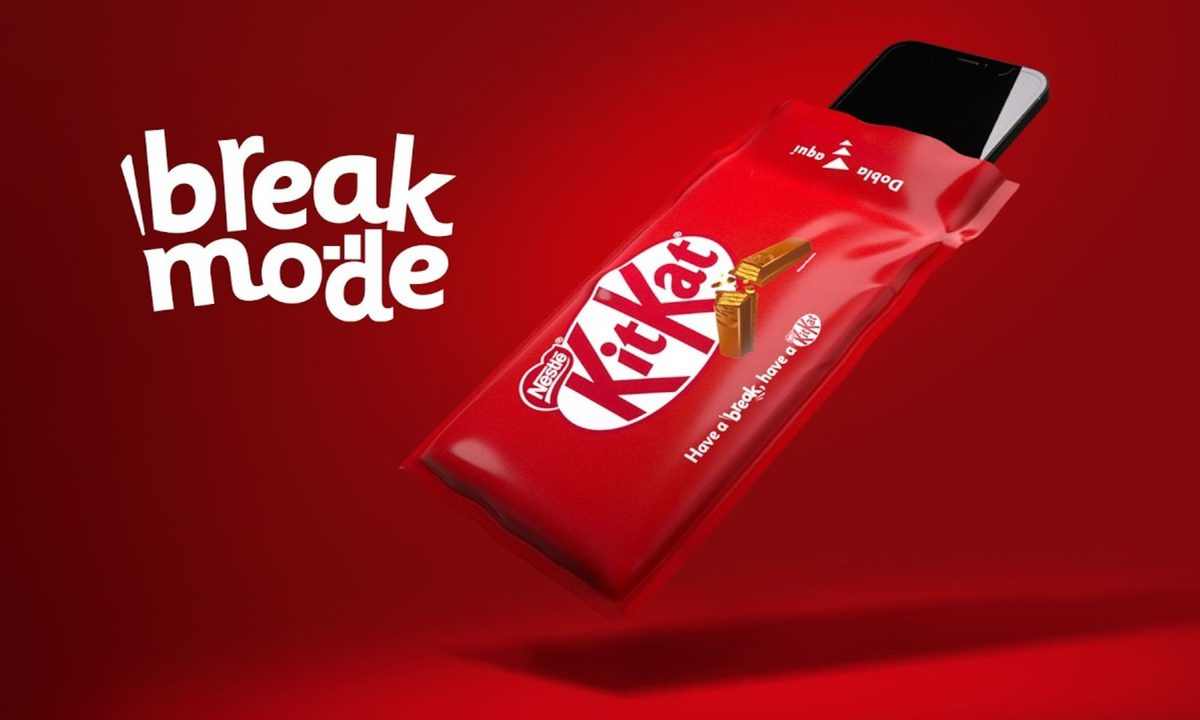
You know that feeling when you really need a break, but your phone keeps buzzing anyway? KitKat heard you. The chocolate brand, in collaboration with creative agency Ogilvy Colombia, has unveiled something called Break Mode, a KitKat wrapper that doubles as a Faraday cage for your phone.

A Faraday cage, for the uninitiated, is a conductive enclosure that blocks electromagnetic signals. The technology has traditionally lived in medical labs and data security facilities. Now it lives in a red chocolate wrapper, which is honestly something nobody saw coming.

How does KitKat’s Break Mode wrapper actually work?

The wrapper looks like an oversized KitKat envelope where you can put your phone. Once it is in there, all signals are completely cut off, including calls, 4G and 5G connectivity, Bluetooth, and GPS.
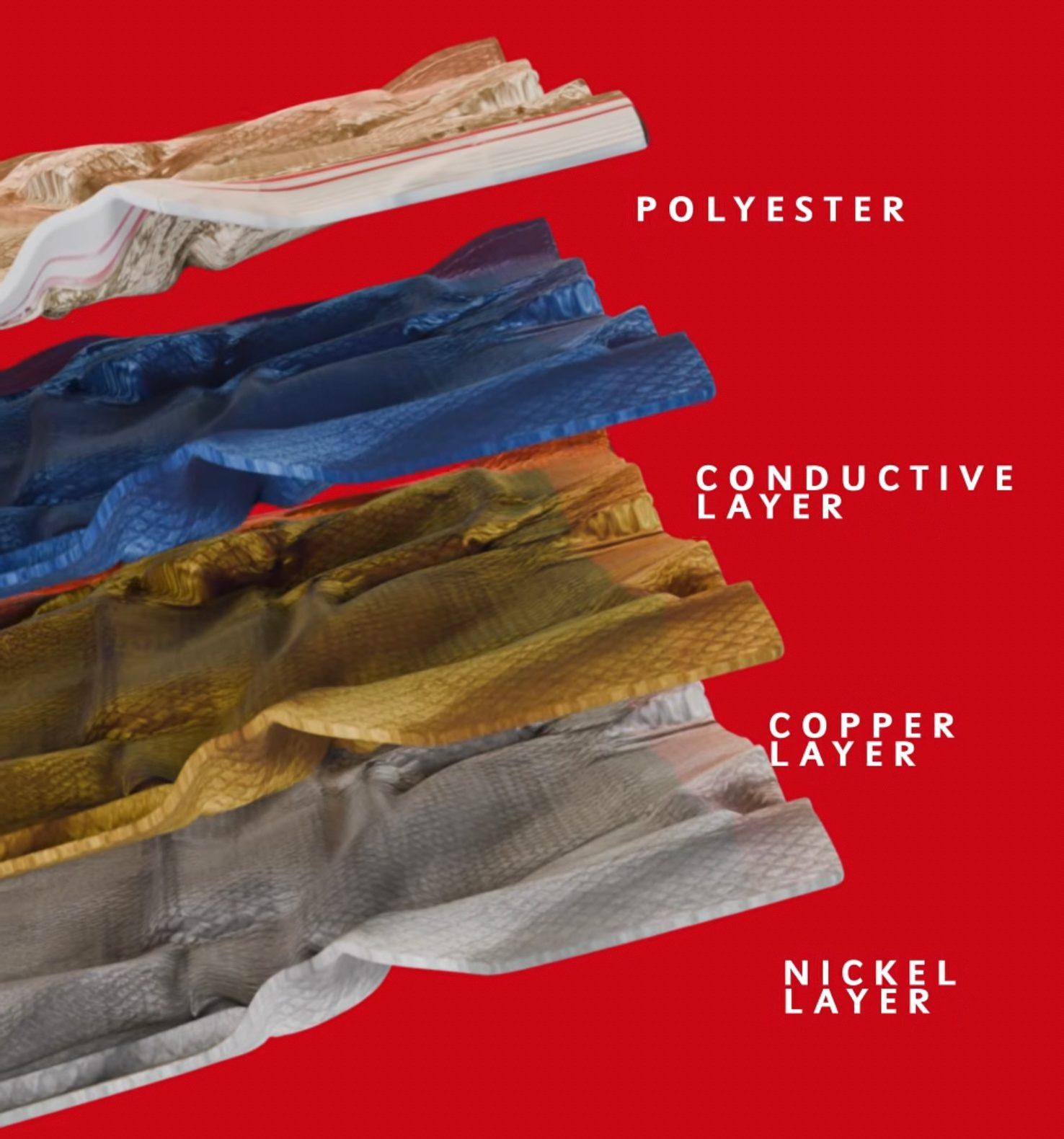
The magic happens in the layers of the wrapper. Copper serves as the primary conductive material, polyester layers give it structural integrity, a polypropylene outer coating handles durability, and a precision-engineered sealing mechanism makes sure no signal sneaks through.

Recommended Videos

Ogilvy tested it under rigorous conditions, including RF signal attenuation, cellular signal strength, and electromagnetic isolation checks, confirming 100% effectiveness. The packaging is also built to last around a year, and its materials can be separated and recycled responsibly afterward.

Can you actually buy the KitKat Break Mode wrapper?

Not quite yet. Break Mode was introduced at Panama’s Expo Tech conference, a concert, and a university campus, giving people a taste of the experience directly. Its commercial viability is still being evaluated. So for now, it remains a very clever marketing concept.

The food-tech crossover is clearly becoming its own genre, and KitKat is not the first brand to blur the line between food and technology. A lollipop that plays music directly in your head when you bite it made headlines at CES 2026 for exactly the kind of wild reason you would expect. Meanwhile, researchers have also explored using ChatGPT to evaluate the sensory qualities of food like chocolate brownies.

Manisha Priyadarshini
Manisha Priyadarshini is a tech and entertainment writer with over nine years of editorial experience.
Starlink Mini may finally cut the cord with a battery-powered dish
SpaceX is fixing the biggest portable problem with Starlink
A Starlink dish.

Starlink Mini is already the version of SpaceX’s internet dish built for on-the-go connectivity. It has found its fans in travelers, campers, vanlifers, and others who live off the grid. But new firmware clues suggest SpaceX may be getting ready to make it even more portable by putting the battery inside the dish itself.

According to a PCMag report, university researcher Jinwei Zhao spotted new Starlink firmware strings that point toward a possible Starlink Mini model with an integrated battery. The key clue is a new DishBatteryStats reference, which appears designed to return battery-specific information rather than simply detect that the dish is plugged into some random external power bank.

Read more
China will put a unique ID code on humanoid robots, just like citizen ID for us humans
China is treating its humanoid robots like citizens. assigning each one a unique ID code from birth to recycling.
Robot with four arms

China has launched a national programme that will assign every humanoid robot manufactured in the country a unique digital identity code, effectively a citizen ID, but for bipedal machines (those that can balance and walk/run on two legs). 

The initiative, called the Humanoid Full Lifecycle Management Service Platform, was announced on Friday. It is led by the Humanoid Robotics and Embodied Intelligence Standardization committee, which is under China's Ministry of Industry and Information Technology (via South China Morning Post).

Read more
Romantic AI bots continue to ruin lives, and the latest horror story is simply shocking
A story that sounds like Black Mirror, except it’s completely real.
Man using phone on bed

For years, romantic AI relationships felt like distant sci-fi fiction, but reality caught up far faster than anyone expected, and it’s looking deeply unsettling already. A disturbing new Wall Street Journal report details how a 57-year-old man became emotionally obsessed with a customized ChatGPT companion named “AImee,” eventually spiraling into delusions, financial loss, hospitalization, and fractured relationships.

One ChatGPT companion reportedly spiraled into obsession and delusion

Read more