  1. Home
  2. Emerging Tech
  3. News

Smartphone battery capacity could be increased using nanochain material

Add as a preferred source on Google

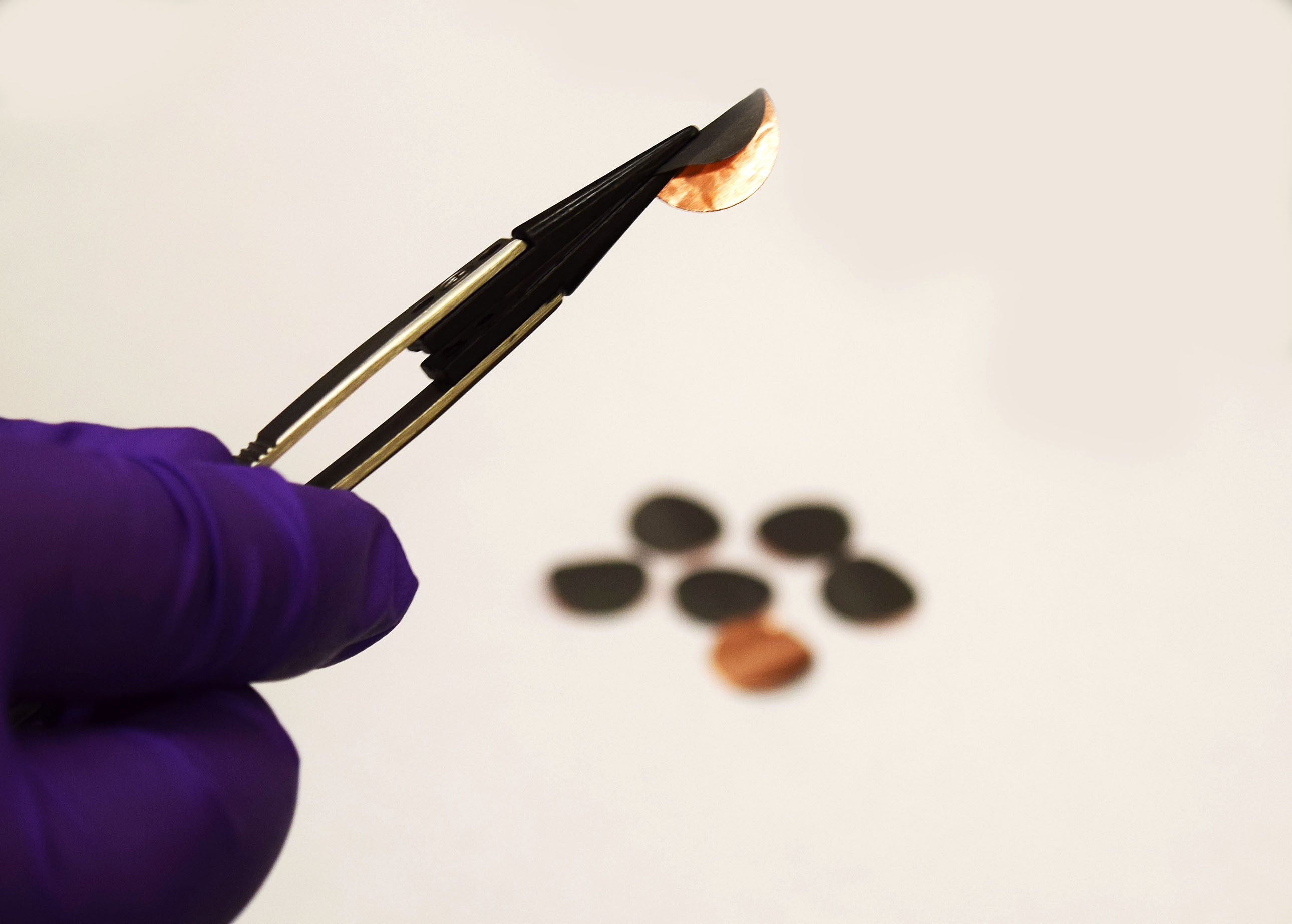
A new method could allow better materials to make up battery electrodes by converting them into a nanochain structure, the black material on this copper electrode of a coin cell. Purdue University image/Kayla Wiles

If you’re frustrated by the fact that electronic gadgets continue to get more sophisticated but your smartphone battery still can’t seem to last a full day, then new research from Purdue University could offer some relief. Chemists there have developed a new method for designing lithium-ion batteries which could make them last longer and charge faster.

Recommended Videos

The amount of charge held by a battery is dependent on the number of lithium ions it can store. Graphite is used for batteries even though other materials can hold more lithium ions because these other materials are too heavy to be practically usable. To make a more efficient battery, the researchers used an element called antimony to create a net structure called a “nanochain.”

When compared to graphite electrodes, nanochain electrodes had twice the lithium-ion capacity. And the effect lasted over the long term, as the capacity remained for 100 cycles of charging and discharging. “There’s essentially no change from cycle 1 to cycle 100, so we have no reason to think that cycle 102 won’t be the same,” Vilas Pol, one of the authors of the study and an associate professor of chemical engineering at Purdue University, explained in a statement.
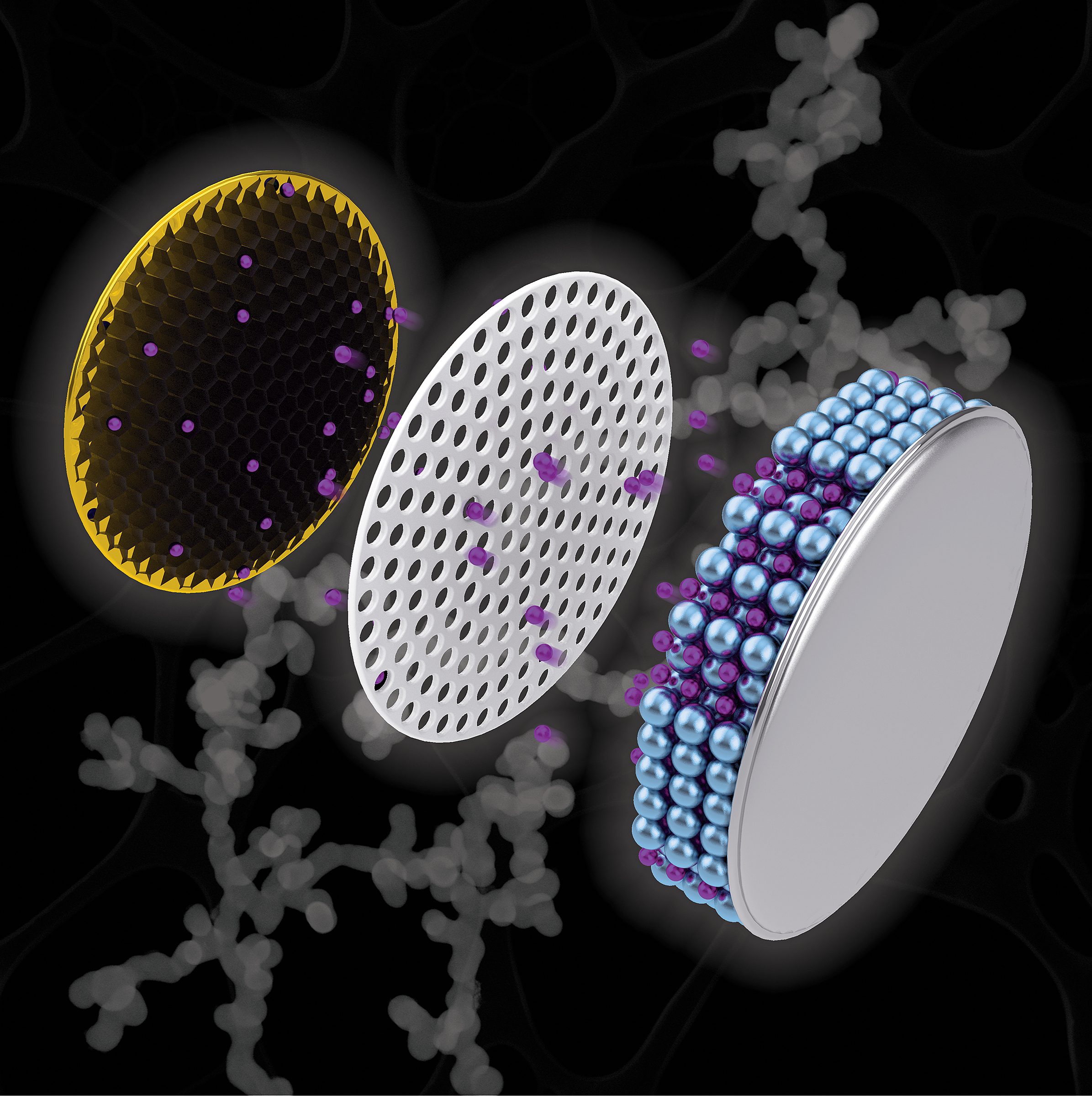
Artistic depiction of a coin cell battery with a copper electrode (left) containing a black nanochain structure, which researchers have discovered could increase the capacity of a battery and cut charging time. Purdue University illustration/Henry Hamann

Similar materials have been used in the past to expand battery capacity, but these materials can be dangerous as they can expand by up to three times. “You want to accommodate that type of expansion in your smartphone batteries,” Pol said. “That way you’re not carrying around something unsafe.”

To allow for expansion of the material, the scientists applied chemical compounds including a reducing agent and a nucleating agent. These create pores within the nanochain which make space for expansion and prevent electrodes from failing. The next step is for the researchers to try scaling up the design to the size of a phone battery.

The findings are published in the journal Applied Nano Materials.

Georgina Torbet
Georgina has been the space writer at Digital Trends space writer for six years, covering human space exploration, planetary…
China’s UBTech unveils eerily lifelike companion robots, and yes, they want to move in with you
UBTech's new humanoid robots are built for companionship, using emotion-aware AI, long-term memory, and humanlike expressions to become part of your everyday life.
UBTech Uworld U1 series robot launch

A humanoid robot designed to live in your house, learn your habits, and pick up on your mood without being prompted is no longer science fiction. Shenzhen-based UBTech Robotics unveiled its Uworld U1 series this week, introducing three robots built for companionship rather than factory work or household chores.

A body that moves like yours, and a brain that reads how you feel

Read more
This $249 LED sign wants to fix your work-life balance
My productivity isn't worth $249... or is it?
Flipper Busy Bar

Flipper Devices has built a reputation among hackers and hardware enthusiasts with the Flipper Zero, a pocket-sized gadget capable of interacting with RFID, NFC, Bluetooth, and other wireless protocols. Now, the London-based company is taking a very different approach.

Its latest product, the Busy Bar, is a desktop productivity display designed to help users stay focused, signal their availability, and automate parts of their workflow. After being teased last year, the device is finally going on sale on July 14. While the concept is genuinely clever, its starting price of up to $249 may make many buyers think twice.

Read more
FAA clears the runway for Mach flights that could cut travel times nearly in half
New regulations could dramatically reduce travel times while keeping sonic booms under control.
Supersonic Flight Time

The dream of flying faster than the speed of sound just took a major step forward. The Federal Aviation Administration (FAA) has announced a proposed rule that would create the first noise-based certification standards for a new generation of supersonic passenger aircraft, removing one of the biggest regulatory hurdles standing in the way of commercial Mach 1+ flights.

The goal is simple: fly faster without the boom

Read more