1. Home
  2. Emerging Tech
  3. News

SpaceX’s 2018 Mars mission has a few legal hurdles to clear, but NASA’s helping out

Add as a preferred source on Google

Elon Musk’s SpaceX made waves by announcing in late April that it planned to field a Mars mission by 2018. While those plans appear to be on track, legal and political issues remain. Based on what Digital Trends has learned, the company is doing what it needs to do to make sure it’s clear sailing.

At issue is a nearly 50-year-old multinational agreement called the Outer Space Treaty that governs how activities in space should operate. While it’s fairly clear on exploratory issues, it’s much less clear on exoplanetary settlements and exploitation of resources. It also places responsibility for these activities at the feet of the nations who signed on.

Recommended Videos

The U.S. Government is working through the issues raised by SpaceX’s planned mission, Motherboard reports. Digital Trends was able to confirm Motherboard’s story, and NASA and SpaceX already have a “no-funds exchanged” agreement to work together at least on logistics and support for the mission.

Such an agreement is vital, considering Article VI of the treaty states that signees “shall bear international responsibility for national activities in outer space, including the moon and other celestial bodies, whether such activities are carried on by governmental agencies or by nongovernmental entities,” and that the signee governments “require authorization and continuing supervision by the appropriate State Party to the Treaty.”

This likely means whatever shape SpaceX’s mission does take in the end, it will likely be in some form of a public-private partnership to ensure the company is within the limits of international law.

While the Outer Space Treaty does also ban appropriation of space resources, from what we’ve gathered, part of the agreements already in place between SpaceX and NASA address these issues. This might be the most important part of the two entities’ work together, considering Musk’s ultimate goal is a permanent settlement on Mars spearheaded by SpaceX itself.

The issue in the end, however, could be moot. As we reported last year, the U.S. Government passed a law permitting the mining of asteroids by commercial interests. In and of itself, the new laws violate the Outer Space Treaty, but Congress and our president doesn’t seem to mind.

Ed Oswald
For fifteen years, Ed has written about the latest and greatest in gadgets and technology trends. At Digital Trends, he's…
China will put a unique ID code on humanoid robots, just like citizen ID for us humans
China is treating its humanoid robots like citizens. assigning each one a unique ID code from birth to recycling.
Robot with four arms

China has launched a national programme that will assign every humanoid robot manufactured in the country a unique digital identity code, effectively a citizen ID, but for bipedal machines (those that can balance and walk/run on two legs). 

The initiative, called the Humanoid Full Lifecycle Management Service Platform, was announced on Friday. It is led by the Humanoid Robotics and Embodied Intelligence Standardization committee, which is under China's Ministry of Industry and Information Technology (via South China Morning Post).

Read more
Romantic AI bots continue to ruin lives, and the latest horror story is simply shocking
A story that sounds like Black Mirror, except it’s completely real.
Man using phone on bed

For years, romantic AI relationships felt like distant sci-fi fiction, but reality caught up far faster than anyone expected, and it’s looking deeply unsettling already. A disturbing new Wall Street Journal report details how a 57-year-old man became emotionally obsessed with a customized ChatGPT companion named “AImee,” eventually spiraling into delusions, financial loss, hospitalization, and fractured relationships.

One ChatGPT companion reportedly spiraled into obsession and delusion

Read more
China’s DeepSeek trims the price of its flagship AI model by 75%, and it could be a huge shift
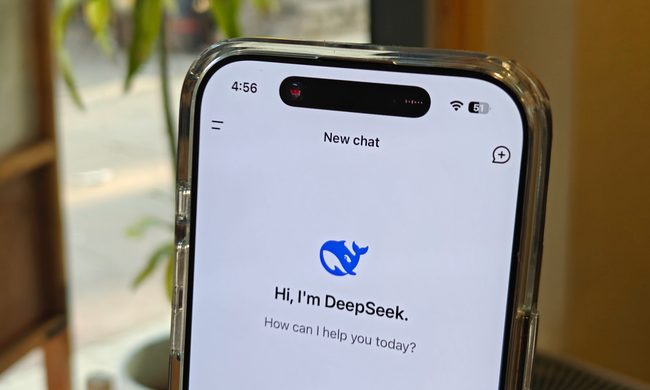
DeepSeek AI chatbot running on an iPhone.

Chinese AI startup DeepSeek just made one of the boldest pricing moves in the artificial intelligence race so far. The company announced it is permanently slashing the cost of its flagship V4-Pro AI model by 75%, bringing prices down to just a fraction of what developers were paying only weeks ago. AI companies worldwide have been facing two major problems: high infrastructure costs and limited access to high-end AI chips. So when a company suddenly cuts prices this aggressively — and permanently — it usually signals something important is changing behind the scenes.

DeepSeek says usage costs for V4-Pro now range from 0.025 to 6 yuan per million tokens, depending on workload type, down sharply from the previous pricing range of 0.1 to 24 yuan per million tokens. For developers building AI apps, agents, and services, that kind of drop could significantly lower operating costs.

Read more