  1. Home
  2. Emerging Tech
  3. Wearables
  4. News

This jacket pulls drinking water straight from the air

Engineers at UT Austin have developed a wearable textile that harvests ambient moisture into drinkable water.

Add as a preferred source on Google
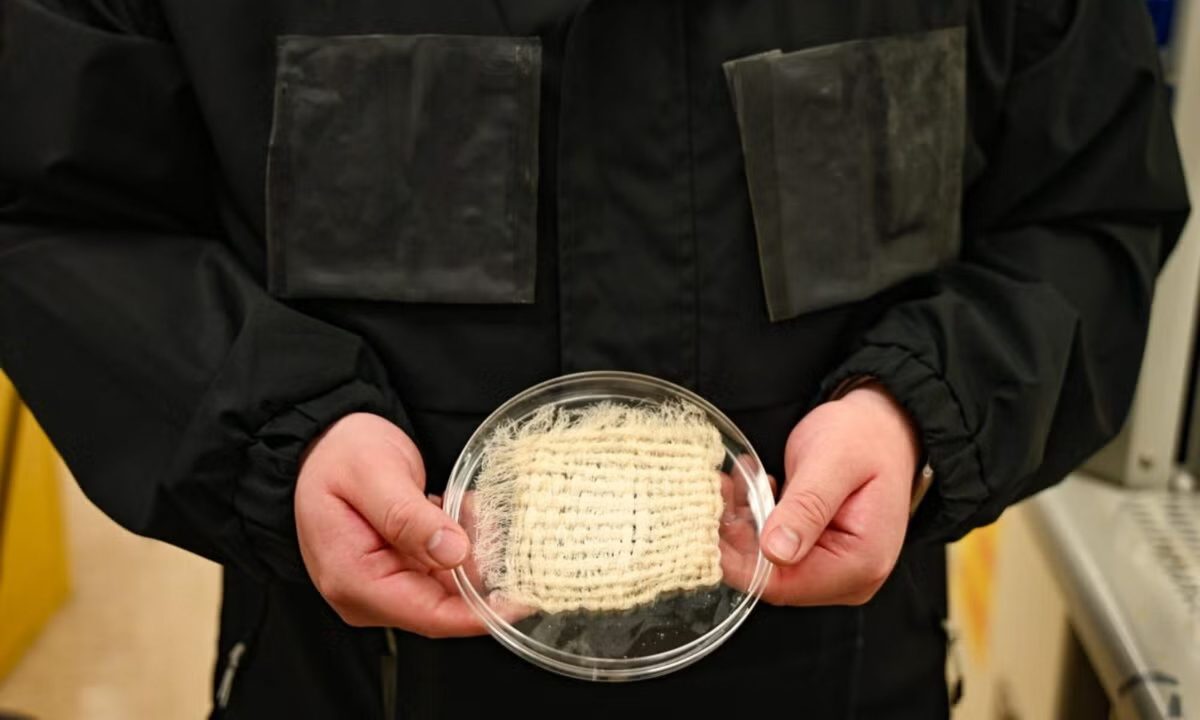
Image showing person wearing a jacket with special fiber that pulls water from air
UT News

Engineers at the University of Texas at Austin have built a jacket that pulls drinkable water directly from the air, offering a potential solution for hikers, soldiers, agricultural workers, and emergency responders who operate far from reliable water sources.

How the jacket collects water

The jacket’s fabric is made from a biomass-derived hydrogel that draws in ambient moisture and channels it to detachable harvesting units. Those units sit inside a foldable collector piece, where sunlight heats them to release the water for collection. In lab testing, the jacket yielded between 400 and 900 ml of water per day, roughly 14 to 30 ounces, depending on humidity. Compared with conventional water-harvesting materials, the textile performed three to ten times better at scale, according to the researchers.
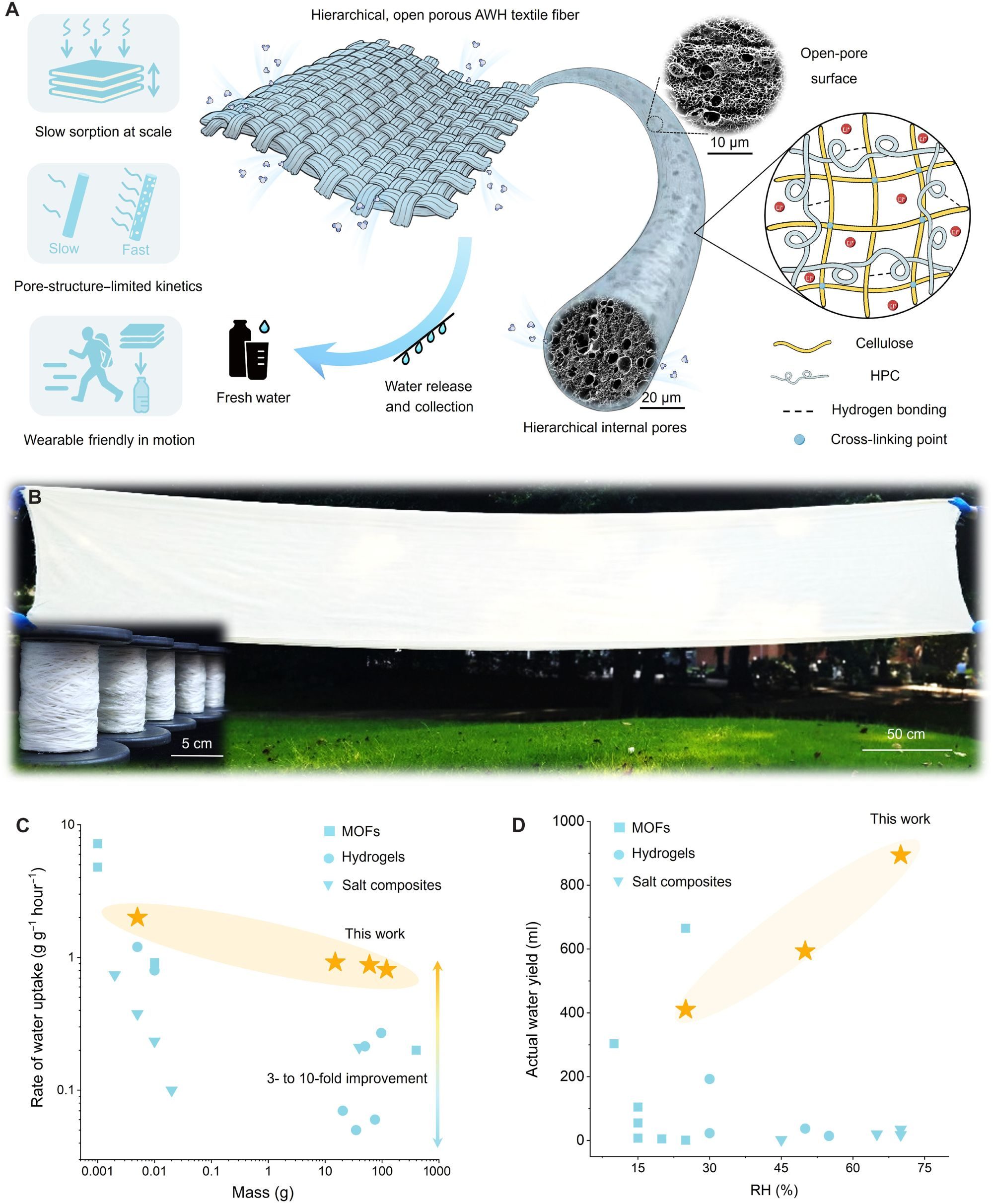
The team’s work, published in Science Advances, addresses a design gap that has limited atmospheric water harvesting to stationary devices like panels and sorbent beds. By engineering the transport pathway directly into the fiber, the fabric moves water from vapor in the air to liquid on the fiber surface and into the textile without the bulk of a standalone unit.

A separate record and a broader ambition

Alongside the jacket research, the same team published a second paper in Nature Water detailing a solar-powered harvesting device that set a new output record: 1.3 liters of clean water per day in both arid and semi-humid climates, equating to 4.3 liters per kilogram of moisture-capturing material per day. Field tests took place in the Chihuahuan Desert in New Mexico and in Austin, Texas.

Recommended Videos

The researchers see both the fabric and the device as part of a wider push to bring atmospheric water harvesting to the regions that need it the most, including parts of North Africa, the Middle East, South Asia, and sub-Saharan Africa. Future applications could extend to backpacks, tents, and emergency shelters.


Pranob Mehrotra
Pranob is a seasoned tech journalist with over eight years of experience covering consumer technology. His work has been…
Study finds humans will talk to AI ghosts of the dead as reincarnations, and it’s pretty grim
The first AI ghost study is in. The results are about as complicated as you'd expect.
VR Headset, Person, Face

A new study from the University of Colorado Boulder confirms something that sounds both impressive and concerning. People find interacting with AI simulations of their dead loved ones deeply meaningful, and most will come away wanting to do it again.

The researchers call it a "generative ghost," which is a clear reference to generative AI, but I’d still prefer to call it unsettling.

Read more
China’s UBTech unveils eerily lifelike companion robots, and yes, they want to move in with you
UBTech's new humanoid robots are built for companionship, using emotion-aware AI, long-term memory, and humanlike expressions to become part of your everyday life.
UBTech Uworld U1 series robot launch

A humanoid robot designed to live in your house, learn your habits, and pick up on your mood without being prompted is no longer science fiction. Shenzhen-based UBTech Robotics unveiled its Uworld U1 series this week, introducing three robots built for companionship rather than factory work or household chores.

A body that moves like yours, and a brain that reads how you feel

Read more
This $249 LED sign wants to fix your work-life balance
My productivity isn't worth $249... or is it?
Flipper Busy Bar

Flipper Devices has built a reputation among hackers and hardware enthusiasts with the Flipper Zero, a pocket-sized gadget capable of interacting with RFID, NFC, Bluetooth, and other wireless protocols. Now, the London-based company is taking a very different approach.

Its latest product, the Busy Bar, is a desktop productivity display designed to help users stay focused, signal their availability, and automate parts of their workflow. After being teased last year, the device is finally going on sale on July 14. While the concept is genuinely clever, its starting price of up to $249 may make many buyers think twice.

Read more