
Assassin’s Creed is about to get a whole lot bigger. Ubisoft confirmed that it’s working on a new project called Assassin’s Creed Infinity, which will begin a new future for the open-world series. While Ubisoft didn’t share official details on what the game will look like, leaks indicate that it could be a major departure for the franchise that sees it expanding into a full-on live-service game.
According to a Bloomberg report, Assassin’s Creed Infinity will actually consist of multiple interconnected games. Rather than simply living the Viking life in Valhalla, players could potentially jump from setting to setting as the game is consistently updated with new content. If that’s the case, we could be looking at a gargantuan game even by Ubisioft standards.
That’s as worrying as it is exciting. If anything, Assassin’s Creed needs less content, not more.
How big is too big?
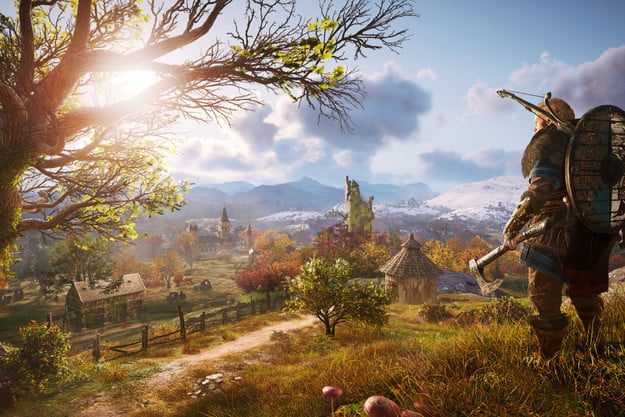
The Assassin’s Creed series has built a legacy on game size. For those who want the most bang for their buck, a game like Assassin’s Creed Valhalla is quite a value. It features an enormous open world that’s filled with objectives, secrets, and missions. One could spend well over 100 hours in the base game before even touching its post-launch content.
That’s a gift and a curse. While it’s great for players who want their games to last, the final product can suffer for its size. Valhalla is an impressive experience, but it’s also exhausting. It’s a bloated game that gives players a seemingly never-ending checklist of chores to tackle.
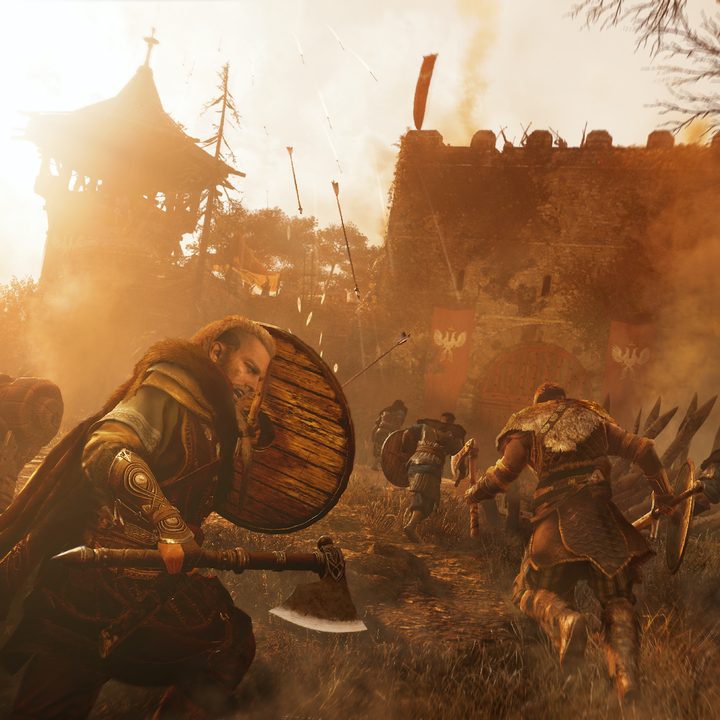
This isn’t something that’s exclusive to Assassin’s Creed games. Valhalla is just one prime example of a “map game,” a type of open-world game where players see a giant collection of icons when they open their map, telling them exactly where to go next. It’s a common design trick in today’s biggest games that can be an effective way of hooking players — there’s something addicting about checking items off a list.
It’s not necessarily fun, though. Map games tend to create arbitrary excess by having players perform the same basic actions multiple times. In Ghost of Tsushima, completionists will follow a fox to its den over 50 times during the journey. It’s cute the first few times; it’s compulsory after the 10th or 20th.
That’s especially true of Assassin’s Creed, which fills its enormous maps with as many icons as it can fit. Players who want to hit 100% will repeat the same tasks ad infinitum. All of that adds time to fans’ final hour count, but doesn’t meaningfully improve the game. Instead, it bloats it, adding hundreds of little distractions that pull players away from the game’s sprawling story.
Quality suffers
The actual quality of the game suffers for it, too. Assassin’s Creed games constantly feel like they are bursting at the seams, collapsing under their own weight. At one point during my Assassin’s Creed Valhalla playthrough, a non-player character randomly dropped dead in front of me. Ten hours later, her rag-dolled body reappeared — still dead — in another location. Unfortunately, she was the character I needed to speak with to progress the story, so I found myself unable to continue the story.
That’s where the rumored premise of Assassin’s Creed Infinity starts to sound like a potential nightmare. The last thing these games need is to balloon even further. As it stands, open-world games are already an unsustainable idea. They take a ridiculous amount of time and money to create. They’ve become an exercise in careful corner-cutting to deliver the most content possible. Games like Biomutant reuse assets like buildings as many times as they can to fill the world. Then there’s Cyberpunk 2077, which sacrificed stability in service of an unwieldy world, kicking off an unending wave of controversy for CD Projekt Red.
Assassin’s Creed is a special series. It’s a historical spectacle that’s lovingly crafted and its alternate history narratives are some of the most intriguing stories you’ll find in any AAA game. But those strengths tend to get buried in superfluous open-world grinds that don’t move the story or its thematic elements forward.
Big game studios need to become more comfortable with reducing content, not increasing it. Video games have the power to tell stories that no other medium can through interactivity. That potential gets watered down when they start feeling like chores.


