
There’s not much to a cup of coffee, at least when it comes to the ingredients — you’ve got beans and water, and that’s it. Yet, we have dozens of different methods for brewing a cup of joe. While drip coffee, espresso, and cold brew are all made with essentially the same ingredients, they are very different beverages. That said, it’s useful to get to know all three types so you know what to order when you walk into your local coffee shop.
Are you looking for something bitter or sweet? Hot or cold? Do you want a jolt of caffeine, or do you want to sit and relax? We’re examining how the three methods differ in taste and caffeine content, along with the brewing processes behind coffee, espresso, and cold brew.
Further reading
Coffee

Coffee is one of the most popular beverages in the world, and there are quite a few expensive coffees, too. While the term “coffee” encapsulates just about everything prepared from roasted coffee beans — including espresso and cold brew — this term is most often used in reference to drip coffee. While you may be unfamiliar with the term “drip coffee,” you’ve probably had a cup before. This is the type of coffee you probably get from your kitchen counter in the morning. Hot water is poured over ground coffee beans, then seeps through a filter and into your coffee pot. You can drink it black (without any added ingredients), or enjoy it with milk or sugar.
Drip coffee is one of the most popular ways to consume caffeine for a number of reasons. Drip coffee machines are relatively cheap, they’re easy to operate, and they can brew a cup of coffee in just a few minutes. Unlike espresso, it’s also very easy to make a large pot of drip coffee or use a French press, meaning you can serve multiple people at once with minimal effort. (You may want to use your own coffee grinder.)
The amount of caffeine in your drip coffee will differ depending on a variety of factors, including the roast and the ratio of water-to-coffee-grounds you use. On average, though, you’ll get about 110 milligrams of caffeine in a 6-ounce cup of coffee.
Check out our favorite drip coffee machines of the year
Espresso
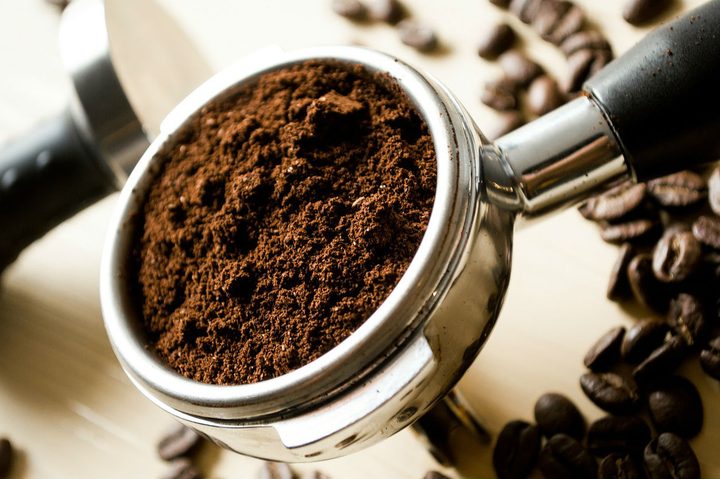
Espresso is also made from ground coffee beans and hot water, but the process is a little more complicated than with drip coffee.
Espresso is made from finely ground coffee beans that are compacted into a small, puck-shaped brick of beans. Hot water is then forced through this brick using high pressure, resulting in a slightly thicker, more bitter, smaller cup of caffeinated goodness. Unlike drip coffee, where some of the main factors playing into taste are the amount of water and beans, espresso can be fine-tuned to suit your tastes. The fineness of the grind, the length of the pull, and the size of the drink all play a part in the beverage’s taste. In general, though, an espresso will be more bitter than a cup of coffee and often less than half its size.
That doesn’t mean that espresso skimps on the caffeine, however. In fact, espresso is basically a concentrated cup of coffee. Espresso contains about 50 milligrams of caffeine per ounce. While this is considerably less than an entire cup of drip coffee, espresso packs way more caffeine per ounce. In other words, you only need to drink about 2 ounces of espresso to get the same amount of caffeine that comes in a standard cup of coffee.
While many people enjoy espresso on its own, it’s also the most versatile form of coffee and is used in everything from lattes to cappuccinos to macchiatos.
Take a look at our favorite espresso machines of 2020
Cold brew

There are a few different ways to make cold coffee. While a pour-over is the easiest method (you simply brew hot coffee and then pour it over ice), you either have to brew extra-strong coffee or use ice cubes made of coffee in order to avoid a watered-down beverage.
The preferred method of making cold coffee is by doing a cold brew. The problem here, however, is that it is by far the most time-consuming way to make coffee. Cold brew is a unique brewing method, as you don’t use hot water during the brewing process.
Like other types of coffee, cold brew is made with ground beans and water. The process is simple, but it’s slow. You steep ground coffee beans in water for about 12 hours — some recipes call for as much as an entire day — and then strain the mixture into a container. This method results in a very different beverage than a standard cup of coffee. The longer extraction time should result in a smoother, less acidic beverage. Cold brew also creates a slightly thicker, more concentrated liquid, which is often diluted with milk or water.
Rock your morning brew with one of our favorite cold brew machines of the year


