
“Fear the Spotlight is an imperfect, but sincere lo-fi horror debut for Blumhouse Games.”
- Eerie atmosphere
- Sincere story
- Some great puzzles
- '90s aesthetic feels off
- Out-of-place voice acting
- Heavy-handed writing
“Why you can trust Digital Trends – We have a 20-year history of testing, reviewing, and rating products, services and apps to help you make a sound buying decision. Find out more about how we test and score products.“
High school can be a real horror show. Bullies roam the halls like zombies, every test has life-or-death stakes, and the threat of expulsion hangs over your head like a guillotine. For a young kid struggling to navigate the world, it can feel like being thrown into one of Jigsaw’s torture chambers.
Fear the Spotlight, the first publishing effort from Blumhouse Games, taps into that dread. The story of two girls breaking into their school to commune with the dead turns mundane suburban sights into haunted houses. It’s a microhorror project cut from the same cloth as teen media like Buffy the Vampire Slayer, but placed through the lens of gaming horror greats like Resident Evil. That sets the stage for a creepy tale of teenage rebellion told through the language of lo-fi visuals and old-school puzzle box gameplay.
As a work of throwback video game horror, Fear the Spotlight passes, but only with partial credit. It’s a concise creepshow with a dual narrative twist that digs into the psyche of both of its teen heroines. Its attempts to look and feel like a PS1 game miss the mark, though, as it can’t shake the feeling of a modern indie game in a stage costume. The tonal discrepancy dims the spotlight around what’s otherwise an impressive passion project for a two-person development team.
Throwback meets modern
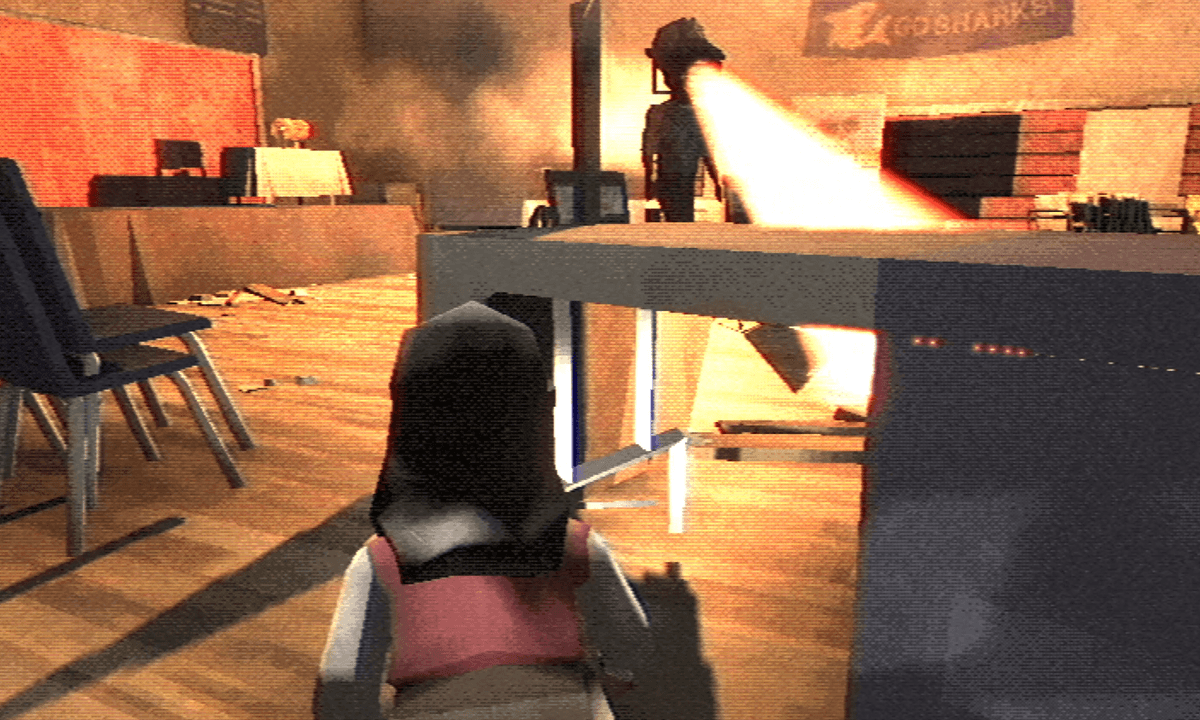
Fear the Spotlight begins amid a late-night school break-in, as Vivian and Amy sneak through the halls in search of a locked-up Ouija board. The duo hope to get some information about a tragic fire that happened at the school long before their time. They get their wish — but you can imagine how that goes for them. That reliable haunted house premise kicks off an eerie first campaign, as Vivian learns the school’s dark secrets via notes while evading a memorable monster with a spotlight for a head.
The tone is somewhere between Life is Strange and Silent Hill, a combination that isn’t always a neat fit. It almost looks the part with its jagged character models, but a grainy TV filter is doing a lot of work to create the illusion of an atmospheric PS1 game. Strip that away and Fear the Spotlight doesn’t look all that different from what you’d expect from an indie game in 2024 (this year’s Crow Country nails the retro horror look much more convincingly). It’s an imitation that makes the art style feel like a bit of a schtick rather than a meaningful use of ’90s visual language.
It can be difficult to find the headspace that Fear the Spotlight wants to put you in.
That’s not to say that it doesn’t use its art style well in moments. When fire spreads through the library after the opening séance goes awry, I run as pixelating flames eat up the crunchy scenery around me. Stealth sequences play with bright yellow spotlights that cut through the musty school. All of the horror imagery cuts through the fragile scenery like a knife, ripping the suburban scenes apart. I can feel that I’m in a deteriorating school with decades of moral rot in its floorboards.
Still, the tonal disparity often bubbles back up to the surface, especially in the adventure’s writing and voice acting. Vivian and Amy may look like they stepped out of Silent Hill 3’s amusement park, but they’re full of hammy quips that have a way of cutting the tension. It’s hard to get a sense of time and place, as I’m always torn between its superficial ’90s touchpoints and its 2020s attitude. It can be difficult to find the headspace that Fear the Spotlight wants to put you in at times.
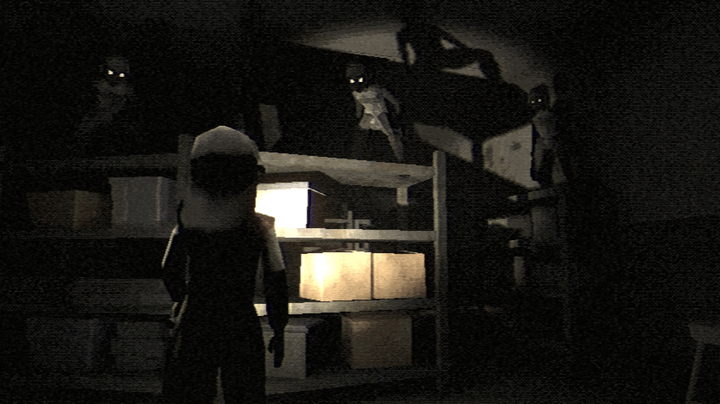
There are moments, though, where it clicks together. Fear the Spotlight works best as a video game equivalent of a young adult novel. It takes the haunting set dressing of a psychological game like Silent Hill, but replaces its adult trauma and grisly violence with relatable teen issues. Its story weaves through bullying narratives, drama club anxiety, schoolyard stalking, and more. It feels-tailor made for a younger generation of players who have perhaps grown up on the jump scares of Five Nights at Freddy’s and are looking to graduate to something that’s a bit more mature, but relevant to their lives. The trade-off is that the story can end up feeling like a heavy-handed anti-bullying PSA. One sequence even takes place in a gym that’s been turned into an emergency bullying assembly, full of student-made standees explaining why bullying is wrong.
The story can feel disjointed in moments too, a quirk seemingly tied to the game’s odd development history. This is actually the second launch of Fear the Spotlight; it was originally released as a much smaller project for only a few weeks before publisher Blumhouse Games offered developer Cozy Game Pals more cash to expand it. The dev duo quickly delisted the game, doubling its story content. This version now has an entire second campaign that leaves the school and focuses more on family skeletons and trading the spotlight monster in for a motherly ghoul that looks like it crawled out of The Ring. That dual narrative makes for a more well-rounded story that tells both heroines’ stories, but they can feel thematically distant, like two tales duct-taped together.
Extracurricular horror
While the project has plenty of warts, its bite-sized puzzle box horror largely delivers. This is Resident Evil in miniature form; Vivian solves her way out of the school in the first two-hour campaign, while a childhood home becomes more of a surreal prison full of locks and keys in the second half. Both scenarios allow Cozy Game Pals to more effectively show off their love for ’90s horror classics with clever, tactile puzzles.
Fear the Spotlight is small in scope, but that works to its advantage.
In one section, I find myself in a gym searching for a way to turn on the school’s HVAC system. To do that, I need to hunt down a handful of lettered fuses scattered in connected rooms. When I find them, which comes through tracking down pumps to drain pools or the lost handle of a bingo ball tumbler, I need to crack open the fuse box, plug some cables into the right spot, and figure out the correct wattage by turning a nearby dial. It’s a multipart solution that has me poking and prodding objects to interact with them rather than sticking the right key in a door.
Fear the Spotlight is small in scope, but that works to its advantage. Cozy Game Pals are able to play with some minimalist ideas that might be a drag in a longer game like Silent Hill 2. For instance, there’s no combat here. Instead, Vivian has to sneak around desks to avoid a searchlight’s gaze. If she’s caught, her lungs take a hit and she’ll need to use one of the few inhalers found around the school to calm down — another great teen-centric variation on the established horror formula. Rather than flooding the story with stealth interludes, they’re only strategically deployed in a few key moments built for tension. In one puzzle, I need to save a projector transparency to a floppy disk. As a long progress bar starts, the monster bursts into the room. I need to evade it while the save finishes, and then get it to a computer on the other side to start the long process of sending it to a nearby printer. It’s one of the few moments where Fear the Spotlight’s ’90s aesthetic gets put to good use.
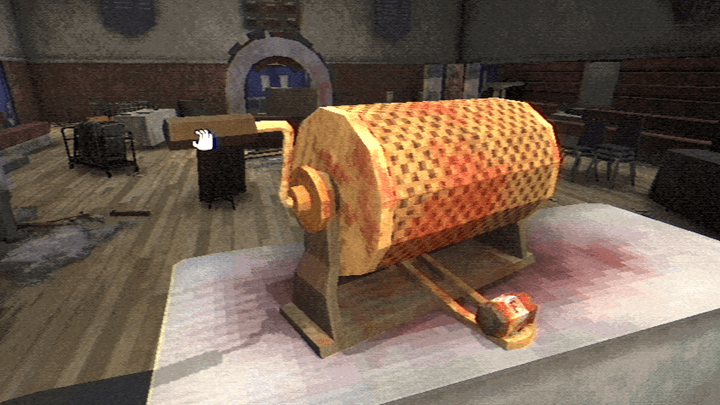
While the second campaign has similar puzzle loops, it introduces new mechanics that freshen the formula up. Here, I’m picking locks through a light minigame and getting jump-scared by loud cell phone notifications that have my hero reliving her family trauma once again. There are just enough good puzzles and structural twists to fill a sleek four-hour game, even if some of that time is bogged down by slow backtracking through the same few hallways.
When the sparse credits pass by at the end, reminding me that all of this was mostly the work of just two devoted developers, I’m greeted by a note from the studio. The duo is the first to admit that their game is by no means perfect; it’s a plucky passion project made possible both by Blumhouse and babysitters in equal part. It’s a moment of vulnerable sincerity that makes it easier to embrace all the limitations and rough edges. Isn’t that the right attitude for a story of two teenagers finding themselves amid the nightmares of an unassuming coming-of-age backdrop? There’s a charming awkwardness to Fear the Spotlight as it wades through its nostalgic inspirations and indie imperfections to find its own voice in the horror gaming landscape. It may not fully get there by the end, but I leave the creepy adventure optimistic that, like Vivian and Amy, Cozy Game Pals has come out the other side with a tighter grip on its identity.
Fear the Spotlight was tested on Nintendo Switch OLED.


