FIFA 23 is one of the best sports games in the business, and one of its best features is the career mode. This lets you take charge of a club — real or imaginary — and take it to the top, buying players, unearthing future gems, and winning trophies along the way.
There’s a lot to learn in career mode, and whether you’re new to career mode or a seasoned veteran, there are always ways to improve. Read through our FIFA 23 career mode guide, though, and you’ll have the knowledge you need to take home the silverware.
Make a strong start

For many of us, choosing a team to manage in FIFA 23 is easy — we pick the club we support. But that might not always be the best idea.
For one thing, FIFA 23’s create-a-club mode is absolutely brilliant. As the name suggests, you can build an entirely new club from the ground up, with control over everything from the kit and badge designs to the average age of your squad. There’s so much detail for you to dive into, letting you personalize your FIFA 23 career mode like never before. Even better, it’s received several improvements this year, including more kit options and extra player tweaks.
There’s another reason you might not pick your go-to club: You need to be aware of the club’s expectations. Some clubs are extremely demanding in what they will expect of you, and while that alone might not put you off taking the helm, it can make running the club more difficult if the board expects you to sign dozens of expensive players or avoid relegation in a hugely competitive division.
On a related note, it’s worth considering the Negotiation Strictness setting before booting up a fresh career. This determines how much opposition managers are willing to negotiate with you in your transfer dealings. If you want to work hard for every signing, set it to strict. Otherwise, you might want to tone it down to ensure it’s a bit simpler to get deals over the line.
Finally, there’s a good way to give your club a quick cash boost right at the start of your career, and that’s by partaking in pre-season tournaments. You’ll be given a choice of three tourneys to join, and we always recommend that you pick the one with the largest prize pool. Even if you don’t win, you’ll still get a nice reward for your participation. If you do win, you could see a significant boost to your transfer kitty.
Learn to balance sharpness, fitness, and morale

When managing your squad, there are three key elements to ensuring your players are in top condition: sharpness, fitness, and morale. Sharpness determines how responsive and effective a player is during games, and it’s improved with training and game time. Fitness, on the other hand, is how much energy your players have during matches. You can help it recover with rest days.
Using a player a lot in training and matches will improve their sharpness but lower their fitness, while resting them will do the opposite. It’s therefore important to make sure you hit the right balance with each of your players.
The third consideration is morale, which you can improve by playing each squad member in enough games and praising them during press conferences. Let it get too low, and their performances could be affected.
Training plays a big role in keeping these things in harmony. While you can simulate training sessions, it’s important to play as many as you can. That’s because not only will it improve your skills, but it will get your team better grades the next time you decide to simulate training.
You can change your team’s weekly schedule to feature training every day, intermittently, or not at all, but keeping it set to intermittent should be good enough for most people.
One thing you can get more hands-on with, though, is each player’s development plan. If you want to retrain a player into a new position, step up their progress, or slow down their decline in their later years, development plans can help you do that. You’ll find them in the Squad Hub.
Pay attention to transfers and contracts

Getting transfers right can be tricky, and this year, FIFA 23 tries to make them a little easier by giving each club a Transfer Analyst. After completing a transfer, your Transfer Analyst will let you know how well you did. If you bought a player, will they improve the squad, and was the transfer good value for money? If you sold a player, do you have a replacement lined up, and did you get a good price for them? The idea is you learn what did and did not go well, and can then use that knowledge to do better next time.
If you’d rather someone else took the lead in transfer negotiations, you can delegate them to your assistant. You’ll be asked to set a minimum and maximum price the assistant should bid (or the minimum and maximum wage they should offer to a player) and send them to work. A few days later, you’ll get a message letting you know if they were successful.
When it comes to players already at your club, it’s a good idea to check which players have less than a year left on their contracts and, if they’re important to your team, offer them a new deal. Otherwise, rival teams might be able to poach them from you without paying you a transfer fee.
Just bear in mind not to overpromise when offering contracts, and make sure you give players the game time you’re promising. And if you’re sick of other teams bidding on your players when you don’t want to sell, you can block incoming offers. Go to Squad > Squad hub, choose the player, and select Block offers.
Use scouting to build your club

Scouting is one of the most important aspects of FIFA 23’s career mode because it lets you renew your squad and continually improve it to meet new challenges every year.
You can send your scouts to look for real players already in the game, and use youth scouts to find new players for your academy. In both cases, your scouts have two key attributes: experience and judgement. Better experience means the scout will find more players for you, while better judgement means they will bring back higher-quality players for you to choose from.
When you first load up a career, you’ll see your Global Transfer Network, which is a list of the real-world players your scouts have found. It’ll be populated with a few players already, each with a report card listing their strengths. Tell your scouts to keep watching these players and you’ll get more detailed reports in the future.
If you want to buy a player, scouting them is vital to understanding how much to bid, as your scouts will be able to give an estimated amount you should offer. Without scouting them first, you’ll be stabbing in the dark and will have no idea how much you should pay.
Look for high-potential players

When you’re searching for new players to bring into your club, their potential is one of the most important things to consider. A player’s potential value is a rough estimation of how good they could become in the future — buy a low-rated player with high potential and you could score a bargain on a future world-beater.
FIFA 23 never reveals players’ exact potential values, and instead uses a range of numbers. But there is one way you can get a better idea. When you select a player, look for the Status section on their report card. There are a few messages that can be displayed here that reveal how promising they are:
- Showing great potential = potential 80 to 85
- An exciting prospect = potential 86 to 90
- Potential to be special = potential 91-plus
If you see any of those messages, you know you’ve found a player with an exciting future ahead of them. Note that a player must be 21 or under and have a minimum OVR of 60 for these messages to show up.
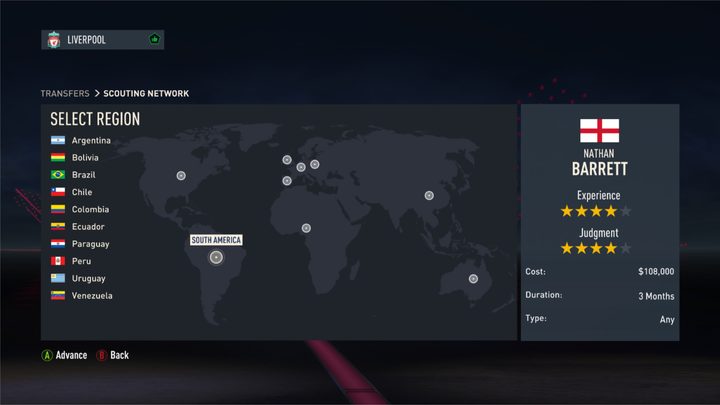
In FIFA 23, different regions are more or less likely to produce future superstars. If you want to find the most promising players for your youth academy, start by scouting the following regions first:
- Brazil/Argentina
- Italy, Spain, and Portugal
- Central Europe
- The rest of the Southern Europe region
- The Rest of the Europe region
When scouting youth players, the potential range tops out at 94. Let’s say you scout a player with a potential range of 72 to 94. To give yourself a quick hint at their potential, find the middle value in their potential range to get a rough estimate of where it’s at. With a range of 72 to 94, that value is 83, which would make a good player for most teams. The actual potential could be higher or lower, but this is a quick-and-dirty way to help you know if a player is worth signing.
Just note that potential can change. If a player performs well, their potential can go up. Likewise, if their performances are sub-par over a prolonged period of time, they might never hit their potential. Nothing is guaranteed, but there’s a lot of room for your players to overachieve and become future stars.