Video game preservation continues to be one of the most strenuous topics in the game industry. While gamers would probably agree that companies should preserve the games they release, that’s not really the case in practice. In a new study organized by the Video Game Industry Foundation, we learned that only 13.27% of video games released before 2010 are in print in 2023. According to the Video Game Industry Foundation, that’s a level of availability on par with silent films and pre-World War II audio recordings. For something as popular and financially successful as gaming, its industry needs to do better.
Recent preservation efforts within the gaming industry show some improvement. Games like Atari 50 are setting new standards for re-releasing games, while a July 12 showcase from Limited Run Games highlighted a lot of retro titles, both good and bad, that will get a re-release thanks to the company’s Carbon Engine. There’s a long way to go until the game industry truly takes preservation and game availability seriously, and there’s a lot the game industry needs to do to improve that statistic.
The dire preservation situation
That 13.27% statistic, as well as recent events like the Nintendo 3DS and Wii U eShops shutting down, should be enough for most to understand why game preservation is such a problem. Gaming is a pivotal part of many people’s lives. Yet, many of the games that might have entertained, inspired, or otherwise helped people just aren’t officially preserved well enough for people to play them without resorting to piracy or other workarounds. But what was causing these issues in the first place?
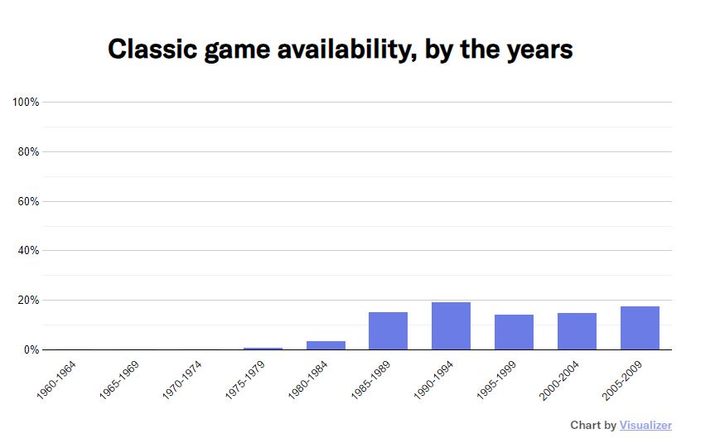
“The availability of historical games is generally understood to be limited,” the VGHF’s study explains. “This is due to a variety of factors, including technical constraints, complicated rights issues, rightsholder disinterest, and the long-term volatility of digital distribution platforms. The scale of this problem is troubling for anyone hoping to access games.”
As with film or music, license issues can cause a lot of games to be delisted and prevent re-releases. There’s also the business side to it: Will the return in revenue be worth the investment needed to re-release a game? And then, if it gets a digital re-release, there’s no guarantee that the digital storefront it’s once again made available on will exist forever.
Those are the obstacles in the way of commercial preservation of older games, but lobbying from organizations like the Entertainment Software Association currently prevents organizations like the VGHF from archiving games. According to the VGHF’s study, the ESA believes that the industry’s past and current efforts to preserve games are satisfactory and that it’s up to individual companies to decide how to preserve the games and franchises they hold the rights to. It’s not just the ESA’s fault, though; the VGHF’s report states that this is an existential issue for the entire industry.
“Historical game availability issues are widespread across all platform ecosystems and time periods. No single company or platform owner is responsible for this reality. This is a crisis for the entire medium of video games,” VGHF’s study says.
Current efforts to preserve
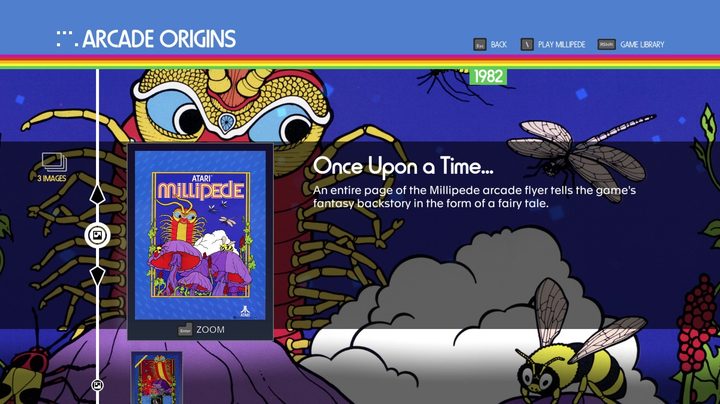
While those of us who enjoy game history and support game preservation can still see the industry’s obvious shortcomings in preservation, some positive developments in recent years could help the commercial aspect of game preservation improve. Remastered versions of old games feel more common than ever, and the quality bar for them keeps rising. Last year, Digital Eclipse’s Atari 50: The Anniversary Celebration collection essentially served as a playable museum of Atari’s history, and the studio is doing it again with The Making of Karateka, a playable documentary about the creation of the first game made by Prince of Persia creator Jordan Mechner.
On Nintendo’s end, the company plans for its Nintendo Switch Online library to be forward-compatible with future systems, and Super Mario RPG, which was not readily available on anything after WiiWare shut down, is getting a remake later this year. Then, on July 12, a livestream from Limited Run Games revived a bunch of games from franchises not that weren’t readily available before, like Gex, Clock Tower, Tomba!, Ocean Software’s Jurassic Park games, and more. Those announcements were all great and made the show worthwhile, but one could argue that series like Gex or Clock Tower are notable enough to be preserved. It’s the games that aren’t as well-known or beloved that are in danger.
But that livestream also showed that the game industry is getting better at paying homage to and re-releasing games regardless of their quality. Arzette: The Jewel of Faramore is a brand new game paying homage to two terrible Zelda games for the Philips CD-i. More relevant to this discussion is Plumbers Don’t Wear Ties, a notoriously awful PC and 3DO game from the 1990s, which will re-release this September with a Definitive Edition that remasters the game and adds audio commentary, video interview features and more to the package. The video game industry has reached the point where companies recognize that it’s okay to pay homage to the good as much as it is to the bad.
Limited Run is even going one step further in some cases. The company revealed that it’ll publish Shantae Advance: Risky Revolution in 2024. That project is actually a revival of a canceled Game Boy Advance platformer that never saw the light of day. Development on the project halted in 2004, but developer WayForward held on to the original code. Two decades later, it’s finishing the project in its original, staying faithful to the original. Not only that, but it’ll actually release the game on a working Game Boy Advance cartridge too. It’s an unheard-of preservation effort that goes beyond simply saving the games we loved growing up.

Previously, companies might have wanted to avoid projects like these because the cost required to do so or re-release them was not worth it. Thankfully, new tools make that a bit easier. All of the games Limited Run announced can run on its proprietary Carbon Engine, which it describes as a “multi-platform development tool that helps different emulators interface with modern hardware.” From a more technical perspective, the engine’s description explains that it uses emulation as a base before building on top of that with “builds features like UI, rendering, audio, data management, controller inputs, and console-specific SDK features like trophies.”
Hopefully, as the tools and technology needed to preserve games improve, more and more companies will do what they can to re-release games, regardless of their original quality or financial viability.
The future of game preservation
There are indications that companies like Digital Eclipse, Limited Run Games, Nintendo, Microsoft, and Sony are more respectful toward their histories and back catalogs than they were a decade ago. Tools like Carbon Engine, in Limited Run Games’ own words, “breathe new life into releases that are rare, highly sought-after, or otherwise no longer available and make them more accessible to consumers, preservationists, and developers.” Still, as the data from the VGHF’s study shows, there is a lot of work to be done.
“Publishers do reissue historical video games through a variety of formats, services, and products, but their collective effort has amounted to re-commercializing or otherwise making available less than one-fifth of all historical games,” the study explains. “As a result, nearly 90% of the game industry’s historical output is inaccessible without acquiring vintage games and hardware from the expensive second-hand market, visiting library collections in person … or resorting to piracy.”

So, where does the industry go from here? On the commercial side of things, we can hope that Limited Run Games’ Carbon efforts and the potential success of remasters and collections from it and Digital Eclipse inspire more companies to do the same. When it comes to archiving, the VGHF thinks the industry needs to be more open to working with libraries and archives.
“Like any media business, the game industry has its own commercial interests, and we can’t expect them to make history their top priority and preserve every single video game. You know who can work on that? Libraries and archives,” VGHF Library Director Phil Salvador wrote in a blog post about the nonprofit’s study. “And they need more tools to get the job done. As we talked about, there are improvements that can be made in copyright law to make it easier for libraries and archives to preserve video games and share them with researchers.”
As consumers, we can continue to support the efforts of companies that actively promote preservation and ask companies to actively preserve every game they already made and will make in the future. Parts of the game industry are a step in the right direction; now, it just needs to keep walking.