

GameStop is still a massive company, with over 5,000 stores and tens of thousands of employees across the United States, but its fortunes are fading as customers’ business shifts to digital game sales and online purchases. After a failed attempt to sell the company and continued under-performance at many locations, GameStop has shuttered hundreds of stores, and the bleeding shows no sign of stopping.
The problems even extend to GameStop-owned magazine Game Informer, where several longtime editors lost their jobs in late August.
It’s obvious that GameStop’s fortunes have turned, but its struggles don’t mean that it’s doomed to fail. Experts think there’s still life left in the company. And maybe, just maybe, it’ll find a way to turn things around.
Still breathing
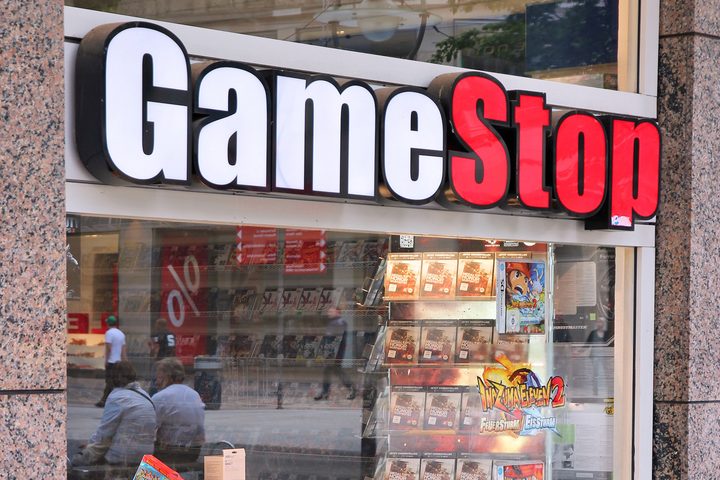
News that hundreds of Gamestop stores are closing may suggest it’ll opt for bankruptcy and liquidation in the near future. Yet the company’s footprint, and the prevalence of players who still prefer physical media over digital downloads or streaming, give is staying power.
WedBush Securities’ analyst Michael Pachter thinks the company’s has 8 to 10 years left. The exact figure depends on how many customers continue to ask for discs over downloads. Since the new consoles from Sony and Microsoft are keeping disc drives intact, Pachter thinks physical will continue to be important.
“They will remain in business as long as physical media exists, and so long as a meaningful percentage of customers opt for physical discs,” Pachter said.
Will those customers eventually bite the bullet and start downloading games? Data from from IDATE DigiWorld Research back in 2017 estimated that 93 percent of all video game sales would be digital by 2021.
Will those customers eventually bite the bullet and start downloading games?
Yet the data varies by region. In the United Kingdom, for instance, about 80 percent of all game sales are now digital. Across the pond in Europe, however, AAA console digital game sales have only just eclipsed the sale of AAA physical games this year.
The United States has internet download speeds and data caps to consider. As game install sizes have ballooned, the amount of time some players must wait to play a game purchased over digital has increased. Digital purchases supposedly offer instant gratification but, for some Americans, it’s quicker to buy a game at a store.
The risks of retail

IDC’s Research Director for gaming and VR/AR, Lewis Ward, says GameStop isn’t alone in its struggle to make money selling physical games. However, most retailers have other revenue to fall back on. GameStop finds itself in a unique position, at least in the United States, because it’s a store that primarily sells games. Console hardware, which remains a component of GameStop’s business, could even start shrinking, as Sony recently announced plans to sell its systems and accessories directly to customers in addition to going through traditional retail channels.
You know the consequence of this if you’ve visited a GameStop recently. Racks and shelves are taken up by memorabilia and merchandise related to video games instead of the games themselves, which increasingly feel pushed aside. You’ll find shirts, figures, trinkets, mugs, and replica props. These all have a higher profit margin.
Ward thinks that offering these is a smart move. Yet he doesn’t believe it will improve the company’s prospects. In other words, Gamestop can’t survive by converting itself into a store dedicated to gaming gear.
Gamestop can’t survive by converting itself into a store dedicated to gaming gear.
“If you’re a super-fan, there could be a means of doing that. In other words, turning that into a corollary stream of revenue that remains for a fair amount of time,” Ward added. “But again, that’s not a mainstream type thing. You have to be a real super-fan to want to do that.”
That conversion also brings its own challenges. “Then you run into the issue if you’re GameStop, you want to scale that across hundreds if not thousands of stores,” Ward said. “How realistic is it for you to get that piece of merchandise that is kind of one of a kind, and do you want it in Cincinnati, versus Texas?”
Building an alternative GameStop

GameStop’s not ready to give up. It’s experimenting with new store concepts in hope of finding a new path for growth. The company announced in July 2019 that it’s developing “unique in-store experiences” with the assistance of design firm R/GA.
The store concepts are varied, including locations devoted entirely to retro gaming, as well as esports-focused locations with competitive gaming leagues. Pachter and Ward agreed that this offered few downsides for GameStop, with the latter emphasizing that partnering with local influencers could make stores social destinations.
“If they get on board with this idea of popular streamers from a local area – you can go meet them, you can go hang out with them – and esports, they can find some interesting angle where they’re drawing in fans to go to a specific type of event,” Ward added.

This would, in GameStop’s best-case scenario, encourage gamers attending events to buy their games and merchandise at the stores instead of online. Yet the sheer number of Gamestop stores, along with their small size, makes enacting the plan no small task. Current stores aren’t large enough for big events and are too tightly packed to reach fresh audiences.
GameStop knows this, and is trying to prepare for new opportunities. However, the company isn’t ready to get into specifics. “GameStop is improving its overall profitability by optimizing its global store portfolio by either consolidating multiple stores based on geographical location or closing underperforming stores,” a GameStop spokesperson told Digital Trends. “This is a common practice GameStop and other retailers perform each year to manage their store portfolios responsibly.”
The spokesperson also recognized that players are currently downloading and streaming games in addition to buying them in person. Yet, according to Lewis Ward, the death of traditional gaming by way of streaming services has been blown out of proportion. It’s one revolutionary technology that GameStop will likely be able to compete with.
The death of traditional gaming, by way of streaming services, has been blown out of proportion.
Microsoft is planning to give players the ability to stream games they own from their home Xbox to a mobile device. That Xbox could very well be purchased at a GameStop.
“We’re projecting [game-streaming adoption] to be a slow roll. We don’t think hardcore gamers are going to jump onto that bandwagon very quickly for a variety of reasons,” Ward said. “But a lot of it has to do with the plain fact that having a local game and running it locally is generally going to offer a better experience.”
Never say die
The experts agree. GameStop will still have a purpose for core gamers in the near future.
There’s still a portion of gamers, particularly on console, who value brick and mortar retailers. Trading in used games still remains a key piece of GameStop’s business, as well, and if we’ve learned anything from the Xbox One announcement fiasco back in 2013, it’s that many people still want this. No new service can take that away.
GameStop may not be here to stay, but don’t count it out yet. The company is ready to hang on for a very, very long time.


