
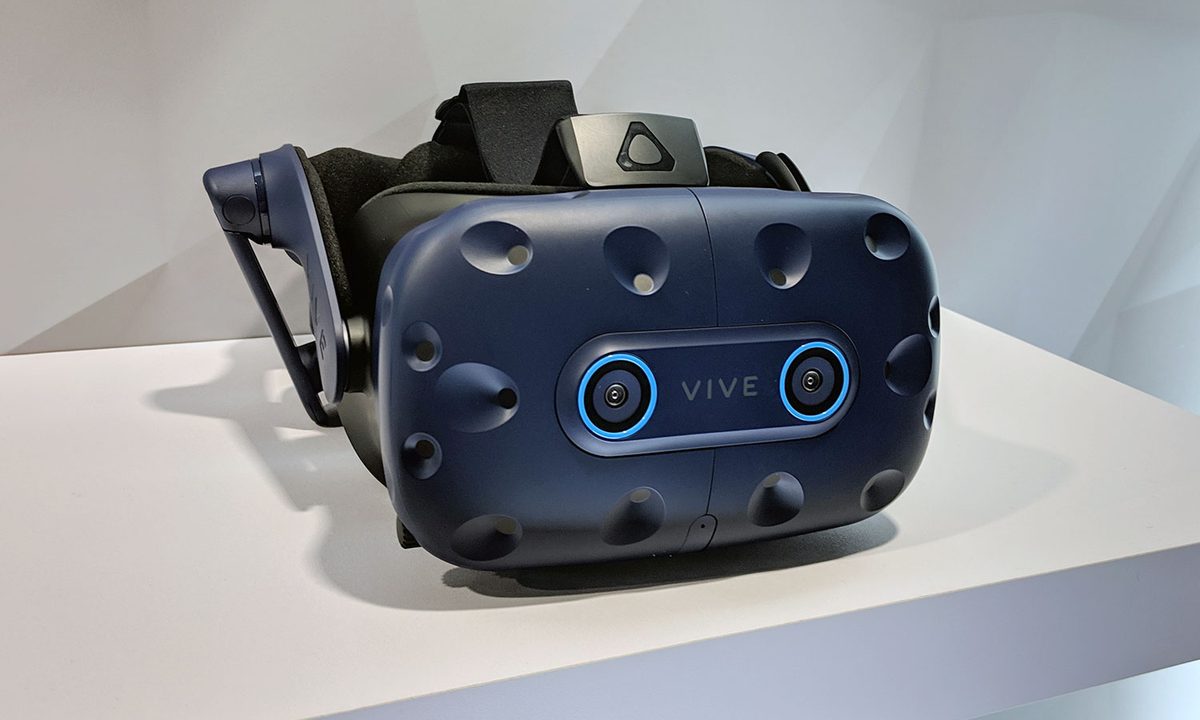
“Vive Pro Eye’s integrated eye tracking could take VR to the next level.”
- You can experience VR without controllers
- Realistic visuals may require less hardware
- Could support more intuitive controls
- Feels geared for commercial use
- Most benefits depend on better software
“Why you can trust Digital Trends – We have a 20-year history of testing, reviewing, and rating products, services and apps to help you make a sound buying decision. Find out more about how we test and score products.“
HTC Vive announced two new headsets at CES 2019, one of which was the Vive Pro Eye. While details were at a minimum, there was one prominent feature announced, and that’s integrated eye tracking. While this isn’t necessarily new to the HTC Vive, eye tracking is now a core feature with full, official support.
More CES 2019 coverage
- HP Omen X Emperium: a 65-inch gaming monitor for your living room
- NES and Famicom join forces on new mini console, mini arcade cabinets
- The coolest new gadgets and gizmos from the CES 2019 show floor
That adds a new and exciting layer of possibility to HTC’s Vive Pro Eye. Tracking a user’s eyes adds a new tool for developers to use in HTC Vive experiences down the road, and more importantly enables foveated rendering, a technique that prioritizes what a user is looking at. Everything else is rendered at a lower resolution to save on performance. The effect is unnoticeable because peripheral vision is less precise.
A look at the future
The Vive Pro Eye can be either wired or wireless. During our demo using Vive Sync (a meeting and collaboration app made for businesses), HTC had two headsets available. One was completely wireless, and the other plugged into a PC. If you look at the headset, you’ll notice it has two front facing cameras, so it likely uses similar tracking to that of the HTC Vive Pro. The controllers used appeared to be the standard HTC Vive wireless controllers.


For the most part, though, the Vive Pro Eye looks exactly like the Vive Pro, sporting a navy blue and black colorway with the same “ergonomic” design. You’ll feel no distinct difference between the two when you put them on. Since it has the same exact specs as the Vive Pro, don’t expect a vastly different experience.
As we jumped into our first demo, the Vive Pro Eye walked us through a brief setup where you adjust your IPD (interpupillary distance or the distance between your pupils) and then use your eyes to follow a small red dot that appears sporadically in different locations on the screen. The use of eye tracking within Vive Sync seemed minimal, but we were able to see the real movements of other user’s eyes during our virtual meeting.
The results? Better visuals, hands-free gaming, and more intuitive experiences
MLB Home Run Derby used eye tracking in a more unique way, letting us navigate the menus without a controller. That was especially interesting since the only accessory MLB Home Run Derby came with was a baseball bat, and we can foresee the use of more hands-free VR experiences.
The last demo we saw was BMW’s M Virtual Experience, and it demonstrated how businesses can track where users look and use real-time analytics to understand how they interact with their product. It wasn’t the most exciting demo was saw at the conference — In fact, it’s a little creepy — but seeing the difference made by foveated rendering was impressive.
You might notice that only one of the experiences we tried was a game – MLB Home Run Derby – and a simple one, at that. That doesn’t seem to be an oversight by HTC. The Vive Pro Eye left us feeling it’s geared towards business and commercial use, not gamers. That could change as we hear more about the headset in the coming months and it prepares for launch in the second quarter of 2019. In any case, its integrated eye tracking could prove to be a game changer for Vive headsets in the future.
The Vive Eye Pro will give us visuals that demand less power, more hands-free gaming and software, and more intuitive experiences. Check out everything announced during the HTC Vive press conference.


