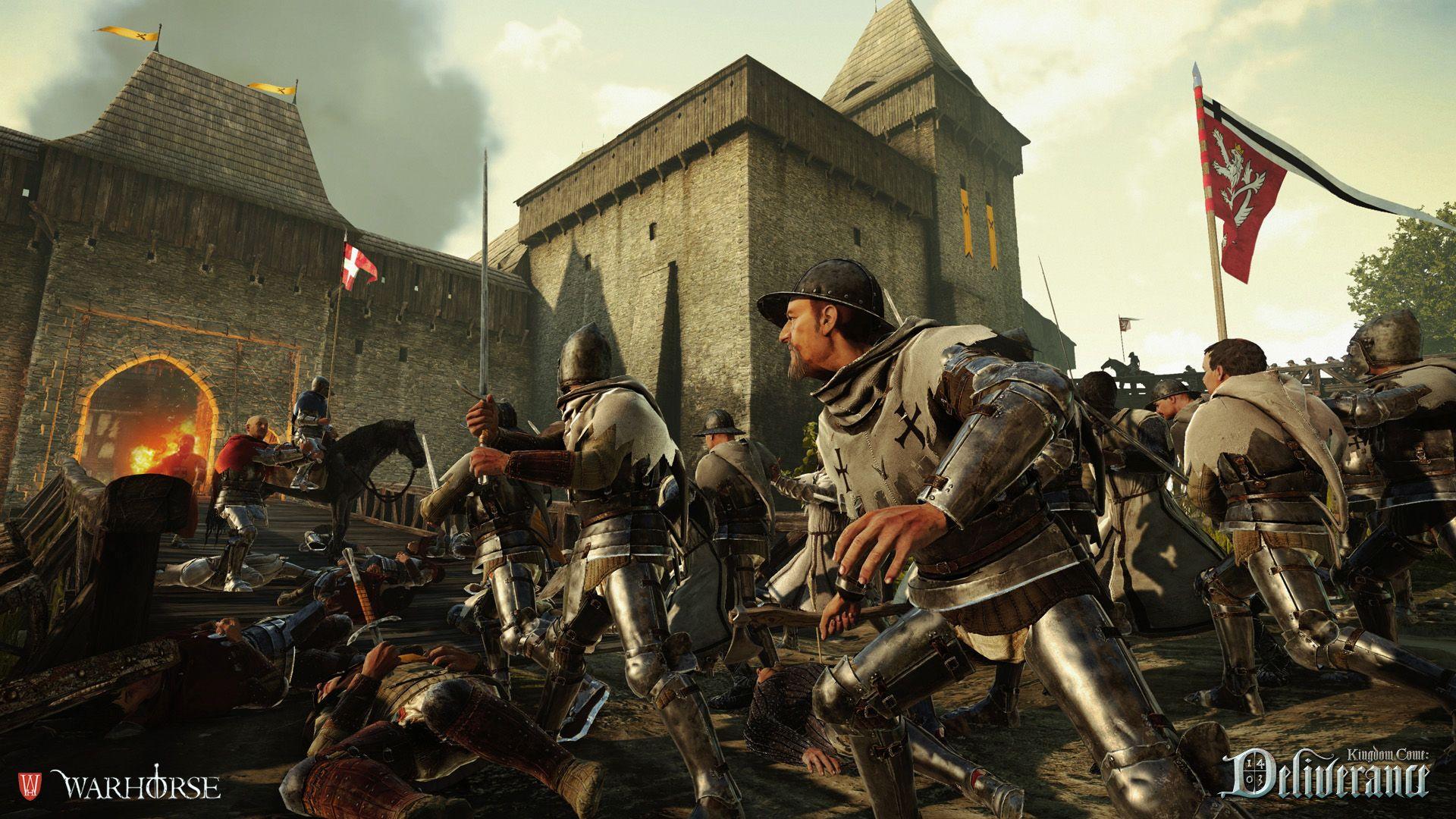
Warhorse Studios wants to challenge the notion that dragons, magic, and other flights of fantasy fiction are what sells a video game featuring armored knights and castles. That’s the reason Kingdom Come: Deliverance exists. Freshly arrived on Kickstarter, the open world, CryEngine-powered, single-player RPG bears more than a few similarities to Bethesda Studios’ dragon-drenched The Elder Scrolls V: Skyrim, but there’s nary a fantasy trope to be found. The team at Warhorse doesn’t shy away from the Skyrim comparison – the building blocks are there, plain as day – but they’re also careful to highlight what sets Kingdom Come apart.

“A lot of game mechanics and our whole concept, is very similar to Skyrim. I like… the Elder Scrolls series. I like their core mechanics. So we build on them. There is a lot of similarity, but we take some things a little bit further.” Those words are from our chat with director and design lead Daniel Vávra, who picked up some experience telling grounded stories during his time as a lead on Mafia: The City of Lost Heaven and Mafia II.
Kingdom Come: Deliverance resembles Skyrim in some ways – huge open world, lots of character customization, open-ended story – but Vávra is quick to point to smaller, mechanical differences that have nothing to do with the upcoming game’s “dungeons and not dragons” mindset. Players will have to cart around plenty of food in order to stay nourished, for example, and raw meats and vegetables left untouched in your inventory will rot over time. There’s also a considerable amount of work that’s been put into the game’s first-person melee combat system, with moves inspired by 15th century close-quarters combat techniques and input through the whole process from an expert fencer.
“I would say that this is something like the DayZ of RPGs,” Vávra says, referencing Kingdom Come‘s realistic systems. The game is something of a dream project for him in the way that it combines a grounded story with a Medieval setting. It’s a period of history that he’s been enamored with since childhood, and one he now gets to immerse himself in every day. Part of that comes from the game he’s working on, of course, but Vávra also proudly boasts about living next door to Prague Castle, in the Czech Republic’s “Medieval district.” He sees Kingdom Come as a chance to create a work of interactive entertainment that capitalizes on a growing pop culture interest in the historical period.
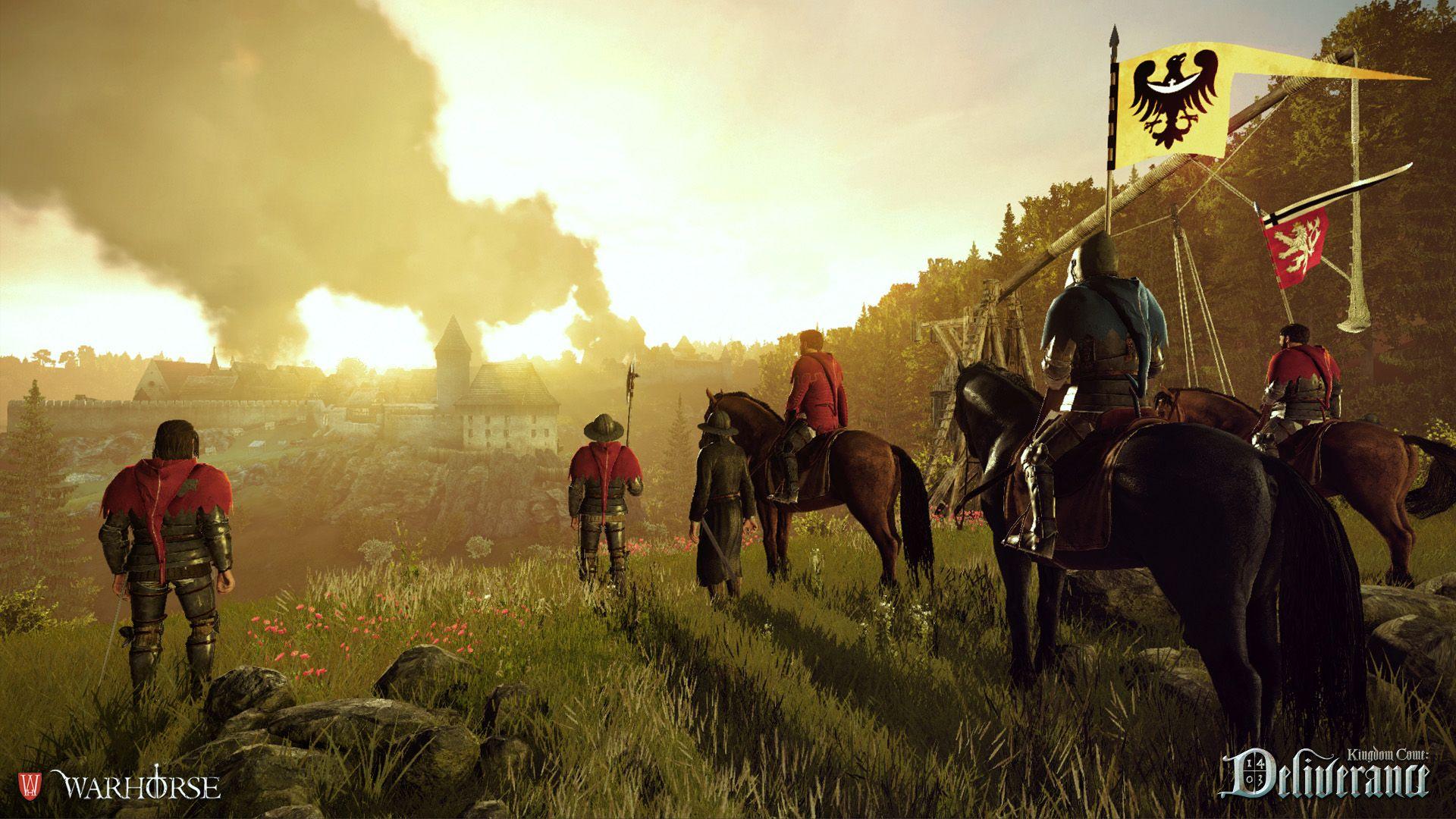
“Judging by the success of movies like Braveheart or Kingdom of Heaven, or TV series’ like Vikings, even Game of Thrones, which is more Medieval than fantasy, Rome, Tudors, all of those series’ … [they’re] quite popular. So I think there’s a large audience that would like to get something like this. They don’t need dragons and magic, they would like to have something more authentic.” Kingdom Come‘s 15th century setting falls in the late days of the Middle Ages, the time of historical figures like Joan of Arc. Its story is a work of total fiction, but the dev team’s goal is to deliver a period piece-like feel in the way the setting is realized.
I would say that this is something like the DayZ of RPGs.
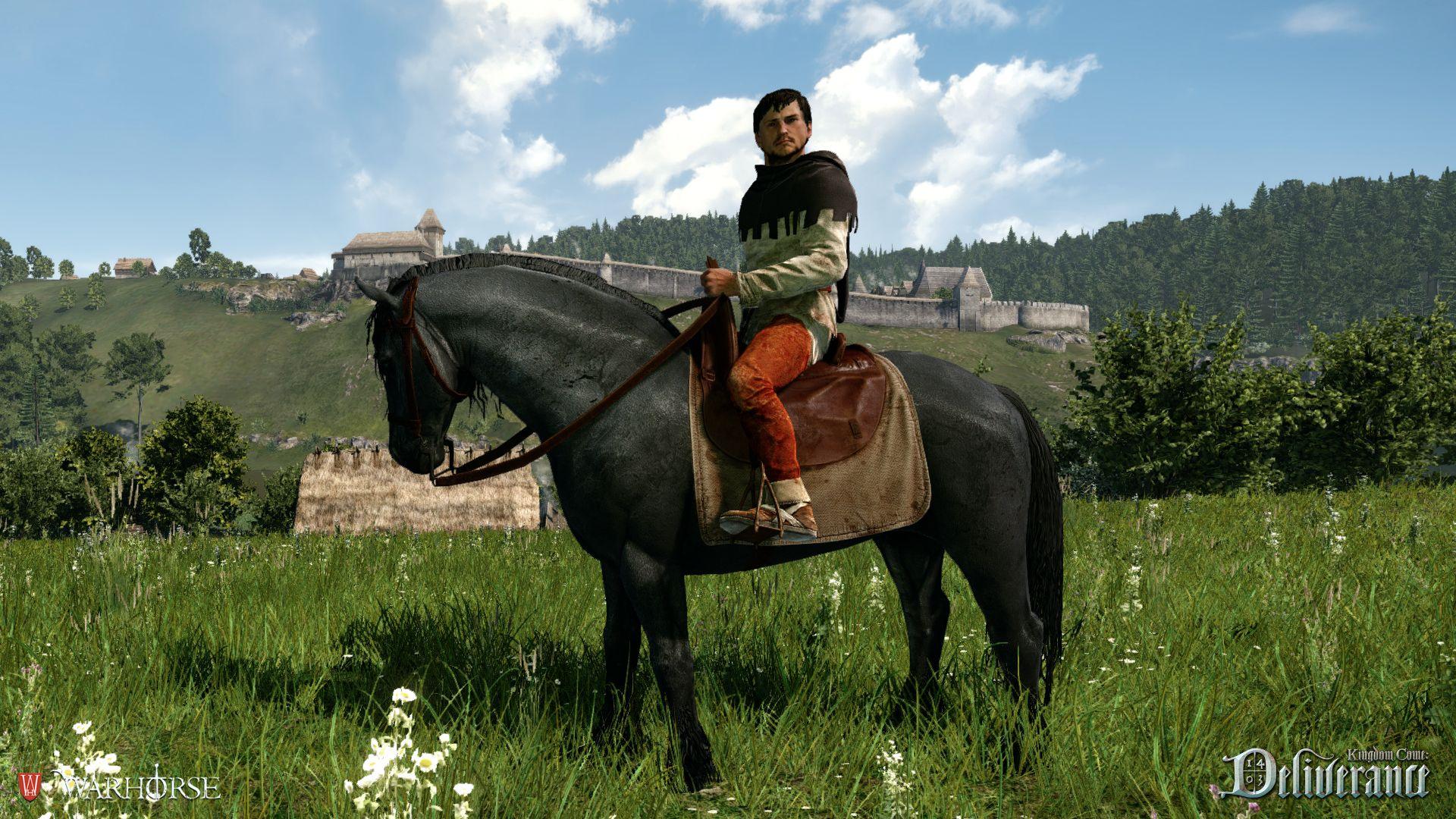
Klima is careful to point out that while Kingdom Come: Deliverance separates itself from other games of this sort, it’s not meant to be an exploration of events as they actually happened in the 15th century. “The game is not really a history textbook,” he says. “It’s set in the early 15th century in the Holy Roman Empire. You are not one of the major players of the period, so the whole story and the environment is just a background… that anybody can relate to. It’s about a young guy who is looking for his place in the world and getting more able to influence the things around him. He goes from a humble blacksmith to somebody who is able to talk to kings and emperors.”
All of the pieces appear to be in place for Kingdom Come‘s grounded representation of the late Middle Ages, and yet Warhorse is now on Kickstarter. What gives with that? Vávra talks to us about the studio’s year-long pitch process, which involved meetings with established publishers. It became clear to the dev team that there’s a lot of resistance to sinking money into a reality-grounded RPG on the scale of Kingdom Come. The decision to self-publish came naturally from there, and “private investors from outside the game industry” stepped forward to fund what promises to be an expensive development process. The one caveat: Warhorse would need to prove there’s a market for this sort of game.

That’s where the Kickstarter comes in. Vávra readily admits that the £300,000 (roughly $500,000) goal isn’t enough to pay for Kingdom Come. Not even close. It’s aimed more at demonstrating to the investors that there’s an audience for this sort of game. “If we manage to get this money, our investors will cover the rest of the costs of development and we will self-publish the game,” he says. “If not we have a little problem there, but that’s life.”
The Kickstarter serves another purpose as well. Warhorse wants to put Kingdom Come in front of players as soon as possible, even if it’s unfinished. There’s no specific timetable hashed out yet, but there’s an elaborate early access plan that follows the lead set by success stories like Minecraft and the still-unreleaesd Star Citizen. “We plan to release a playable build of the game very soon with just one small location where people can test different game mechanics,” Vávra says. “We’ll constantly add new features to this build and beta test it with people, get some responses from the community, and then release an early access beta before the game is completed. I think we can release a playable build several months from now. That’s our current plan.”
Release platforms are also subject to change at this point. The plan is to bring Kingdom Come to PC/Mac/Linux as well as PlayStation 4 and Xbox One. If all goes well with the Kickstarter and no delays crop up, Warhorse estimates that the home computer portion of the release could happen by late 2015. The consoles are a little different, however. Warhorse is a licensed developer on PlayStation and Xbox, but the added obstacle of dealing with console gatekeepers could push the release timing -out beyond what’s in the plans right now – or even a PlayStation/Xbox release at all – on those two platforms.
“The game is perfectly console-ready,” Vávra says. “The problem is the business model of console app stores. We will do as much as we can to make it happen, but the only thing we can promise right now is PC, Linux, and Apple.”
Take a peek at what’s in store for Kingdom Come: Deliverance in the trailer below. You also ought to check out the Kickstarter page, where you can find more information about how the game works as well as the pitch video from Warhorse. The little we got to see certainly looks promising, and we won’t argue with the value of injecting a bit of freshness into the all-too-frequently fantastical Medieval setting.