After 15 years off the pitch, Mario is once again lacing up his cleats. Mario Strikers: Battle League is coming to Nintendo Switch next month bringing soccer back to the Mushroom Kingdom. The surprising series revival will mark Mario’s third sports outing on the Nintendo Switch, and the stakes are a little high this time.
While Mario Golf: Super Rush featured excellent golfing systems, the package itself was thin. There wasn’t much to do outside of its short, shallow RPG story mode. Post-launch DLC brought more courses, but the experience felt lacking compared to past Mario sports games. Battle League will give Nintendo the chance to rally, potentially putting its long line of Mario sports titles back in players’ good graces.
I got a glimpse of what the new Switch game has in store during a hands-off demo. While it’s still looking light on content, its online integration looks to fill in those gaps. For those who love playing titles like this with friends, Mario Strikers: Battle League seems like it could scratch a co-op sports itch that’s usually reserved for FIFA.
Strike, not soccer
In Mario Strikers: Battle League, players compete in 4v4 (plus a computer-controlled goalie) “Strike” matches. The sport resembles soccer, but it’s much more aggressive. Characters can tackle one another, use Mario Kart-esque items, and even knock each other into the electric fence surrounding the pitch. There are no red cards here.
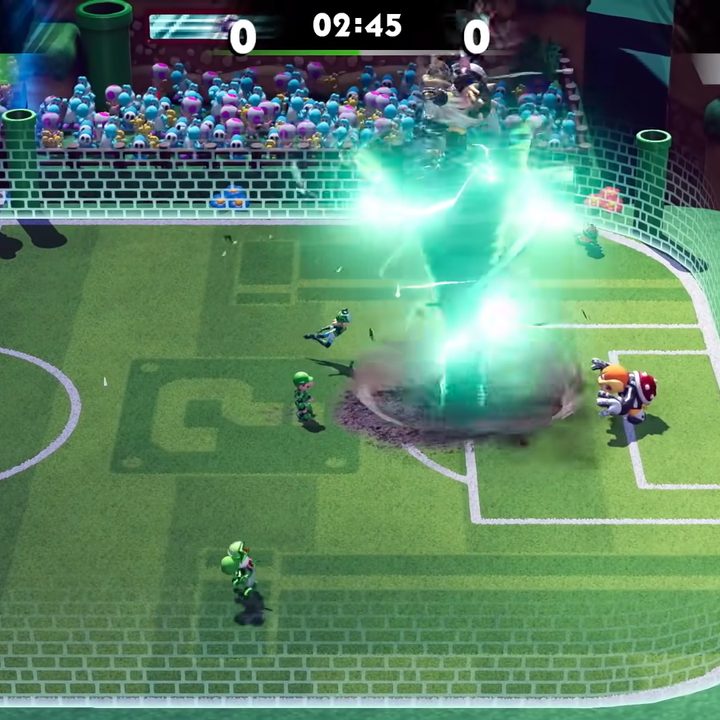
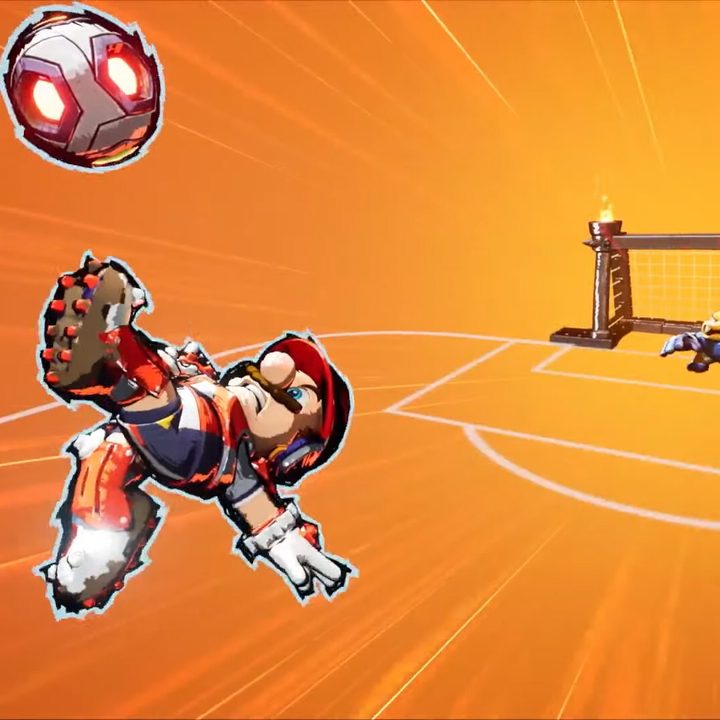
What immediately caught my eye was how hysterically brutal the animations are. When characters smash into an electric fence, they light up like a cartoon cat who’s just stuck a fork in an outlet. In one match, I watched as Toad smashed a ball into a goal. Wario tried to block it, but the force of the ball sent him flipping through the air in perfect slapstick fashion. The cartoon mischief of it all takes me back to the days of beloved arcade sports titles like NFL Blitz.
Aside from items and physical comedy, the game’s main gimmick is its strike shots. At random intervals, orbs will appear on the field. If a team gets one, all its players will be electrified. By doing some successful button-timing without being tackled, players will make a special “super” shot, not unlike the ones in Mario Tennis Aces. Strike shots are accompanied by a fantastically animated cutscene of the character pulling off a special move. Those shots are also worth two points, which makes them particularly valuable.
The core soccer gameplay seems fast-paced, but easy to grasp. The game’s nuance comes from its individual characters, each of which has their own stats. There’s a little bit of depth there, as players can buy gear using coins earned after playing a match. There are gear slots for head, body, arms, and legs, with multiple options purchasable for each. Each piece of gear buffs one stat but decreases another, so players could turn Rosaline into the ultimate tackle machine at the expense of speed.
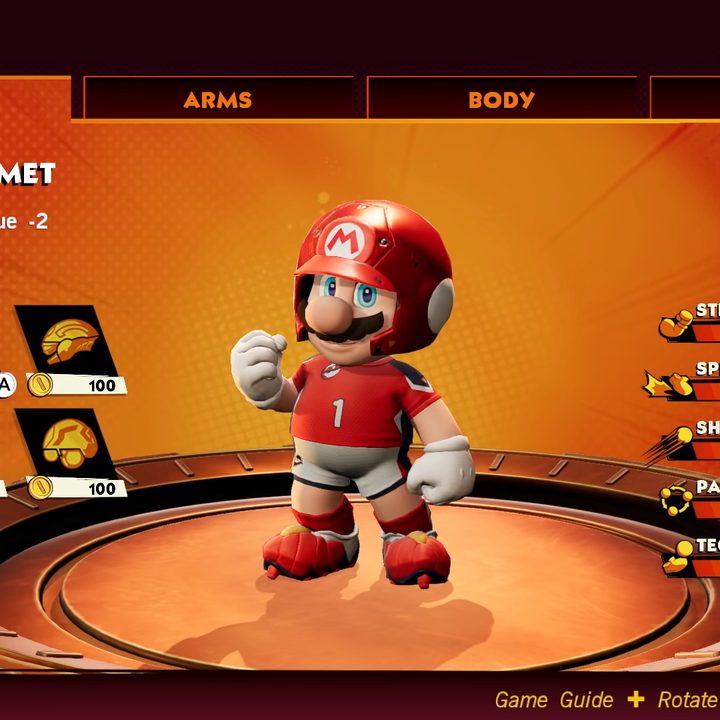
Gear also seems to play a role in the game’s Cup Battles mode, which is the closest thing the game has to a single-player campaign. In that mode, players tackle a series of double-elimination tournaments that each have a special gimmick. In the canon tournament, CPU teams get an additional piece of “canon” gear each round, presumably increasing their shot power.
The single-player experience is looking a little light beyond that, but the gear component gives solo players a reason to test out character builds while grinding coins.
Join the club
The main draw of Mario Strikers: Battle League is its Strikers Club mode. The online mode allows players to create their own club featuring up to 20 friends. A team can customize its uniform, logo, and stadium, the latter of which can be done via a second “token” currency that’s earned in the mode. When two teams compete, the game smashes both teams’ stadiums together rather than picking one.
The mode features seasons that can last anywhere from a few days to a few weeks (Nintendo says it hasn’t settled on the exact time frame yet). During that time, any members of a club can play matches — separately or together — and earn coins and tokens for their team. There’s a bit of friendly rivalry involved, as clubs will have an internal leaderboard that ranks the players on each team. There are also season achievements that club members collectively work toward to gain more gold and tokens.
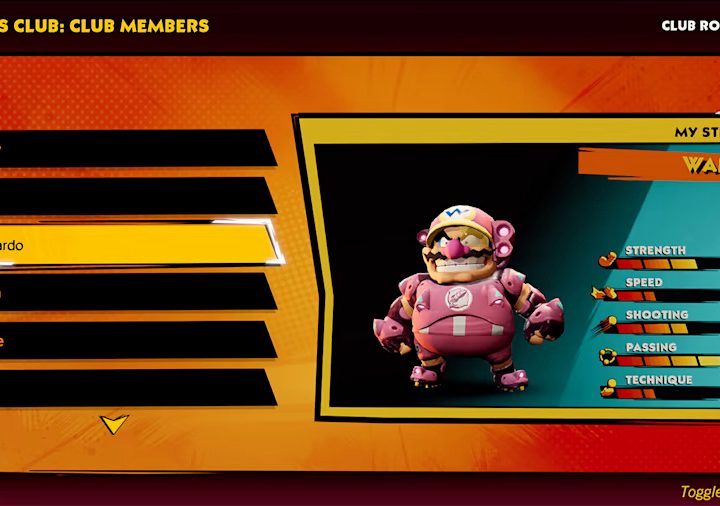
Strikers Club looks to be the game’s make-or-break value proposition, similar to how Nintendo Switch Sports’ online integration is its primary feature. I can absolutely see a world where I get four or five friends together to get in the competitive spirit. Collective bragging rights are a more satisfying reward than coins, after all.
In general, Battle League has strong multiplayer potential. Up to eight players can compete on one Switch, which could make it the life of a party. With options to toggle off strike shots and items, players can take it as casually or seriously as they want. While it doesn’t look like the most robust Mario sports package, a strong core and flexible options could go a long way (I’m still playing Switch Sports regularly despite its lack of modes).
Like a lot of Nintendo’s recent games, Battle League’s success will come down to how much long-term support it gets. The timed club seasons give a reason to log back in regularly, which is a good start. Nintendo also confirmed that the game will get post-launch content, which will include new characters (hopefully that’s great news for scorned Daisy fans). I imagine that means more gear will come to the game too, giving players a reason to grind for coins.
Based on what I’ve seen so far, Mario Strikers: Battle League should, at the very least, be on par with Mario Golf: Super Rush. The arcade-style gameplay looks fast and fun, there’s a nice progression hook thanks to gear, and Strikers Club is a genuinely unique feature for a Nintendo game. For friends who have free time on their hands this summer (especially kids on break from school), this could be an ideal way to pass the time now that Splatoon 3 is set for September. Just keep your expectations in check if you plan to go solo: There’s no I in soccer.
Mario Strikers: Battle League launches on June 10 for Nintendo Switch.