

While I once enjoyed jumping into a few matches of Halo or Street Fighter, lately I almost never engage with multiplayer titles. Where we once enjoyed a game’s multiplayer component for what it was and for as long as we found it fun, an ongoing industry push toward “live services” wants those titles to be our only games.
Gone are the days of jumping in and playing a round or two of capture the flag or team deathmatch for a quick burst of fun before turning the game off. Games like Fortnite, Call of Duty Warzone, and Destiny 2 all immediately put you on the treadmill of battle passes, daily and weekly challenges, and login bonuses upon starting, with the hope that you will stick around indefinitely rather than have your fun and move on.
The death of that classic multiplayer experience could be accelerated in 2024, with Sony’s live service initiative leading the charge. Low-stakes, one-off multiplayer modes are nearly extinct in favor of live service titles, but that change feels more forced than natural.
Fractured factions
Sony, and specifically Naughty Dog, is perhaps the best case study in looking at how the industry has changed how it views multiplayer. From Uncharted 2 forward, Naughty Dog included a multiplayer element in each of its games up until The Last of Us Part II. These modes were standard for the time — a few different game types, some unlockable outfits and cosmetics, and ranks to rise through. It all fit the “jump in, jump out” style that had been the norm up until that point. You were rewarded for playing more, but that was never the goal; the focus was making each match fun regardless if it was your first or 100th.
When The Last of Us Part II was approaching release, it came with the news that the Factions mode, which had been a surprise hit with fans from the first game, would not be included. The team’s ambitions for what would become The Last of Us Online had grown and it would need more time. Fast-forward three years and we learned that it had not only been shifted to a live service-style game, but was later flat-out canceled. Here’s the primary reason for that, in Naughty Dog’s words: “To release and support The Last of Us Online, we’d have to put all our studio resources behind supporting post-launch content for years to come, severely impacting development on future single-player games. So, we had two paths in front of us: become a solely live service games studio or continue to focus on single-player narrative games that have defined Naughty Dog’s heritage.”
While I personally find this choice to be the best one the studio could have made, it is still indicative of what major publishers like Sony think multiplayer games need to be in the modern gaming climate. Naughty Dog has never been a multiplayer-centric studio, let alone focused on live service. That doesn’t mean it hasn’t made exceptionally fun multiplayer modes in its games, nor that it couldn’t create a compelling live service game either. It just shows that the former is no longer even being considered as worth investing in.
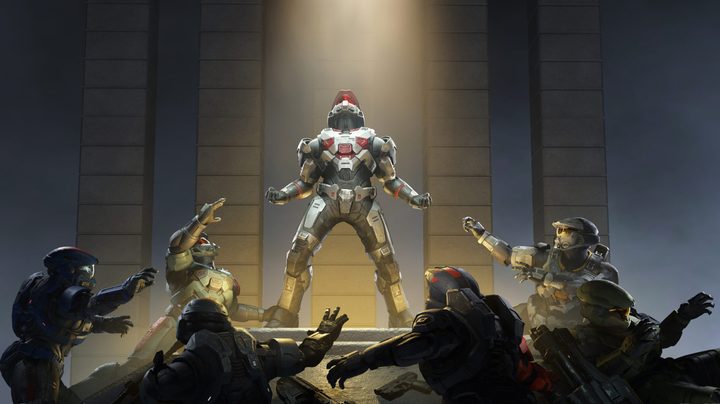
What’s questionable is how much players actually prefer the current live service model to standard multiplayer integration. Take Halo, as an example. In the Bungie era, before it went on to become one of the pioneers of live service games, Halo 2 and 3 were some of the most popular and enduring multiplayer games on the market. Players didn’t need external incentives like battle passes or challenges to keep coming back — the core gameplay was more than enough to do that on its own.
The comparatively troubled Halo Infinite has been plagued by many flaws since launch, with most stemming from its attempt to chase that live service trend. It was almost universally agreed that the game felt good to play, but the framework of challenges, battle passes, XP grind, and drip-feeding of content crushed the player base. And this isn’t an isolated incident, either. A fun multiplayer concept like Exoprimal is, unfortunately, destined to die as a “failure” due to being shoved into a constantly updating, money-printing model rather than embracing what it felt made to be: a casual, fun way to kill a couple of afternoons with your pals.
I’m not so naive as to ignore the driving factor behind this shift in multiplayer philosophy: money. Games cost more time and money than ever before. Even selling a few million units won’t necessarily offset the costs of development anymore, so a multiplayer game needs to not only keep players engaged, but funneling money into the game in various ways. Sony has clearly taken notice of the success of these types of games and is in the process of a massive shift in direction in an attempt to capitalize on it.
I just wish there was still value put on a multiplayer experience not engineered to keep you playing (and paying) for years. Old multiplayer games felt like they were designed to keep you playing by being fun, not because you feel obligated to. I would HAve gladly played a dozen or two hours of a The Last of Us II Factions mode, but even if The Last of Us Online had been released, I don’t think I would have even bothered with it. I will always have fond memories of clutch moments of narrowly escaping with the enemy flag in a Warthog in Halo 2, or the nights spent running and rerunning campaigns in Left 4 Dead 2.
I don’t believe that’s just nostalgia talking, either. My memories of live service games are focused on the unending grind and progression that never reach a satisfying payoff. One-off games gave me those moments, win or lose, every match.


