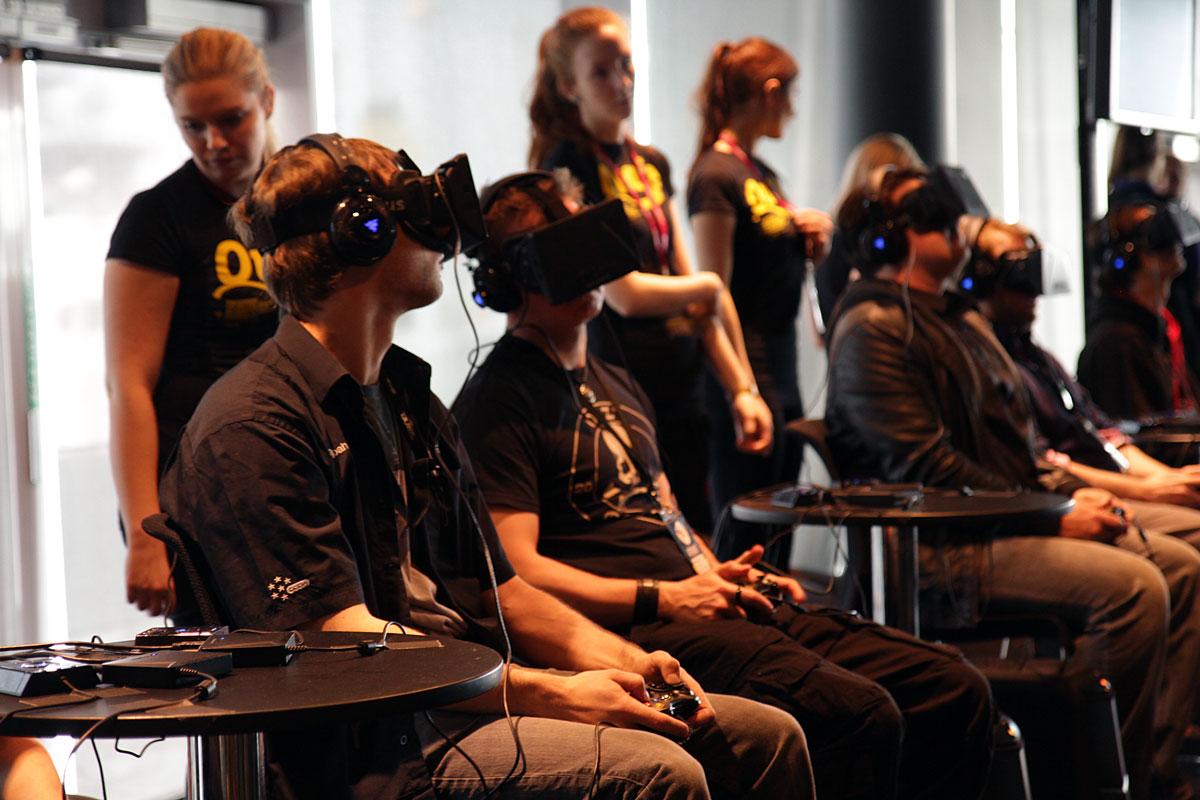
There’s really only one way to accurately convey in text the experience of using an Oculus Rift: look around. Oculus VR’s virtual reality headset has come a significant distance since id Software’s John Carmack showed off a janky, stitched-together prototype behind closed doors at E3 2012. The tech went to Kickstarter, got funded by the crowd, shipped out to backers, and whipped the development world into a frenzy of excitement.
We sat down with the Oculus VR team at E3 2013 for a peek at how things are coming along, and were greeted with a surprise: a 1080p version of the devkit. There’s no plan – for now – to actually sell this model in the pre-consumer release period; it exists purely to prove that Oculus Rift can deliver HD visuals well.
 The session started off with a look at the Unreal Engine 4 “Elemental” demo through the standard 720p devkit. Remember: even though 720p is technically HD, it’s split on the Rift between two lenses, so you’re essentially viewing everything at half resolution. The jump to 1080p is a huge improvement, as we soon learned.
With the demo concluded on the standard devkit, we switched over to “Elemental” on the HD model.
Wow.
This is a significant improvement, and it’s the target for the eventual consumer release. The quality is still less than what you’d see at the same resolution on an HDTV, and there’s a noticeable blurring effect when you move your head quickly, but the upgraded kit is still a prototype. What’s more, any VR headset – even the eventual consumer model – requires user-specific calibration for optimal performance, and the Oculus booth demos just didn’t afford any time for such a setup.
With “Elemental” finished, we moved on to VR Cinema, a fan-created app built on the standard devkit that also works with the HD one. VR Cinema is essentially a video player, only it drops you into a physical space that resembles a movie theater. You can sit in any seat that you like, watch reflected light play off the floor, adjust the size of the screen as you like, and even turn completely around to check out the projector against the back wall. The goal for a more polished version of this app would allow for a sort of social “multiplayer” setup in which you share the theater with connected friends.
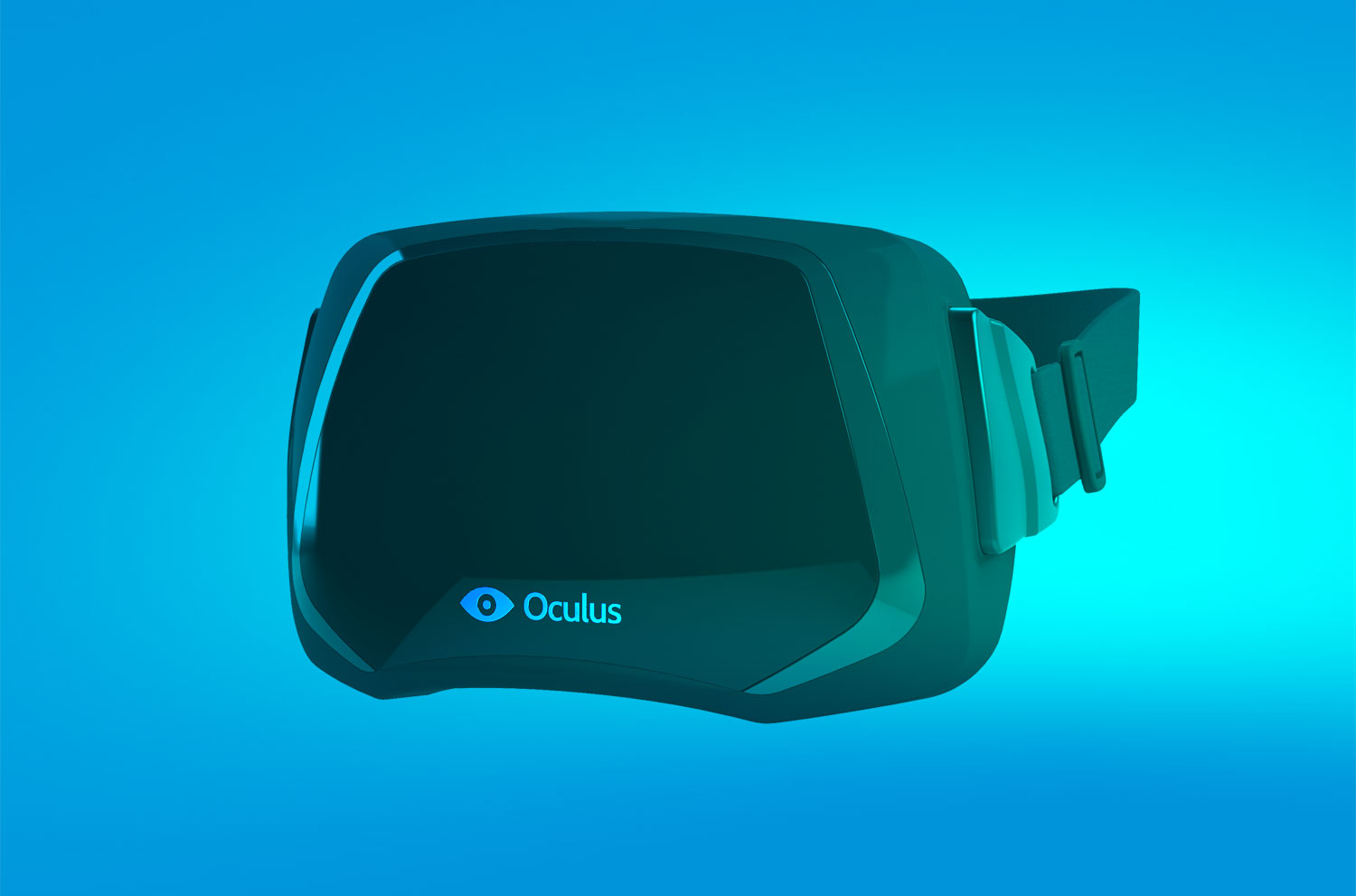
Getting the headset running at an HD resolution is a big step forward for Oculus VR, and it’s just the beginning of what’s planned. The headset is viewed internally as a platform unto itself; now that the presentation is close to being nailed down, the team is working at coming up with cracking the problem of VR input. For now, most users are pairing the Rift with gamepads and mouse/keyboards, though some are also taking advantage of more unique control options, such as Razer’s Hydra.
All of this is part of the long-term planning. While it would be great if the input problem could be solved prior to the consumer launch, more realistic thinking sees a dedicated control scheme added to v2.0 or even v3.0 of the Rift. Much of this also depends on continued support from the development community. If more studios start building headset-only as CCP Games has with EVE VR, supply chains will have to be stepped up to accommodate the demand.
The fact remains: Oculus Rift is in a considerably stronger place than it was just one year ago when it debuted behind closed doors as a noteworthy gimmick. It continues to establish a presence as a serious contender in the gaming hardware space; we can only speculate at what the coming year’s advances might bring, but it’s hard not to put that thing on your head and feel like you’re touching upon the future of interactive entertainment.