“Pixel Ripped 1978 brings Atari nostalgia to VR in a charming adventure that feels a little too removed from reality at times.”
- Authentic Atari references
- Clever meta gameplay
- Inventive 3D worlds
- Charming Easter eggs
- Repetitive Dot combat
- Undeveloped Bug story
- Sanitized Atari history
“Why you can trust Digital Trends – We have a 20-year history of testing, reviewing, and rating products, services and apps to help you make a sound buying decision. Find out more about how we test and score products.“
Even though I was a 90s kid, I grew up with an Atari 2600. My mother handed her old console down to me when I was young and I loved it so much that I hooked it up to the TV in my bedroom. For years, I’d spend every weekend trying to master games like Breakout or simply struggling to understand how to play Spider-Man at all. I still have a clear image in my head of that pre-teen kid sitting way too close to an old TV joystick in hand, surrounded by walls covered top to bottom in posters.
So I couldn’t help but feel a warm nostalgia wash over me when I found myself sitting in an authentic simulation of almost that exact experience in Pixel Ripped 1978. My PlayStation VR2 became a literal time machine as I played rounds of Breakout on Atari’s classic Video Pinball console, all while my digital older brother rudely blocked the screen.
Honest moments like that make the third entry of the standout VR series another easy charmer, though not all of its historical representation feels quite so genuine. More than previous entries in the series, Pixel Ripped 1978 finds itself at the intersection of sincere reverence for video game history and accidental propaganda.
Throwback era
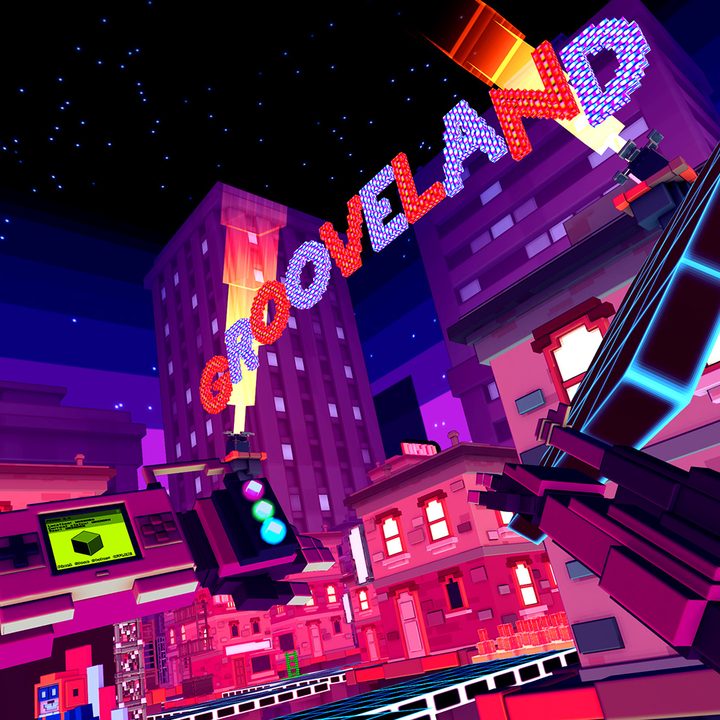
Following up the success of the excellent Pixel Ripped 1995, the 70s-themes threequel expands on developer Arvore’s winning formula. It tells two intersecting stories: One is the tale of a digital hero named Dot fighting a war against a cyber goblin inside a digital world, and the other is that of a workaholic game developer named Bug working at Atari. Through video game magic, Dot syncs up with Bug. Their goals align, as changes Dot makes in her world help debug issues in Bug’s games. It’s a clever narrative trick that has players jumping between an authentic recreation of an Atari office and a 3D adaptation of 2600’s worlds.
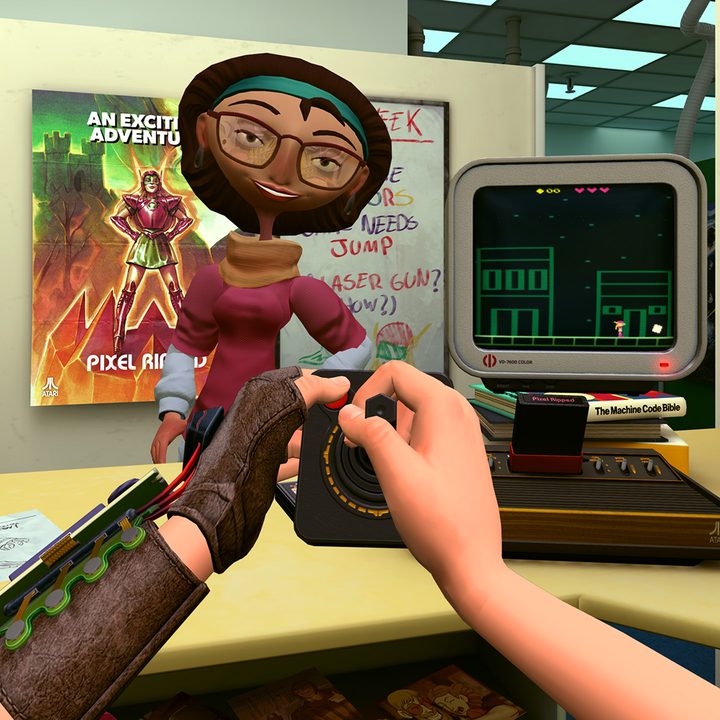
Of the two halves, the Bug sections are the standouts here, which largely see the developer testing games at her desk on a small monitor while coworkers distract her. As I try to play through original 2D adventure games by using a perfect recreation of the Atari 2600’s joystick, I need to pause to answer a constantly ringing phone, stamp contracts, and deal with chatty colleagues. Like previous games that have used a similar formula, it’s an ingenious juggling act that feels true to life. It’s so authentic and immersive that I quite literally get a jump scare the first time a coworker walks over to my desk — for a second, I genuinely thought a stranger had walked into my apartment.
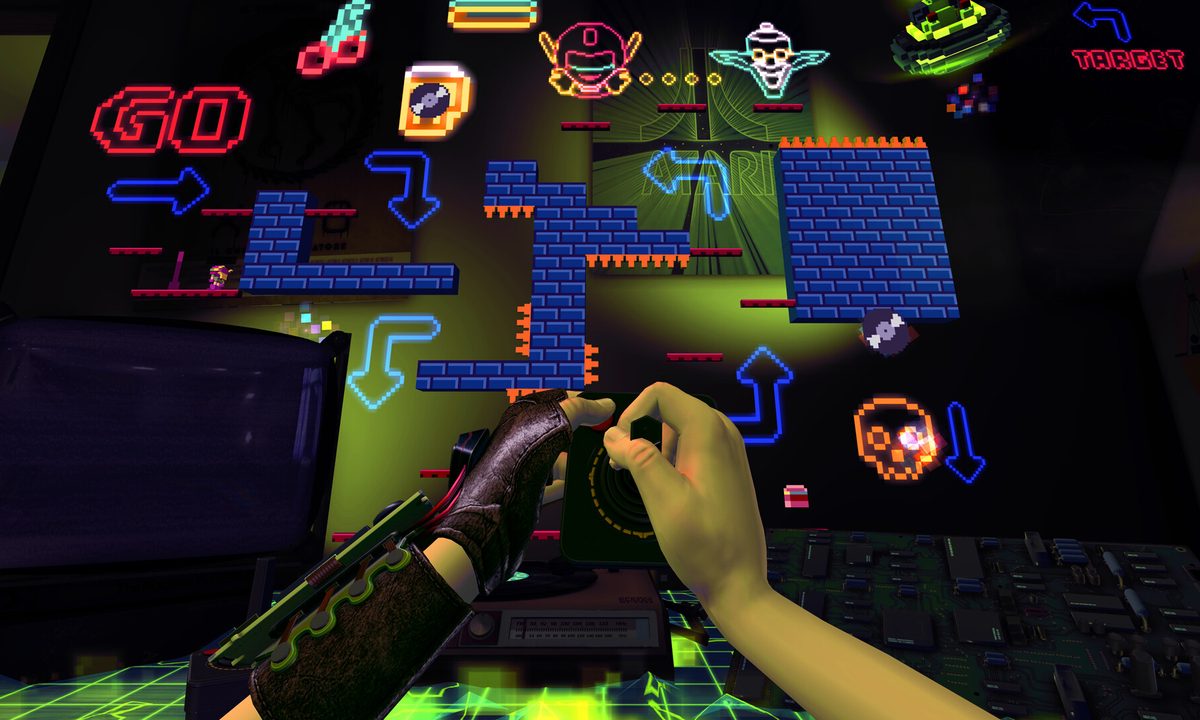
Some clever gameplay twists make Avore’s fictional Atari games fun in their own right too. One has me navigating a club with security cameras that’ll kick me out if I’m not partying near them. To do that, I need to slot a floppy disk into a debug machine next to my monitor, turning my shoot button into a dance button while active. A later title plays like a de-make of VVVVVV, as I need to smash a big red button on my desk to reverse gravity in the game. Like a lot of VR games, controls like that can get frustratingly finicky; I managed to mangle my character’s hand at one point around a controller. Still, it’s hard not to be charmed by how clever it all is.
It’s fun enough to make me dream of a VR Mega Man game.
Dot’s adventures are fun in their own right, although they aren’t quite as inventive. There, players are thrown into the games themselves, where Bug’s 2600 titles become blocky first-person shooters. It’s a novel idea that works well, as I use my Sense controllers to blast enemies with an arm cannon and hunt down collectible Atari cartridges. Combat gets repetitive as I’m mostly just holding down a trigger to pepper dragons and goblins with pea shooter pellets or swing at them with a melee item, but it’s fun enough to make me dream of a VR Mega Man game.
The most successful gameplay sections come when Dot and Bug’s worlds collide, which largely happens in standout boss encounters. The Video Pinball scene I mentioned earlier changes when Dot’s nemesis busts out of the TV screen. My digital living room suddenly becomes a Breakout board as I’m using motion controls to move my paddle and using my free hand to grab handfuls of crumpled paper and toss them at my goblin foe. Each of those encounters shows off what Arvore does best, creating inventive meta-experiences that fit with VR.
Atari-washing history
What’s less successful here is how its two narratives come together. Pixel Ripped 1995 handled its two-tier story expertly, creating a moving coming-of-age story about a character growing up as video game history itself is rapidly changing. The story of Dot saving her digital world was more of a side-tale to support that idea. Pixel Ripped 1978 flips the script, putting a much greater emphasis on the digital world’s drama instead of Bug’s personal life.
It’s a bit of a disappointing priority flip, one that left me with a rather incomplete portrait of a promising protagonist. There’s a good story in here about a creatively burned-out game developer trying to reignite their passion for art, but we only get brief glimpses of that in between Dot’s digital adventures. Flashbacks tease even more character-building, exploring Bug’s relationship with her dad, but we don’t get enough of those interactions for any of it to stick. The story instead ends on a somewhat vague note, leaving a story about how conflict is key to making art.
It moves from fanfiction to alternate history.
Part of me wonders if the understated story has to do with Atari’s involvement in the game. The iconic company serves as Pixel Ripped 1978’s publisher, though it came into the game’s development fairly late. That led Arvore to add extra dev time onto the project to add in more Atari history. As a result of that partnership, the story is full of visual Easter eggs and even some voice cameos from legends like Nolan Bushnell. It’s clear that the developers had fun playing with real video game history this time rather than inventing a fictionalized version of it.
That creates an odd tension, though. It’s hard to square the authentic recreations of Atari’s machines and games with an idealized portrait of what it was like to work at the company. It’s a cute workplace comedy filled with eccentric characters having fun, a happy-go-lucky image that feels sanitized by a company trying to tightly control its brand. Atari is no stranger to that approach, with its excellent Atari 50: The Anniversary Celebration delivering a bit of corporate propaganda. But it feels a little more jarring in a game that’s recreating workplace culture in the video game industry — a space that historically hasn’t been kind to its workers.
Naturally, I don’t think that a light-hearted VR game is the right place to get into the nuances of the industry’s toxicity problems. Still, it’s hard not to feel a little uneasy, or at least inquisitive, about how Atari’s image is presented here. The Pixel Ripped series has skirted around these problems in the past by focusing on kids growing up on games rather than the industry making them. They’ve also had the luxury of dealing in pure fiction, with Arvore creating homages to old games. With Atari and its IP in the mix, there’s a necessary distance that’s missing here; it moves from fanfiction to alternate history.
If you can put that critical lens aside, Pixel Ripped 1978 is still a perfectly charming adventure in the VR series’ strong history. Some frustrating controls and repetitive combat are counterbalanced by a loving ode to the Atari era complete with nostalgic references to classics like Pitfall! and Yars’ Revenge. If you grew up with an Atari and yearn for that simple era of games, this is as close as you’ll get to stepping into a time machine.
Pixel Ripped 1978 was reviewed on PlayStation VR2.