

When the PlayStation 5 Pro was revealed, the big buzzword to come out of the presentation was PlayStation Spectral Super Resolution (PSSR). This was PlayStation’s “secret sauce” intended to sell the $700 upgrade to new customers and existing PS5 owners alike. Similar to AI upscaling seen in technology like DLSS, PSSR allows games rendered at a lower resolution to be upscaled using AI to appear more detailed. For the PS5 Pro, this means removing the need to choose between a performance mode that prioritizes frame rate and a resolution mode that sacrifices frame rate for a clearer picture.
PSSR is the first time any kind of AI upscaling has been used on consoles … and will be key in PlayStation’s success for its true next-generation console.
Sidestepping the graphical arms race
With rare exceptions, new game consoles have mainly sold themselves based on providing a graphical leap above its predecessor. This was clear as day going from 8- to 16-bit systems, and perhaps at its peak going from 16-bit to 3D, but has since hit a level of diminishing returns. PS5 games are undeniably better looking than PS4 games of the same scale, but the differences are in the margins.
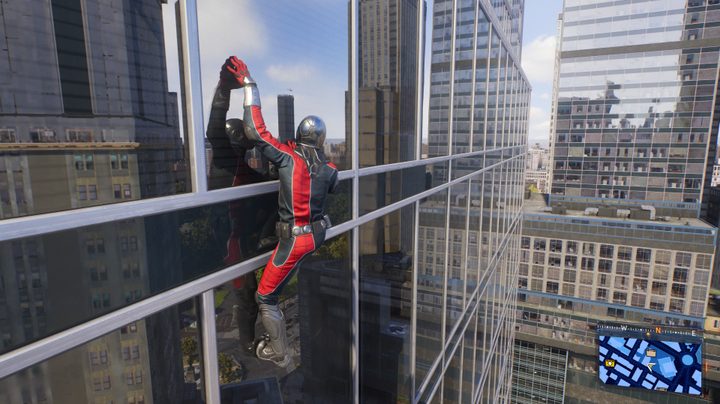
Despite the gap in graphical fidelity shrinking from generation to generation, the cost to produce them only seems to rise. I don’t pretend to know the ins and outs of game development and budget allocation, but I don’t think it would be too outlandish to suggest that squeezing out as much visual detail and fidelity plays a major role in the exorbitant budgets we’re seeing for AAA releases. It takes a lot of talented artists to craft a world as detailed as the ones in games like Horizon Forbidden West and Marvel’s Spider-Man 2. That also forces developers to do a bit of a balancing act in how far they can push the visuals while still getting adequate performance. As much as the hardcore crowd loves to champion higher frame rates, it is much harder to market a game based on how it feels versus how it looks.
PSSR could be a way to ease the pressure on teams to hit that rising bar of visual expectations without compromising FPS and overall performance. We’re already getting a glimpse of that with the PS5 Pro effectively running games in Performance Pro mode and upscaling the game’s visuals to match what it would be in Fidelity Mode. We won’t see the true fruits of this power until it is the baseline with the PlayStation 6, but it demonstrates the potential perfectly. Instead of making compromises on performance and visuals, developers can focus more of their resources on achieving their vision and allow PSSR to “scale” the graphics up to a level that wouldn’t otherwise be technically possible. That would still allow PlayStation to tout its newest console as having the best graphics without putting that strain directly on developers’ shoulders.
There is a limit to how low-detail an image can be and still look good when upscaled, but it significantly reduces one bottleneck from the equation.
The rise in budget and development time go hand in hand. If PSSR is as easy to work with and effective as it promises to be, the hope would be that it could help ease those issues, even if it’s in just one small way. If teams are able to make games a little more efficiently without sacrificing quality, it could be a little step away from the industry’s current state where a single flop can mean the end of a studio.
While that’s all great for developers, players reap just as much benefit from PSSR. Looking at the PS5 Pro as a bit of a beta test, we see how effective it is at artificially boosting image quality. Is it perfect? No, but I don’t believe it has to be. Most of us aren’t going to notice if some foliage in the distance has a touch of artifacting or some shadows look odd in the heat of battle. Plus, being AI, the idea is that PSSR will only get better over time. If that works as I hope, we could even see a generation where games that come out at launch remain on par graphically with games released years later as the technology gets more advanced.
During this generation, we’ve been hearing about how untenable the current AAA development cycle is. Team size, budgets, and development time are approaching the point where selling anything less than multiple millions of copies would be a catastrophic failure. There is no ideal solution to this problem — it’s a systemic issue that comes from corporate greed and the chase for infinite growth — but PSSR could be one small piece that helps ease a crisis.


