After years of waiting and one delay, Sucker Punch’s Ghost of Tsushima is finally here. It was met with critical acclaim, including earning the Editor’s Choice distinction in our review, and we praised the game’s sprawling open world, engaging combat, and compelling story.
If you followed the development of the game at all, you know it’s heavily inspired by the golden age of Japanese samurai films, specifically the works of Akira Kurosawa. The developers wanted to ground the game in realism as well as honor the cinematic storytelling of the samurai genre. Before you dive into the world of Ghost of Tsushima, we definitely recommend watching these films to get a feel for the type of storytelling the game explores.
Further reading
- Ghosts of Tsushima: Tips and tricks you need to know
- Ghost of Tsushima: Photo Mode tips and tricks
- The best games to play after finishing Ghost of Tsushima
13 Assassins

Takashi Miike is heavily influenced by the work of Akira Kurosawa — the master of the samurai sub-genre. That is no more apparent than in Miike’s 13 Assassins. Released in 2010, the film is a political drama loosely based on historical events. At the end of the Edo Period, 11 samurai and a recruited hunter are hired to assassinate the Lord Matsudaira Naritsugu. The Akashi clan is unleashing wanton violence on the commoners and nobility but is shielded from consequence by his half-brother, who is the current Shogun. Their goal is to assassinate him before Naritsugu is promoted to the Shogunate Council.
The film is a slow burn that ends in the bloody violence Takashi Miike is known for, and it perfectly encapsulates the political drama, personal motivations, and stylized violence that define the sub-genre. That’s what makes it a perfect entry point into the genre.
Seven Samurai

Seven Samurai is one of the oldest films on this list and one of the most influential. It is hailed as one of the greatest international films ever made, and one of the most commonly recreated and referenced. It is essential viewing for any fans of the genre and film buffs in general. The story follows seven ronin who are hired by local villagers to protect them from bandits. The film is broken into two parts: The essential setup and recruitment of the samurai and the conflict with the bandits.
The movie is long but well worth the watch. After viewing it, you can see just how many films are inspired by it.
The Twilight Samurai
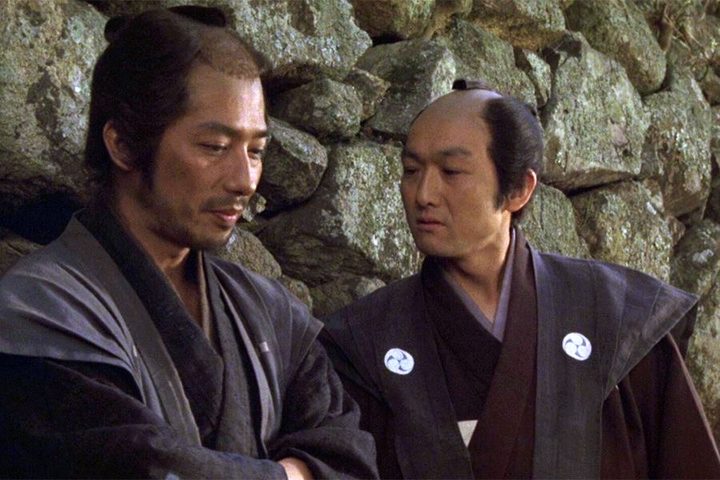
Many films in the samurai genre center the drama around their code of ethics and the moral and political implications of going against them. The same is true in Ghost of Tsushima, when he questions his order’s code of ethics and its ability to fight off the Mongol invasion.
The same is true of the critically acclaimed The Twilight Samurai. While Ghost of Tsushima focuses more on war, The Twilight Samurai’s story is more personal. However, it still puts the traditions of the samurai front and center in its storytelling. It follows the story of Iguchi Seibei, a recently widowed and impoverished samurai. The story is heavily rooted in social etiquette, and it features a strong female character in Seibei’s love interest, Tomoe. It still ends in a duel to the death, as any samurai film must, but its focus is far more on human relationships than violence.
Harakiri

Masaki Kobayashi is another one of the great Japanese filmmakers. While his filmography isn’t nearly as focused on samurai in the way Kurosawa was, he still created two of the most significant samurai films in Samurai Rebellion (also on this list) and Harakiri.
Similar to how Ghost of Tsushima questions the practices of samurai, so too does the film Harakiri. It deals with the tradition of seppuku — or honorable suicide — and the hypocrisy of their noble code. It’s a layered movie that is worth watching and unpacking. The film won the Special Jury Award at the 1963 Cannes Film Festival and is some of the finest Japanese cinema ever created.
The Hidden Fortress

The samurai genre does not exist in its own sub-genre. Samurai films have by and large been influential for filmmakers across genres. That is particularly true of Kurosawa’s work, whose films heavily influenced action-adventure films, westerns, and even George Lucas’s Star Wars. In fact, The Hidden Fortress was a huge influence on the way Lucas wrote the original script. R2-D2 and C3-P0 are reminiscent of the two peasants that lead in The Hidden Fortress. The film isn’t Kurosawa’s finest, but it still stands among the best in the samurai genre.
Throne of Blood

Seven Samurai is arguably the most influential of Kurosawa’s films, but we think Throne of Blood is Kurosawa at his finest. The film is also a great example of the homogeneous nature of art, as it is a transposed version of Shakespeare’s Macbeth. It follows the story of a warrior who murders his lord in an ambitious bid to take control of the Spider’s Web Forest. It takes liberties with the Macbeth story, but Kurosawa’s ambitious storytelling and stylized art direction make for a haunting and violent film that beats every other film adaptation of the play by leaps and bounds. Kurosawa would return to Shakespeare again with the 1985 film Ran.
Killing (Zan)

The most recent film on this list, Killing is a notably subdued film compared to others in the genre. It resembles The Twilight Samurai because of its emphasis on morality and the struggles of a young samurai being pulled into a life of violence. It explores the emotional consequences of taking a life, and it builds up to a single — albeit messy — sword fight at the end. It was directed by Shinya Tsukamoto — a cult director best known for his horror films. However, if you were a fan of them or just low-budget art films in general, Killing should be right up your alley.
Samurai Rebellion

Samurai Rebellion is Kobayashi’s other film on this list, and it is arguably on par with Harakiri. It is a period drama that follows three samurai pushing against the strict social constraints of the period. It is one family’s individualistic rebellion against the oppressive state and their own customs. Isaburo is the deadliest swordsman of his clan and is looking to escape from his controlling wife. Meanwhile, his son is forced to marry the mistress of their ruling lord. But when the lord comes calling for her to return, the father, son, and wife all resist him, hence the rebellion in the title. It’s a story that centers its drama on the restrictive code of conduct of the period, which perfectly parallels the struggles in Ghost of Tsushima.
Blade of the Immortal

While Ghost of Tsushima is heavily grounded in realism, much of Japan’s culture and the later romanticizing of the samurai is rooted in myth and the supernatural. That’s what makes the film Blade of the Immortal so unique. It fuses supernatural elements with the mythic status of samurai. Based on the popular manga, it follows the story of Manji — a samurai who has been given eternal life by sacred bloodworms. Fifty years and plenty of scars later, he encounters a young woman named Rin who recruits him to protect her from a gang of fighters led by Anotsu. The film contains Miike’s trademark violence to an extreme degree. It features outlandish characters, crazy weapons, and fountains of blood. It’s one of the most ridiculous films on this list, but it is also arguably the most fun.
WATCH ON HULU
Samurai Assassin
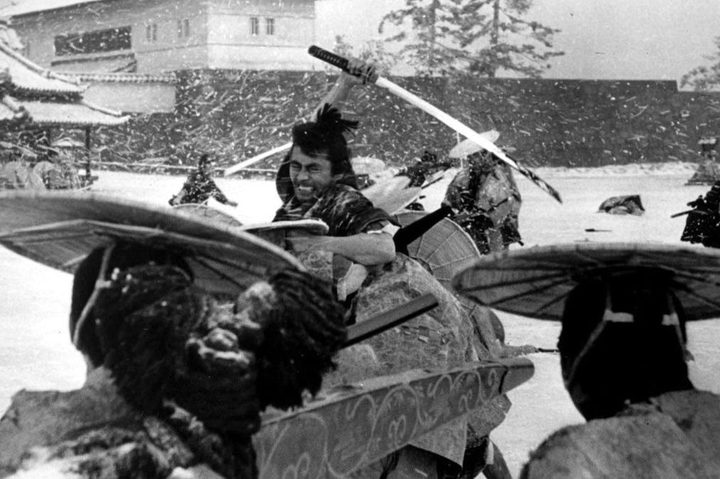
Samurai films are usually highly stylized and end with dramatic and bloody sword fights. Samurai Assassin is one of the films that created that tradition, and it is still one of the finest examples in the genre. It operates like a noir film, as members of the Ii clan investigate to find a traitor and assassin in their midst. The story centers on the lowly warrior Niiro and his ambitions to become a samurai. It’s a film that seamlessly ties its emotional stakes to the political drama at its core. Director Kihachi Okamoto also has wonderful widescreen imagery, including the beautiful snow-swept battle at the film’s conclusion. It’s a film that blends style and substance, and it is easily one of the best samurai films ever made.