Microsoft is approaching the next generation of consoles a lot differently than it has in the past.
Xbox head Phil Spencer announced on Thursday, July 30, that Microsoft would bundle xCloud, its game streaming service, with Xbox Game Pass for Xbox Game Pass Ultimate members at no additional price. That makes Ultimate an incredibly compelling service and, at just $5 more per month than an Xbox Gold membership, the de facto option for Xbox owners.
The announcement is the clearest signal to date the Microsoft plans to go all-in on cloud gaming — and that it sees the technology as the real next-generation battlefield.
It’s a move that is, in some ways, familiar — even though the technology is new. Back in 2012, rather than engaging in a direct fight with Microsoft and Sony over graphics resolution and processor speeds, Nintendo created a console that focused on something else entirely. By stepping away from the console wars, the company managed, in its own way, to win them.
Nintendo called that strategy “Blue Ocean.” Now Microsoft, it seems, could be looking for a new harbor as well.
Microsoft has clearly learned from past mistakes. It realizes that trying to force streaming on customers unilaterally is a move that can (and likely will) backfire badly. The company tried to impose its will during the launch of the Xbox One and felt the consequences for the entirety of this console generation.
That’s part of why the console arms race is still going strong with the launch of Xbox Series X and PlayStation 5. Gamers — especially hardcore gamers — expect next-generation hardware to do things the current generation can’t.
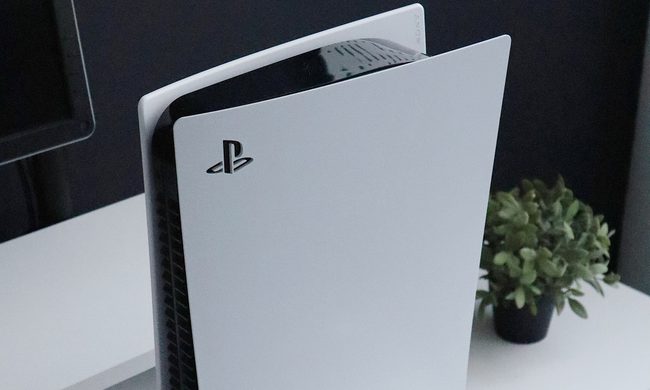
Sony showed it had ticked the box six weeks ago when it unveiled the PS5 game lineup. Xbox will likely do the same later this month. But as players marvel over instant level switching and minimal start-up times, they’ll also get a taste of what game streaming can do. And that might be all Microsoft needs to start building brand loyalty.
This was hardly Microsoft’s first move in the game streaming space this year. On June 22, the company sold Mixer, its Twitch competitor, to Facebook. While the service never grew into a major player in the space, by transferring Mixer to Facebook, Microsoft automatically gained a bigger showcase to show off xCloud technology, including an expected feature letting people who are watching a Mixer stream directly launch and begin playing the games themselves.
xCloud isn’t going to be a perfect (or likely even optimal) product out of the gate. It currently only works with Android phones and tablets and requires either a 5G or 10Mbps wireless connection. The device list will expand, of course, and the technical requirements will either loosen or the spread of 5G will catch up soon enough. But to bet the farm on xCloud right now would be foolhardy. Just ask Google, which has seen Stadia struggle since its debut.
In many ways, the launch of Xbox Series X is both the beginning of a new generation and the beta test for the following one. Microsoft and Sony will slug it out with two systems that are largely the same, technically. And the extreme fan bases of both systems will debate the merits, while the rest of the world just enjoys the games.
But in the next couple of years, as the kinks get worked out of xCloud and cloud gaming becomes more than just a curiosity, Microsoft will have already embedded it into its console architecture, giving users a taste of what it’s like to stream titles like Halo and Forza onto new platforms. And by the time we get to the mid-terms of this console generation, that could be a critical advantage.
Sony, of course, is exploring game streaming also. And it will likely expand its program in the years to come. But Sony, at present, lacks the in-house backbone to compete with Microsoft or Google (or, for that matter, Amazon), both of whom have huge cloud servers. Seemingly aware of this, the company struck a partnership with Microsoft last May to collaborate on new cloud-based solutions for gaming experiences.
That means Microsoft will likely benefit financially from any cloud service Sony launches — a nice consolation prize, should xCloud fall behind PlayStation Now.
That’s not the goal, though. By folding xCloud into Xbox Game Pass Ultimate, Microsoft is letting people slowly get used to a looming shift in the way games are played. And by pairing it with their Netflix-like all-you-can-play model and including all-new first-party releases, it’s making it even more palatable.
It’s a bold experiment that blends the short-, mid-, and long-term direction of the games division into a single bet. But as the industry stands on the precipice of a major shift, it’s one that could pay off for Microsoft just as much (or more) than Nintendo’s gamble eight years ago.