  1. Home
  2. Audio / Video
  3. Features

Digital Trends may earn a commission when you buy through links on our site. Why trust us?

The new HomePod is still too expensive, which is exactly how Apple wants it

Add as a preferred source on Google

Apple just announced its second-generation HomePod. And it did so without too much fanfare, via press release and just a day after it unveiled new M2 processors inside new a MacBook Pro and Mac mini. And while there maybe wasn’t much fanfare, there was plenty of flourish — also in typical Apple fashion — without divulging all that many details about what’s new.

Apple HomePod 2023 model.
Image used with permission by copyright holder

There’s the lower price, of course, with $50 shaved off the first-gen HomePod price. The internals have been reworked some, though whether that’s to lower the overall cost, or just to make things better, remains to be seen. But It’s got a new S7 processor instead of the older (and less purpose-driven) A8. It’s got support for the Matter smart home standard and can listen for things like carbon monoxide alarms. And it’ll still play music and do other smart home stuff.

Recommended Videos

It’s also too expensive for most folks at $300. The catch is that the price probably doesn’t matter if you’re the sort who will be purchasing a new HomePod.

The new HomePod is a little less expensive, but still a smart speaker for the upper crust.

Consider, for a minute, the biggest competitors to the HomePod which, to be clear, is a premium smart speaker. This isn’t some $50 throwaway music maker. Amazon’s Echo Studio costs $200. A Sonos One is $219. Google’s awkwardly named Nest Audio isn’t quite in the same ballpark, but it’s $100, just for comparison’s sake. Or you could get Roku’s wireless speakers and wireless subwoofer for less than a single HomePod — and still have enough left over for lunch.

Does the new (or old, for that matter) HomePod do that much more than any one of those speakers? They all connect to the internet and do internet things, from music to smart home. (OK, Roku is really about home theater and not smart so much smart home.) They can all be paired with other speakers for whole-home audio, or (for Amazon and Sonos, anyway) paired with your television for audio.

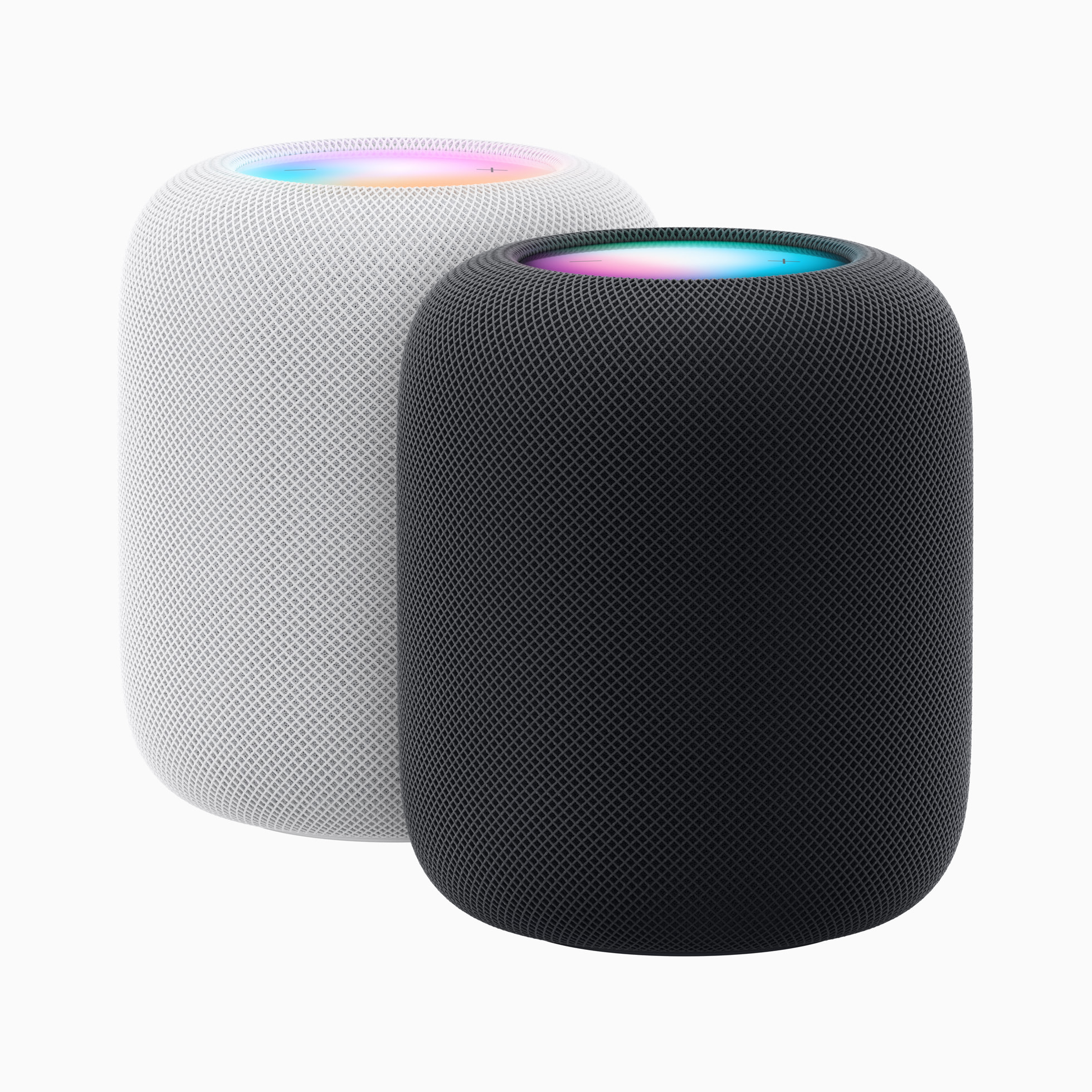
Apple HomePod 2023 internals.
Meet the new HomePod — slightly less expensive, but still priced at a premium. Image used with permission by copyright holder
No, as is the case with Apple’s other products, you’re not just paying $300 for a smart speaker. You’re paying $300 for an Apple smart speaker. One (and again, just a single, standalone speaker) that ties into the larger Apple ecosystem in ways no competing speaker can do, from setup to everyday use. Put your iPhone next to the new HomePod and it’ll suggest things you can play. You can use the Find My feature on the speaker to find missing devices around your home. (Hopefully not too often.)

Give HomePod the benefit of the doubt and presume that it’ll have superior audio. But is it $100 better? For a single speaker? Maybe it is. Maybe your standards of what’s “better” just aren’t worth that much more money. Maybe you care less about Apple’s privacy and environmental lines and just want something that works well enough, if not as close to perfect as can be.

It’s the totality of the product that lets Apple charge that much more than its competitors. Also just the company’s sheer size — it can afford to sell fewer of these things, though even that doesn’t make it immune from being deemed less than a success, as was the case with the original HomePod.

Will this new model suffer the same fate? Good — great, even — though at a price that simply was too high for the market to bear?

We’ll start to see after February 3, when the second-generation HomePod is released.

Phil Nickinson
Former Section Editor, Audio/Video
Phil spent the 2000s making newspapers with the Pensacola (Fla.) News Journal, the 2010s with Android Central and then the…
Spotify just made it easier to catch up on long reads without actually reading
Long-form journalism is coming to Spotify, and it fits right in your commute.
The atlantic article playing on spotify

It seems that Spotify wants to become a one-stop solution for all our audio needs. The music streaming giant slowly added audiobooks and podcasts to its platform, and now it is adding magazine articles. 

In a post on its website, Spotify said that over 650 long-form magazine articles are now available to listen to. The curated collection is produced by Spotify's in-house audiobooks team and pulls from some of the biggest names in publishing, including Rolling Stone, The Atlantic, Vogue, Variety, Billboard, GQ, WIRED, Vanity Fair, and Pitchfork.

Read more
Apple AirPods Pro 3 review: Eight months later, a worthy pick that keeps on giving
Apple's flagship earbuds are refined, more resilient, and explore further than any rival out there.
AirPods Pro 3 top view

Quick Take

I picked the AirPods Pro 3 with the primary motivation of enjoying better noise isolation and sound quality. But over time, I've extracted more utility out of them than an average pair of premium earbuds. Using them to correct my posture while working? Yes. Heart rate monitoring? Yeah, that too.

Read more
Google is not killing your old and aging Chromecast, after all
Users feared Google had silently killed the original Chromecast, but the company says a fix is here.
Chromecast 2015

For a brief moment, the internet genuinely believed Google had finally decided to kill off the original Chromecast, after multiple Gen 1 users reported casting failures and apps refusing to connect over the past few days. Honestly, considering the tiny streaming dongle is now more than a decade old, nobody would have been completely shocked, but thankfully, Google now says the issue has been resolved, and the aging Chromecast survives another day.

Google says your old Chromecast is still safe for now

Read more