
  1. Home
  2. Audio / Video
  3. News

Deezer is fighting against slop with a tool that detects AI music on streaming platforms

The new free scanner works across major streaming services while Deezer pushes broader licensing.

Add as a preferred source on Google
Baby, Person, Head
Deezer

Deezer has launched a free online AI music detector that checks playlists from 20 major streaming platforms for AI-generated tracks. It uses the same technology Deezer has been using to detect and tag synthetic music on its own service.

The tool is available in 27 languages, and it arrives as Deezer says nearly 75,000 AI-generated tracks are being delivered to it every day. That volume gives the launch a sharper edge than a simple playlist cleanup feature. It’s a way to put synthetic-song detection in front of listeners before the rest of streaming settles on common rules.

How much AI music is hiding in playlists

Deezer says 43% of people arriving from other streaming services already have AI-generated music in their playlists. For listeners, the new scanner answers a basic question that most platforms still don’t surface clearly.

Users connect a streaming account, choose playlists, and review the results. Because the scanner works across 20 common services, Deezer can get its detection system in front of people who don’t use its app.

Recommended Videos

That stance lands while major music apps are testing how far they want to go with generative tools, including Spotify’s experiments around AI-made covers and remixes. Deezer is focusing on the cleanup job that follows, identifying AI songs after they’ve already entered a library.

Why would the industry license Deezer’s detector

Deezer says its detection technology can identify tracks from major generative music models, including Suno and Udio. It can also be expanded when the company has enough data examples from other tools.

The company says it has made progress on a broader system designed to catch synthetic content without a model-specific training set. That gives Deezer a business case beyond the public playlist scanner. It wants platforms, labels, distributors, and rights groups to use the same underlying technology to spot machine-made tracks before they distort discovery or payment systems.

What happens after AI tracks are tagged

Deezer says fully AI-generated music makes up only 1% to 3% of streams on its service, but it also says as much as 85% of those streams were fraudulent in 2025. When Deezer finds stream manipulation, it excludes those plays from royalty payments.

The company has already removed AI-generated tracks from algorithmic recommendations and editorial playlists. Broader steps, including supplier policy changes or demonetization, are still under review. For listeners and the industry, Deezer’s practical message is clear. Detection has to happen before trust, royalties, and recommendations can be cleaned up.

Paulo Vargas
Paulo Vargas is an English major turned reporter turned technical writer, with a career that has always circled back to…
Nothing’s next budget earbuds are coming for boring AirPods clones
Nothing Ear (3a) may bring back some personality to budget earbuds
Nothing Ear (a) deal

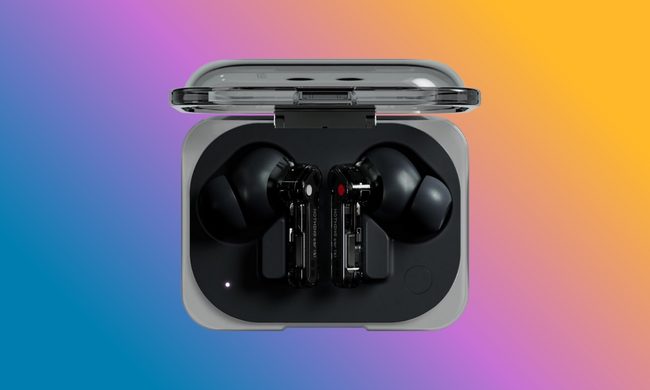
Budget wireless earbuds are the most popular kind of wearable tech in the market. But just like smartphones, a lot of these hearables basically look quite similar to one another. Nothing has actively worked on avoiding that trap, and its next affordable earbuds are expected to keep the track going.

The company has just confirmed that Nothing Ear (3a) will launch on July 7 at 11:00 BST, sharing the stage with the upcoming Nothing Phone (4b). The teaser does not reveal the full spec sheet yet, but it does show the earbuds in four colors: White, Black, Yellow, and Pink. Nothing’s audio lineup has always leaned on transparent styling and playful color choices to stand out in a sea of AirPods clones.

Read more
Sony’s WH-1000XM6 headphones just became more tempting for gamers who hate gaming headsets
The new update adds Bluetooth LE Audio's Gaming Audio Profile, giving Sony's premium noise-canceling cans a lower-latency trick for compatible gaming devices.
Sony WH-1000XM6.

Sony's WH-1000XM6 gaming mode is rolling out through firmware version 3.1.5, adding support for Bluetooth LE Audio's Gaming Audio Profile, or GMAP. The same update also includes general performance improvements, so WH-1000XM6 owners have a real reason to open the Sony Sound Connect app.

It's a handy upgrade for headphones built more for commutes or office silence than late-night matches. Bluetooth lag can make games feel faintly wrong, especially when a footstep or button press lands a fraction too late.

Read more
Acer’s 1,000Hz gaming monitor is real, expensive, and stuck waiting on a launch date
The Amazon listing confirms the $699.99 price, while the display remains temporarily out of stock.
Electronics, Screen, Computer Hardware

Acer’s 1,000Hz gaming monitor has moved from announcement to Amazon listing. The XV273U F5 is priced at $699.99, giving competitive players a real number to weigh before one of the fastest displays headed to North America actually ships.

Availability is still the problem. Amazon lists the monitor as temporarily out of stock, and Acer has previously pointed to a Q4 North America launch window instead of a firm release date.

Read more