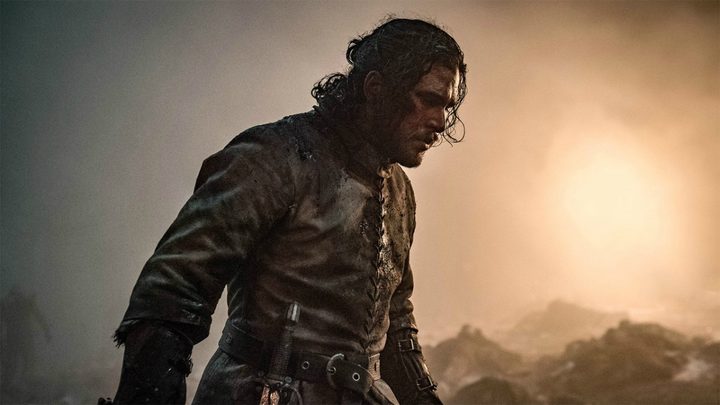
Opening scenes are important; they set the tone for everything to come. It should mean something that way, way back in in 2011, Game of Thrones began its very first episode not with Jon Snow, or Daenerys Targaryen, or Cersei Lannister, but with three men from the Night’s Watch riding out beyond the Wall to search for Wildlings, only to be set upon by White Walkers, the show’s frosty, undead-commanding villains from an age long past.
- Wildest fan predictions for Game of Thrones
- The most brutal deaths in Game of Thrones
- Why Daenerys Targaryen should not be queen
It’s the same way the first novel in George R. R. Martin’s series began, and although the story gained a reputation for intense and often brutal politics and backstabbing among its human characters, the shadow of a true existential threat always loomed over the proceedings for the audience. Even the title of the first episode, Winter is Coming, emphasizes the slowly approaching doom.
(Warning, spoilers below: If you’re not caught up on Game of Thrones season 8, episode 3, you really shouldn’t read further.)
Well, in season 8, episode 3, winter did come … and then it went (if you could see it, that is). After eight and a half seasons of buildup, the White Walker menace was (apparently) summarily dispatched of in a single episode. For years now, the show has hammered home the point that the battle for the Iron Throne is a petty, insignificant trifle compared to the undead army that is coming to wipe out humanity. As Davos lays it out when Daenerys demands that Jon and the North kneel to her, “If we don’t put aside our enmities and band together, we will die. And then it doesn’t matter whose skeleton sits on the Iron Throne.”
Not quite, Davos.
Killing White Walkers: It’s easier than you think
As it turns out, the threat wasn’t all that serious. The White Walkers were annihilated after one battle, and despite the frequent talk of how Westeros needed to unite against them or perish, Cersei Lannister decided to hang back in King’s Landing, and it now seems clear she’ll never have to glimpse the army of the dead.
The first sign that the White Walkers were going to be dealt away with quickly came in season 7, when they realized that killing a Walker also killed all the wights under their command. Thus, killing the Night King, leader of the whole army, would undo them all, turning a figure who had seemed like a force of nature, and the story’s most potent metaphor for human frailty, into a mere video game boss.
All that was left was to see who slew the Night King, and while the show did pull a fast one by having Arya stab him with Valyrian steel (in a callback to a trick she’d learned seasons earlier) rather than Jon, there was something deflating about watching the Night King explode, his entire army dying (again) with him.
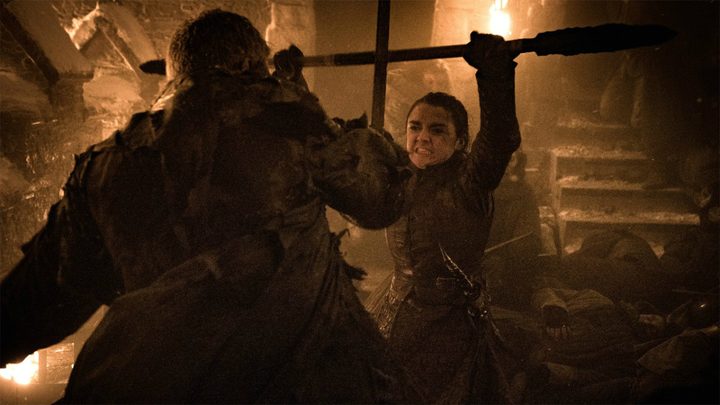
In many ways, The Long Night is one extended anticlimax. There are some intense moments, to be sure. The beginning of the battle, with the Dothraki horde riding toward the wight army, flaming blades aloft, was a great visual, especially as the lights in the distance blinked out, signaling the complete failure of the charge. (Also, why was the plan to send all their light cavalry charging into the unknown?)
The first two episodes of season 8, however, spent a lot of time meditating on the seeming impossibility of fending off the dead — the fact that many, maybe even most of the characters huddled in Winterfell wouldn’t live to see the dawn.
Consequences are so season 1
Aside from a few minor characters (Dolorous Edd) and a couple of larger ones whose last stands made sense as part of their atonement arcs (Theon and Jorah), the cast made it through largely intact. This was despite repeated shots of characters facing certain death, like Jaime and Brienne, backs against the wall with a wave of wights crashing upon them.
Although the show’s reputation for subverting expectations and shocking character deaths was a bit overblown, Game of Thrones was undoubtedly a show that used to be about consequences. Characters made selfish, short-sighted decisions and those decisions had ramifications that often reshaped the whole board. The Long Night (which really didn’t last that long) felt generic; the heroes held the fort against overwhelming odds and took down the bad guys with a last-second Hail Mary.

It’s more Disney than HBO.
It makes sense that the battle against the dead wouldn’t be the final battle. Every story needs a denouement, and seeing how Westeros shakes out after the “Great War” is a natural conclusion. But one might have expected the White Walker invasion to devastate Westeros before being stopped, and for the survivors to then fight over the wreckage. Instead, the Walkers made it as far south as Winterfell, and Cersei seems to have made the right play in biding her time in sunny King’s Landing.
For all the buildup the army of the dead had, all that was needed was a stealthy teenager with a fancy dagger. White Walkers down. Now what?