
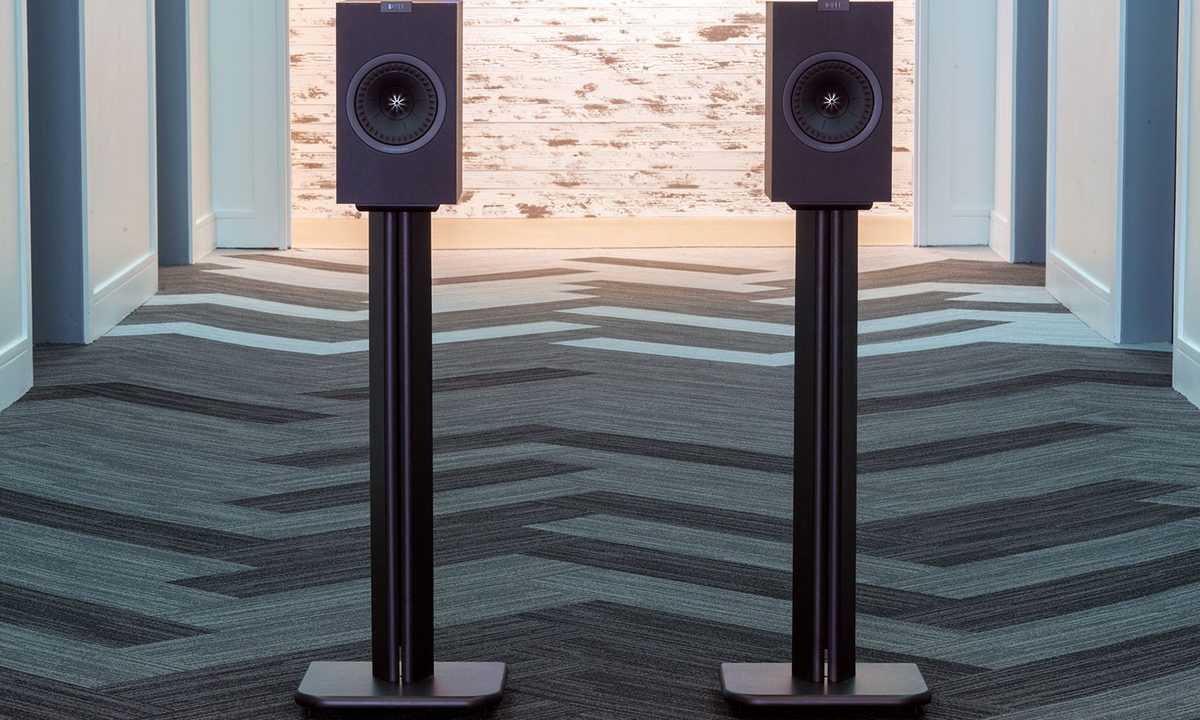

“Offering warm body, rich detail, and crystal clarity, KEF’s unassuming Q150 are a stellar way to get hi-fi sound at a midrange price.”
- Rich, warm midrange
- Smooth and remarkably clear upper register
- Heady bass response
- Deep, dimensional soundstage
- Sleek, rugged cabinets
- No speaker screens included
- Wish for more presence in upper midrange
“Why you can trust Digital Trends – We have a 20-year history of testing, reviewing, and rating products, services and apps to help you make a sound buying decision. Find out more about how we test and score products.“

This product was featured in our Holiday Gift Guide! Check it out to find gift inspiration for everyone in your life.
Bookshelf speakers are enjoying one hell of a resurgence. Just a few months ago our ears were all but blown away by one the most incredible pairs of bookshelves you can buy for under $1,000, the ELAC Uni-fi UB5. The kicker? They cost just $500. Not long afterward, our ears were once again enthralled by the nearly perfect KEF LS50 wireless bookshelves, which cost a pretty penny more, but offer some of the most transparent and organic sound this side of a live performance. So, when KEF tempted us with a KEF Q150 review, the smallest and most affordable speakers in its revamped Q series, we took the bait.
Those British blokes aren’t kidding around. The KEF Q150 are excellent, and like the Elac UB5, they’re also a steal of a deal at just $550. That relatively modest sum lands you impressive trickle-down technology from KEF’s otherworldly Blade speakers, specifically the brand’s two-way, concentrically mounted tweeter/woofer combo aimed at linear frequency perfection, the Uni-Q driver array. So, how do KEF’s two-way beauties match up against ELAC’s mystical 3-way speakers that stole our hearts and ears? You’re about to find out.
Out of the box
The Q150 arrive in a spacious cardboard box, suspended inside by thick corners of foam. At just over 12 pounds each, the speakers are lighter than expected, especially when compared to the bookshelves mentioned above — the ELAC UB5 weigh 16 pounds each, while the powered KEF LS50 are an anvil-like 22 pounds. That’s not to say the Q150 are suspiciously light as they feel robustly designed, right down to the vinyl exterior, which is thicker and much more rugged than the UB5’s. At just under 12 inches high and 11 inches long, they have a slimmer profile than many bookshelves in their class, able to blend into the background with ease.


There’s no mistaking that Uni-Q array when you pull the Q150s from their wrapping. The gleaming tweeters are cut by jet-plane fins at the center and encircled by rubbery woofers with dimpled edges, instantly recalling the LS50, though the Q150’s flat front face is much more traditional than the convex design of their pricier siblings. Searching through the box you’ll find a helpful set of universal instructions, as well as foam port plugs to mellow the bass. Unlike most bookshelves, though, you won’t find any speaker grills. Buyers who prefer a more demure aesthetic can still find cover for their naked speakers online at an extra $15 per speaker.
Features and design
Bearing the mark of their Uni-Q forefathers, the latest version of KEF’s Q-series is visually mesmerizing, and we think most buyers will want to display as they come (though we’re still a little surprised that grills don’t come standard). The black models we received have a touch of B-2 Stealth Bomber in their blood, right down to the rubbery, midnight-black KEF logo on the front. If you’re into the post-Beatles John Lennon look, you can also get them in satin white with black accents.
The black model we received have a touch of Stealth bomber in their blood.
The Q150’s driver set includes a 5.25-inch driver and a 1-inch tweeter. Present on all Q-series speakers, the Uni-Q array is designed to deliver perfectly timed frequencies for better accuracy and a more three-dimensional soundstage. Newly designed for 2017, the array has been reset at the center of the cabinet for better clarity, while the back of the tweeter has been dampened inside the bass-reflex cabinet to cut down on sound leakage and ensure better accuracy.
At the back is a centrally mounted bass port, set above easy-spin gold binding posts, which make the speakers a snap to set up with exposed speaker wire. If you’ve got banana plugs, however, you’ll need to remove the color-coded plastic caps sitting the binding posts — which can be a bit of a trick — before inserting the plugs.
KEF’s setup guide recommends a minimum of six feet between speakers, and a bare minimum of nine inches of distance from a wall behind them. The 2-way speakers achieve an impressive claimed frequency response of 51 Hz to 28 kHz, and they definitely pump out plenty of bass for their size. The crossover between driver and tweeter is set at 2.5 kHz. Nominal impedance is 8 ohms, which makes the Q150 easy to drive, even with less-than-mighty amplifiers.
Performance
Every speaker’s sound signature is unique, and the Q150 are especially distinctive, offering deep and powerful bass, a warm, and supple midrange, and a spritely top side that delivers fluid clarity and textural detail. The different shades combine for a sultry sonic flavor that’s instantly enticing. There’s audiophile-grade sound to be had here, with detail that unfolds before you subtly, turning even bland moments into engaging musical experiences.

For the KEF Q150 review, we started the speakers off on Onkyo’s new TX-8270 stereo receiver, which did a respectable job of revealing the Q150’s deep and dimensional soundstage, marked by a very accessible sweet spot that stretches at the center. As one might imagine, the Q150 aren’t nearly as transparent or precise as KEF’s LS50 Wireless (and at less than one quarter the price, they shouldn’t be), and they also offer a darker, smoother sonic color than the Elac UB5 overall, with less sparkle at the attack of instruments. If the UB5 are a crisp Chardonnay, the Q150 would be a smoky Pinot Noir.
As such, the Q150 are perhaps less effervescent when it comes to reproducing snappy percussion — the pop of a snare, or the glint of a ride cymbal — and less breathy with reedy saxophone solos and trumpet blasts. But they also offer deeper body there, and a deft touch to instrumental timbres, drawing up especially textural recreations of instruments like upright acoustic bass, B3 organ, and acoustic guitar.
The Q150 offer a sultry sonic flavor that’s instantly enticing.
When we later connected to the prodigiously powerful Anthem MRX 1120 receiver, both sets of speakers opened up significantly, moving even closer together in their treble reproduction. On either receiver, though, the Q150’s zippy upper register does an excellent job cleanly defining blisteringly fast instrumental lines, such as jazz great Ahmad Jamal’s treacherously nimble solo on One (Ahmad).
The speakers are also aces at carving out glistening electric guitar tones, leading to our favorite five seconds of sound during the entire evaluation, courtesy of Tower of Power’s What Is Hip. The song begins with a familiar collection of funky percussion that’s cut with soft, chocolate-y grit by the Q150. The melange is intersected with that gleaming electric guitar in the left channel, and stabbing trumpet in the right, before heading into a short and sweet turnaround solo at the one-minute mark that’s so explosive you’re liable to kick over your coffee table getting your funk on.
Moving to other genres for our KEF Q150 review, the speakers continued to impress, showing an innate knack for drawing out the sonic colors of whatever class of music is fed to them. One fine example of their versatility came with the silly bit of French(ish) pop from comic novelty band Flight of the Conchords, Foux du Fafa. The song is surprisingly well mixed, and the speakers are adept at outlining the many synthesized percussion instruments. But they really show their mettle in the treble register at the end, as Brett’s retro synths send forth space-like countermelodies at towering heights, cutting through with impressive precision, and zero bite or sibilance.

But perhaps as impressive as anything we heard musically is what the Q150 can do with a top-tier TV series. Watching an episode of The Handmaid’s Tale late one night, we were impressed by the rich detail the speakers managed to reproduce from simple gestures and dialog. Moments like a drink being mixed at the bar jumped out at us — a cork gave a satisfying thwop as it was pulled from the bottle, and clinking ice cubes in a shaker seemed to emerge in three dimensions. A later scene in which the drunken Commander sucks down wine sounded (somewhat dismayingly) as if we were right next to him, and we could actually hear the liquid on his tongue through his words. The Q150 bested the Elac UB5 there, the latter of which cut clear detail, but without the resonating presence of the Q150.
The only real quibble we might offer about the speakers comes back to the smoother sound, especially in the upper midrange, which lacks the kind of presence or energy offered by the UB5. That said, these speakers are stellar performers for the money, presenting another great option in the red-hot bookshelf market.
Our Take
One of the best pairs of speakers we’ve heard at their price point, the Q150 are yet another brilliant feat of engineering to add to KEF’s storied audio canon.
Is there a better alternative?
As you might have guessed, ELAC’s UB5 is our obvious choice, and they really are hard to beat at their price. That said, both speakers have their advantages, in both design and performance, so we recommend heading to your local stereo shop or setting up both in your own room to let your ears be your guide.
How long will it last?
As mentioned, the Q150’s vinyl exterior feels extremely rugged, as does the rest of the build quality. They’re passive speakers, so there’s not much tech to worry about here, meaning they should last for years to come.
Should you buy it?
Yes. Offering warm body, rich detail, and nimble clarity, KEF’s Q150 are an excellent option at $550.


