

“Easy to use and quite affordable, the SB-600 doesn't let Atmos really shine.”
- Easy setup
- Clear dialogue
- Generous number of inputs
- Semi-wireless surround speakers
- Distracting display
- Mediocre Dolby Atmos
- Poor midrange sound quality
“Why you can trust Digital Trends – We have a 20-year history of testing, reviewing, and rating products, services and apps to help you make a sound buying decision. Find out more about how we test and score products.“
For those looking to get a more immersive TV experience, Dolby Atmos soundbars are a tempting upgrade. Boasting an easier, more convenient setup than wiring up a room with an A/V receiver and a bunch of discrete speakers, soundbars just make a lot of sense.
But Dolby Atmos soundbars tend to be pricey affairs thanks to the extra speakers and drivers required to get the full 3D effect that makes Atmos worth having.
Monoprice is attempting to do something about that with its very affordable ($450) SB-600 soundbar. Has it succeeded in creating an Atmos experience for everyone?
Let’s take a look.
What’s in the box?
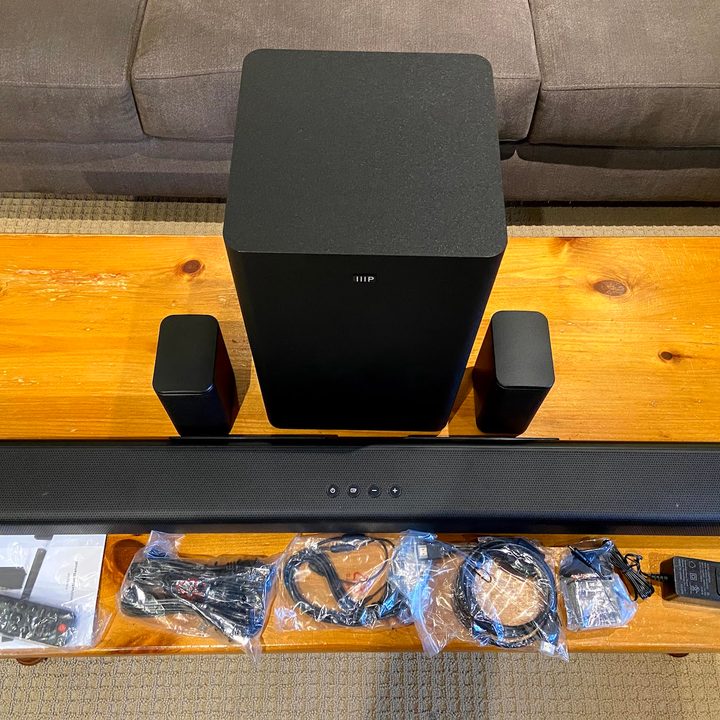
Monoprice includes everything you need to get set up with the SB-600. In the box, you’ll find the main soundbar, a wireless subwoofer, a pair of semi-wireless surround speakers (more on these later), a remote, power cables, HDMI and analog cables, wall-mounting hardware, and printed instructions.
The only thing you may need to buy is an optical cable in the event your TV doesn’t support HDMI ARC.
The SB-600 box and packaging is very sustainable as far as soundbars go. It’s mostly plain cardboard, save for three foam inserts that protect the soundbar, and a bunch of poly bags.
Design

The SB-600, like a lot of Monoprice’s products, has a bare-bones vibe. The main soundbar is a simple, black enclosure with a perforated metal grille. At 40 inches wide and three inches in height, it should fit nicely under most TVs without blocking any of the bottom portion of the picture. Other than the small Monoprice and Dolby Atmos badges and the four control buttons on top, it’s a very clean look.
This would be an ideal situation — soundbars should definitely not call attention to themselves — were it not for the bright LED display that hides behind the grille. It lets you know which source you’re using (HDMI 1, 2, ARC, etc.) and despite the fact that the instructions say the display will automatically dim after 10 seconds, our review unit stayed bright the entire time the system was in use, creating an unwanted visual distraction.

The eight-inch wireless subwoofer is a nondescript black box, and at 16.5 inches tall, it’s on par with a lot of other wireless subwoofers in this category. The surround speakers are tiny — about the size of a thick paperback novel.
I love that Monoprice includes wall-mounting hardware with the SB-600, but the brackets that are meant for the surround speakers point them straight out from the wall. If your TV room happens to have side walls located an even distance from the seating area, this isn’t a problem. But if you don’t, there’s no way to pivot the speakers so that they’re aimed at viewers’ heads and not at the front of the room.
The included remote is simple but effective, giving you access to all of the SB-600’s settings and modes in a logical, easy-to-use layout. It’s not backlit, which will make it more awkward to use in a darkened room, but that’s an obvious feature to eliminate if you’re trying to keep the price as low as possible.
Setup and configuration
Unlike a lot of soundbars in the $700 to $2,000 range, the SB-600 doesn’t have any Wi-FI connectivity. That’s a bit of a drawback for things like high-quality streaming music, but it sure simplifies the setup.
Something that beats a lot of other soundbars is the SB-600’s generous complement of ports.
Once you’ve connected the main soundbar to power and to your TV via HDMI, and placed/plugged in the subwoofer, all you have to do is find a home for the surround speakers.
Technically, these units are wireless — they don’t need to be tethered to the wireless sub or the soundbar — but they’re not completely wire-free. The right speaker needs to be plugged into power via its AC adapter, and it also needs to be connected to the left speaker via an included 13-foot analog cable.
It’s easy enough — I had no trouble hiding that cable behind our couch which is pushed up against the wall, but I can see this being more of a challenge in other situations. Still, it’s better than the usual surround arrangement required by affordable surround soundbars: Wiring both speakers to the subwoofer, something that is messier and less flexible in terms of placement.

Something else that beats a lot of other soundbars is the SB-600’s generous complement of ports. You get two HDMI inputs, one HDMI ARC output, an optical input, a coaxial digital input, an analog jack, and a USB port for MP3 music playback. There’s also a Bluetooth connection for wireless music streaming.
That’s pretty decent — many soundbars only have a single HDMI ARC port, which means you’ll end up sacrificing an HDMI port on your TV, with no way to gain that port back without the use of an HDMI switcher. Those two HDMI ports are also 4K HDR-compatible and support Dolby Vision, so you won’t have to worry about getting the highest-quality signal to your TV.
Sound quality
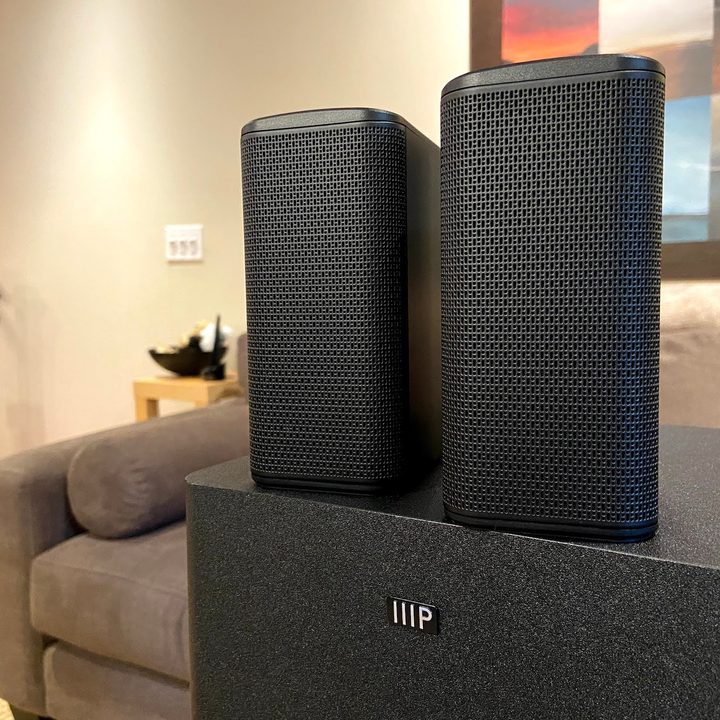
If you’re moving from your TV’s integrated (and probably terrible) speakers, the SB-600 will be a big step up. Between the main soundbar’s six drivers, the wireless sub, and the surrounds, you get a way better sense of immersion than a TV can offer, with very clear sound that can also get very loud if you wish.
Dialogue sounds clear and crisp. If you have trouble making out speech, the SB-600 can help.
But the SB-600 suffers from two distinct drawbacks. First, it lacks a decent midrange. Even after playing with the built-in EQ modes (movie, music, dialogue, sports) and altering the bass and treble levels, I couldn’t get the system to feel full and warm.
My guess is that there’s simply too big of a gap between the target frequencies of the soundbars’ drivers and what the sub is capable of. It can deliver big, boomy bass, as well as bright highs, but that middle range feels decidedly hollow.
On the positive side, dialogue sounds clear and crisp — the soundbar’s center channel very much favors higher frequencies. If you have trouble making out speech, the SB-600 can help.
But the downside is that you lose some of the sonic nuances, especially in movies with very dynamic soundtracks (think Marvel, DC, and Star Wars flicks).
Second, as Dolby Atmos systems go, you’re not going to be blown away by the height channel effects.
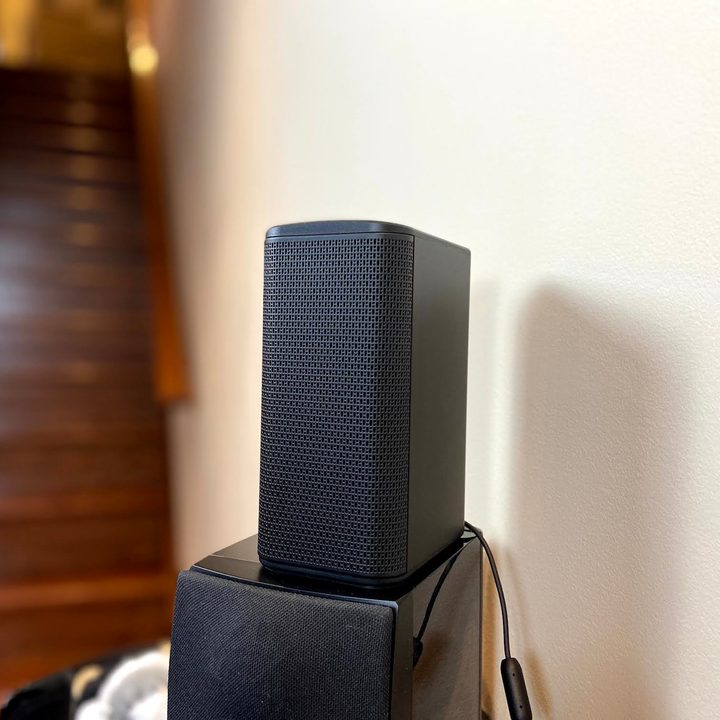
I threw a ton of Dolby Atmos material at the SB-600, from Disney+ titles like Iron Man 2 and Doctor Strange to Dolby Atmos Music tracks from Tidal HiFi streaming music service, plus Dolby Atmos demonstration videos from my LG TV. I found that, in general, the system delivered good surround performance, but that extra dimension offered by Atmos was a bit hit-and-miss.
It ended up being most noticeable — and enjoyable — when listening to Atmos Music. Tracks by The Weeknd and Post Malone had a really expansive soundstage that filled the room.
Movies, on the other hand, lacked that overhead dimension that Atmos is known for.
As Dolby Atmos systems go, you’re not going to be blown away by the SB-600’s height channel effects.
Bluetooth audio was acceptable, but it’s immediately apparent that Monoprice hasn’t made this mode a big priority. Knowing what the system can do when provided with a Dolby Atmos music stream, it’s a bit disappointing that the SB-600 can’t do a better job of upscaling regular stereo into a more immersive mix. All of the speakers are active when listening via Bluetooth, but the sound lacks the expansiveness I was expecting.
Controls and usability


I really like that when you start a new stream, whether it’s from the TV or another connected device, the LED display tells you what kind of a signal it’s getting. It might say Dolby Atmos, Dolby Surround, or PCM, which is a helpful confirmation of your source material.
But that display can be tricky to read. It only shows a handful of characters at a time, so most messages end up scrolling — you’ll need to pay attention because it will only show you the sound format when switching to a new input.
As I mentioned above, the display’s always-on mode was a bit annoying at times.
Another odd quirk: If you set your preferred levels for bass and treble, these are reset when you switch from one EQ mode to another.
Our take
The Monoprice SB-600 is a decent surround soundbar with lots of inputs and a very easy setup thanks to its wireless sub and mostly wireless surround speakers. However, a lackluster Dolby Atmos performance and a hollowness in the midranges keep it from earning our full endorsement.
Is there a better alternative?
For a lot less money, the $300 Vizio M-Series 5.1 soundbar may not have the SB-600’s dedicated height drivers or wireless surrounds, but its virtualized Dolby Atmos effects are still noticeable and it provides a much better balance of frequencies.
For a notably better Dolby Atmos experience, the Vizio SB36512-F6 offers excellent Atmos sound for the same price as the SB-600.
How long will it last?
Monoprices products aren’t fancy, but they’re well-built, and the SB-600 should last for many years. It comes with a one-year warranty.
Should you buy it?
The SB-600’s main advantages are its excellent set of inputs and its semi-wireless surround speakers. But unless these features are super-important to you, I think you’ll be happier with a Vizio model for the same or less money.


