

On today’s episode of You Asked: Sony’s new Bravia partnership with TCL raises big questions about pricing, quality, and data privacy. We break down what it means, whether a new QD-OLED is coming this year, and how anti-glare screens really perform in a dark room.
Sony and the new Bravia Inc
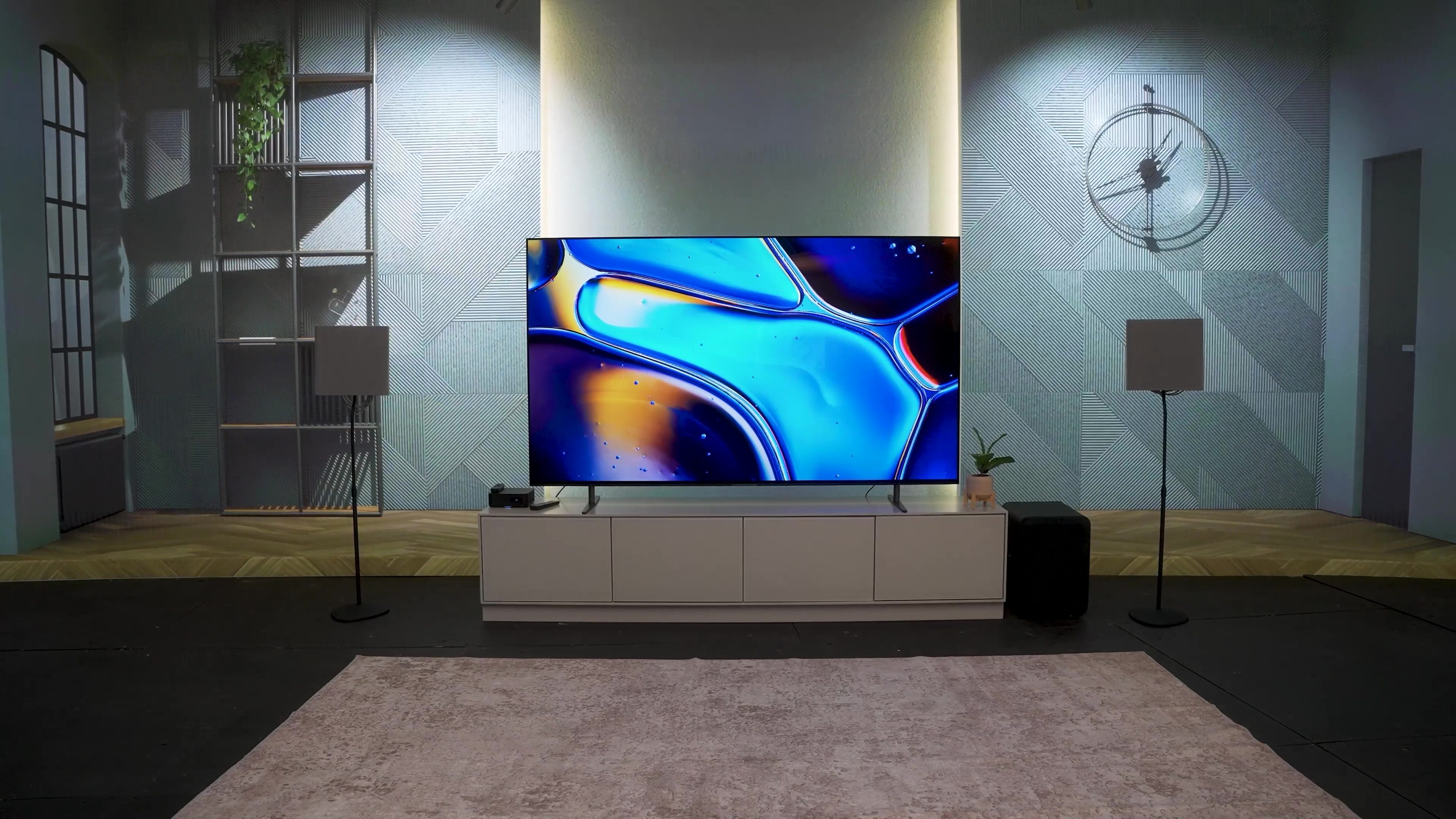
@charltonium4083 asks: Here’s one concern that isn’t discussed in the video or any of the comments: Which country will have primary jurisdiction over the new Bravia inc? Will it be China (TCL), or Japan (Sony)? Back in 2020, Homeland Security discovered that TCL may be directly sponsored by the CCP and that the TVs have backdoors to allow data to be breached by the government (thus allowing it to spy on customers). This has also been a more problem with other companies like TikTok and DJI, although a bit more publicized with them to the point where the USA has repeatedly threatened to ban all DJI products. If TCL owns 51% of the new Bravia inc, particularly in the manufacturing and business side, does that mean that it also has all of the customers’ data, and that the CCP could have more ability to spy on customers through the new Bravia TVs going forward? I’d be far less concerned if the customer data was actually handled by Sony (under Japan’s jurisdiction).
OK, quite a loaded question there with some implicit bias, to say the least. But we’re going to get into all of it.
First, Bravia Inc will be located in Tokyo, Japan within Sony’s headquarters. So that’s where the business will be. Manufacturing is likely to take place where TCL has its larger facilities, like China, Mexico, and Vietnam. One of their biggest advantages is large-scale production facilities that keep efficiency high and prices low.
As for your spying concerns, you might be surprised to know that just last month, March 2026, a Texas judge dismissed a lawsuit from the Texas Attorney General accusing TCL of tracking user habits without consent and selling that data to advertisers. So while our internet privacy remains an ongoing concern, TCL and Sony probably shouldn’t be a major concern. Personally, I’m more concerned about Meta, Google, Amazon, and hundreds of phone apps that have more access than a smart TV.
Either way, be sure to practice safe internet use. Read the user agreements when you register. Understand where your data is going, who it can be sold to, and how to limit what is tracking you with VPNs, ad blockers, and other tools.
Manufacturing and pricing strategy

@theGovnr1 asks: To me, it seems the new products will have the Sony technology and design but be manufactured by TCL.
And that’s my take as well. I think the goal is for manufacturing to become less expensive. There are several outstanding Bravia-branded TVs on the market, and most would tell you their picture quality is best in class. But if I’m not mistaken, they fall behind Samsung, LG, TCL, and Hisense in overall sales, likely due to price. So if having TCL handle manufacturing lowers the price while maintaining the image processing technology that makes Sony what it is, that’s a win.
Time will tell, and until the day comes when we have a TCL-manufactured Bravia TV to test, there’s really not much anyone can do to change minds. Based on comments, many of you have clearly decided that this is not for the better and the Bravia brand is doomed. Hopefully, you’re wrong, because then we can all get Sony-level TVs for less.
Sony OLED lineup outlook

@1.doubleyou asks: Will there be a new QD-OLED TV from Sony this year?
I’m leaning toward no, for a couple of reasons. One, they’re pouring a ton of resources and marketing into the release of their True RGB Mini LED TV. And two, they’ve been staggering their big TV updates every other year.
In 2023, we got the A95L QD-OLED. In 2024, we got the Bravia 9, their flagship Mini LED TV. Then in 2025, the Bravia 8 Mark II became the successor to the A95L in the QD-OLED department. And this year, probably sooner than later, we’ll have more details on this True RGB TV that will take over the flagship Mini LED role from the Bravia 9.
Not to mention, with the TCL merger, there may need to be some adjustments in how Sony’s OLEDs are manufactured before we get a new one.
Do anti-glare TVs fail in dark rooms?

@CoolVibe-w5f has a Samsung question in reference to their anti-glare screens, asking: How do the blacks look in a dark room compared to a glossy screen? From what I’ve read, the blacks are not quite 100 percent, especially next to a glossy screen.
A wise person once said: You can’t believe everything you read on the internet. What I’ve seen, take it or leave it, is very little to no difference in a dark room. If the only light being emitted in the room is coming from the TV, you will see pure black. I’m confident in that, and clearly Samsung is as well as they continue to expand that anti-glare panel into more TVs.
This year, it’s in the S95H as well as the S90H. Previous S90 models still had the glossy screen. The anti-glare panel is featured in several Mini LED TVs as well.
I don’t think they’d keep going all in on the technology if they weren’t sure it was delivering a viewing experience on par with the best from Sony and LG. We did a video a while ago putting the Samsung S95D next to LG’s flagship OLED in a dark room to show the difference. And I’ve seen others put their 2025 models, the S95F and S90F, side by side, and it’s very difficult to see a difference, if you can see one at all.


