
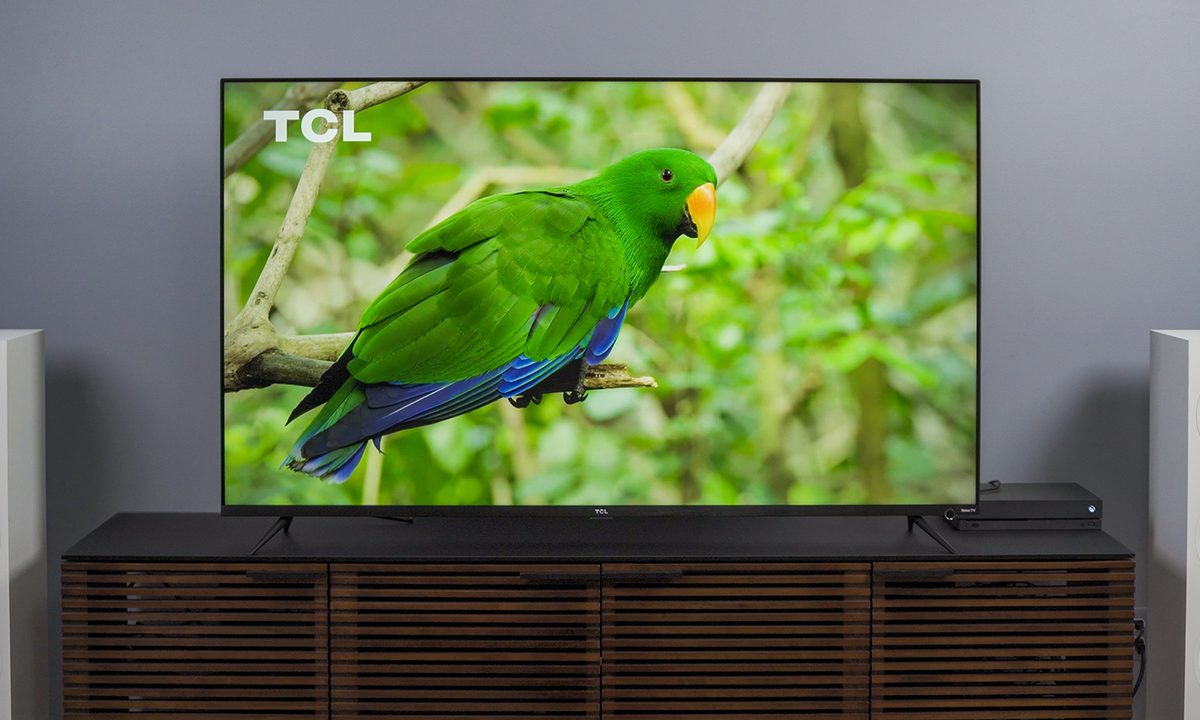
“A good basic TV that falls just short of being great.”
- Great for gaming
- Decent contrast
- Attractive design
- Roku app access
- Out-of-box picture needs work
- Frustrating picture presets
- Not especially bright
“Why you can trust Digital Trends – We have a 20-year history of testing, reviewing, and rating products, services and apps to help you make a sound buying decision. Find out more about how we test and score products.“
My relationship with TCL TVs began two years ago when I reviewed the company’s 2018 6-Series TV. That model put TCL on the map among TV enthusiasts who had previously never considered the brand.
Today, TCL is the budget-friendly brand to beat, with several models including the noteworthy Roku TVs that perform as well if not better than much more expensive competition. In fact, I think TCL can be thanked for a shift in the TV industry toward higher-performance televisions with lower prices.
So where does the 2019 5-Series sit in TCL’s lineup, and is it worth purchasing one with TCL’s 2020 lineup likely due to hit store shelves in August? After all, a 65-inch model costs just $600, while the 55-inch variant is only $400. Those prices are tough to beat. But what can you expect from a TV at that price? Let’s dig in.
Out of the box
The TCL 5-Series is a much better-looking TV than I expected for the price. It’s top and side bezels are extremely thin, the TV’s profile is also quite thin, and the TV’s “feet” are attractive as well, if not a little light and cheap-feeling.
I’m not a fan of the circular button which sits next to the TV’s Roku logo, and the bottom border is a little large, but on the whole, the TV looks like it should cost more than it does.
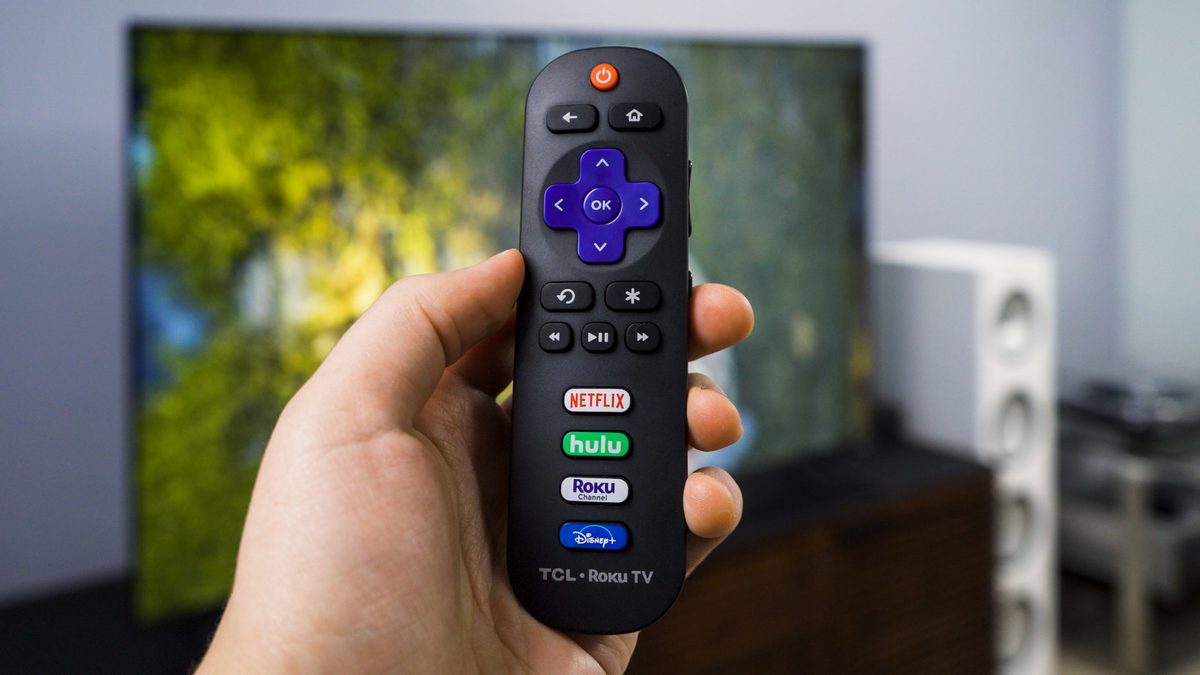
Included with the TV is an increasingly elusive composite video breakout cable, a set of AAA batteries, and a Roku remote. This particular Roku remote does not have a built-in headphone jack nor is it a voice remote, though private listening and voice control are available through the Roku app for iOS and Android — we’ll be talking about that app quite a bit in this review.
Features

The 5-Series isn’t a high-end TV, at least not in price. This TV doesn’t offer local dimming zones for its direct backlighting. This means the TV has much more uniform brightness across the screen than an edge-lit TV would. But because it can’t dim any of those backlights, it could struggle to offer deep blacks, especially in scenes with bright objects on dark backgrounds.
Aside from the omission of local dimming, it isn’t apparent that any corners were cut. TCL doesn’t speak to its video processing often, so there’s no clear indication the 5-Series has anything less capable inside than its 6-Series or 8-Series cousins.
The 5-Series, like all TCL TVs, is a Roku TV, which means not only do you get a Roku home screen filled with customizable input names and apps, Roku is also the interface one uses to adjust any kind of setting. Typically I’m a fan of the Roku TV interface, but not so much with this TV.
Setup

Before I go on, I want to be clear that I’m not assigning blame to either TCL or Roku for the issues I’m about to point out. I feel it is an issue of partnership, and I hope these problems can be addressed in the future with a firmware update. After all, that’s the beauty of smart TVs: You can update them.
It is difficult to get the best picture quality because so much work needs to be done.
In the past, my praise for the Roku TV OS has been rooted in Roku’s simplicity and ease-of-use. It’s an approachable experience, even for folks who aren’t technically-inclined. Unfortunately, it’s a lack of simplicity around getting the best picture quality that has me concerned.
The first thing I tell folks to do when they get a new TV is to go into the picture settings and change the TV to movie (cinema, custom, etc.) mode, then adjust the backlight setting to achieve the brightness they want. The movie (or equivalent) picture preset reliably adopts a warmer, more accurate color temperature by default, and often eliminates motion smoothing, which can create the dreaded “soap opera effect.”
In the case of the 5-Series, the TV will adopt a warm color temperature, but there’s still some motion smoothing that needs to be turned off. No big deal, it happens.
That movie preset is now active for whichever input you happened to be tuned to. Let’s say you were watching cable or satellite at the time; the movie preset is now engaged and presumably properly set up. Now the user has to go into every other input they are using, HDMI 2 for a game console, HDMI 3 for a Blu-ray player, for example, and select the movie mode for each of them.
That’s also true for streaming apps, which isn’t readily apparent to most users. Furthermore, it’s not enough to just open an app like Netflix and pick movie mode, you must start streaming a show in order to adjust the picture settings. Kind of a hassle, but forgivable.
But what if you accidentally picked a show or movie that’s presented in HDR (in Netflix’s case, it would actually be Dolby Vision). You would now be selecting one of three Dolby Vision picture modes: Dolby Vision Dark, Normal, or Bright. OK, fine, we can pick the Dolby Vision mode we like, but what about SDR content — which is what most people watch, most of the time — on other apps, like Amazon or Hulu? In order to adjust to movie mode for apps playing SDR, you have to go play some SDR content on one of those apps.
Sound frustrating? I’m just getting started. We haven’t talked about regular HDR10 mode, which is what you get with a lot of YouTube content and many Amazon shows. There are three modes for HDR10 as well. So, if we count them all up, there’s a total of seven different options between SDR, HDR, and Dolby Vision, and that doesn’t include other picture modes like game or standard.
That’s way too much work to find the right picture preset. What’s more, the backlight settings between the dark, normal, and bright HDR modes (including Dolby Vision) are all maxed out, and yet something happens in the background to brighten the screen.
There’s also the matter of the color temperature and level of motion smoothing changing among Dolby Vision modes, which makes no sense to me, and the anomalous “micro contrast” setting, which does something to the contrast, but is unreliable and enigmatic. It also makes it seem like the TV has local dimming when it doesn’t.
For any of you who are lost right now, that’s kind of my point. The person who purchases this TV is going to set it up, turn it on, and may not touch any of the settings, which is a shame because the out-of-box, low-power picture preset is nowhere close to the full capability of this TV and, frankly, doesn’t look great.
And if the buyer does dare venture into picture settings, it is difficult to get the best picture quality because so much work needs to be done. I just don’t see that happening with most people.
So, I suppose we should talk about that picture quality now.
Picture quality

As I just explained, the out-of-box picture quality on the TCL 5-Series TV is not great. It’s not poor, but it is a little underwhelming. That’s particularly perturbing when this TV is capable of fairly impressive pictures to the untrained eye.
It’s aces for gaming as it has auto low-latency mode, low input lag, and a high refresh rate.
If one does jump through the hoops and optimized settings for a better picture, they will be rewarded by what appear to be very rich colors and impressive contrast. That last bit came as a surprise to me. This TV’s contrast is remarkably good considering there’s no local dimming, and since there are no dimming zones to control, there are no annoying backlight fluctuations to deal with when watching in a darkened room.
Also, I was pleasantly surprised at the mitigation of halos around bright objects on black backgrounds. Even though the screen doesn’t ever get pitch black, it gets dark enough to offer decent contrast.
So what does this all add up to? A better-than-average TV. It’s good. Not very good. Definitely not great. But a solid good. It’s aces for gaming as it has auto low-latency mode, low input lag, and a high refresh rate. It doesn’t support variable refresh rate, but that wouldn’t be expected here. For general TV watching, it is fine. Higher-quality content like 4K HDR material deserves better, though.
Here’s the thing: You can do better for not much more money, and I think you should. I’m a fan of TCL, but I can’t recommend this TV when the company’s own 6-series is so much better for just a little more money. Also, the Hisense H8G is a more impressive TV for just $100 more at the 65-inch size.
Don’t get me wrong. Lots of people will get this TV home and be just fine with it. There’s nothing wrong with that. I just don’t want folks getting this TV home and then later learning there was something much more pleasant to look at for just $100 more. Regret is an ugly thing.
Our take
At $600, the TCL 5-Series is a good value, with good picture performance and a mostly friendly Roku TV experience. Its out-of-box picture performance leaves something to be desired, and it can be difficult to optimize the picture settings for all content. Once it is adjusted, however, it can offer slightly better-than-average picture quality which most viewers will enjoy.
Is there a better alternative?
Yes. The TCL 6-Series (R625) and the Hisense H8G are both better TVs and cost just slightly more. It’s worth the upgrade in either case. It’s worth pointing out as well that the Hisense is an Android TV, so with that option, you lose Roku.
How long will it last?
So far, I have not had any problems with longevity with regard to TCL TVs. However, I only began testing them 2 years ago, so it’s hard to be confident in saying this TV should last a long time from a hardware functionality standpoint. In terms of features, it’s going to be left behind very quickly.
Warranty
TCL provides a one-year warranty covering parts and labor when the TV is used for non-commercial purchases. More information is available at TCL’s TV warranty page.
Should you buy it?
It’s fine to buy this TV if the price to size ratio is appealing. Otherwise, consider spending a little more money to get a lot more picture quality.
If you’re looking for a discount, take a look at the best 4K TV deals available.


