“TCL's 8-Series dazzles and delights with every scene.”
- Remarkable backlight control
- Minimal light bleed/halo effect
- Excellent HDR performance
- Solid out-of-box color
- Dolby Vision and Dolby Atmos capable
- Poor off-angle performance
- Audio quality is just ok
“Why you can trust Digital Trends – We have a 20-year history of testing, reviewing, and rating products, services and apps to help you make a sound buying decision. Find out more about how we test and score products.“
It sometimes seems as if TV manufacturers try too hard to innovate. I get it; they feel the need to create something flashy which will generate excitement and a perceived need for the latest and greatest. All too often, “the next big thing” isn’t really that big at all.
That’s not the case with the new TCL 8-Series TV, which uses a mini-LED backlighting system. This is a big deal.
You might say that shrinking down the size of an LED backlight and using more of them (lots more) is more evolution than revolution. You’d be right. Yet sometimes the right evolution can bring about a revolution.
I first laid eyes on the 8-Series mini-LED at IFA earlier this year, and even among the bustle of the uncontrolled viewing environment, I knew it was something special.
With the 8-Series now on the market and priced far above any TCL TV and best televisions under $1,000 in the past — the 65-inch 65Q825 is $2000, while the 75-inch 75Q825 asks $3,000 — this is TCL’s first attempt to compete with established names like Sony, Samsung, and LG in high-end televisions. Does it succeed?
The tech behind the tech
If you were to dissect an LCD panel, you’d find up to 14 different layers, but you may be surprised that all those layers are useless without some form of a light source.

Today, that light source is LEDs, and thanks to progress, we now get a full array of them sitting directly behind the LCD sandwich.
Until now, the number of those LEDs would be in the hundreds. Some very advanced TVs might count them in the low thousands. TCL’s innovation is the use of smaller LEDs, so they now number in the tens of thousands. Over 25,000, in the case of the 75-inch model.
20,000 points of light
Now let’s talk about how the rubber hits the road. What do you gain from having a whole lot more tiny LEDs?
Control.
Since LCD displays have a tough time stopping all of the light shining behind from bleeding through, they struggle to produce deep blacks. And since deep black levels are a fundamental component of contrast, LCD TVs are usually compromised in that area. They just can’t compete with the likes of OLED.
TCL’s tech effectively mimics OLED. An OLED can hit deep black levels because pixels can be turned off entirely. The 25,000 LEDS in the TCL 8-Series use a similar tactic. If a portion of the screen is supposed to appear pitch black, the LEDs illuminating that part of the screen turn off.
That’s the theory. It’s a careful dance, in practice. Dimming all those LEDs and lighting them at just the right time requires a lot of processing power. I was concerned TCL might not have the chops to pull this off. After all, why haven’t we seen this kind of technology from Samsung, LG, Sony, or Vizio?
Turns out, I didn’t need to be worried.
OLED killer?
If you want to see what it’s like to set this TV up (and you should, because there are a few quirks involved) you can watch my unboxing and basic setup video. Now, if you don’t mind, I’m going to skip to the good stuff and help you decide if this TV performs well enough for its price, and why you might choose it over a competing LED/LCD TV or even an OLED TV.
Let’s be clear. This isn’t an OLED killer. First, it isn’t necessarily a cost-effective alternative for most people. The LG C9 OLED TV is just $100 more for the 65-inch screen size. Admittedly, though, if you step up to a larger screen size, the 75-inch TCL 8-series makes more sense coming in a good $2,000 less than LG’s $5,000 77-inch OLED.
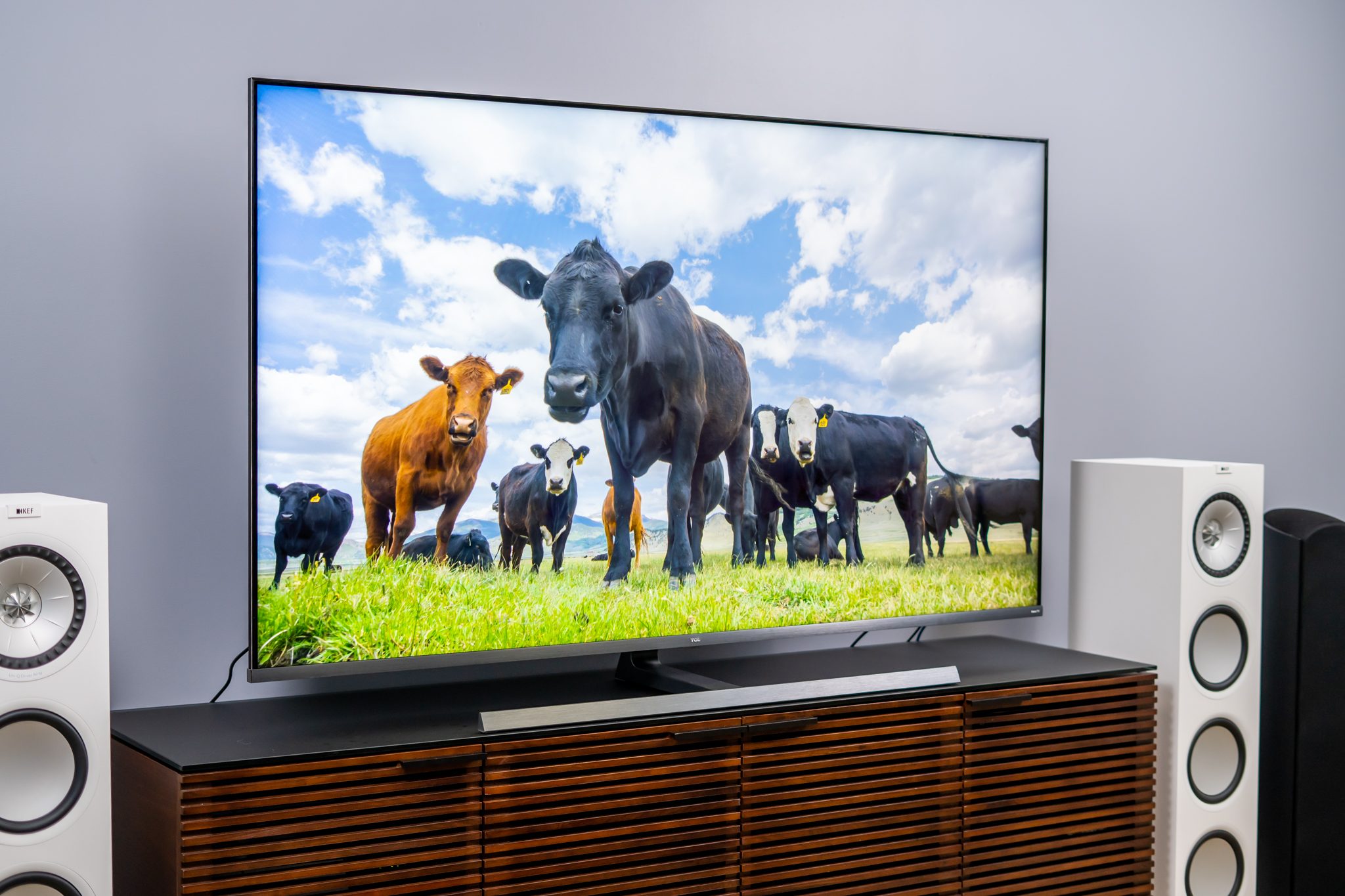
Second, as good as the TCL 8-Series is, it can’t beat an OLED’s black levels. And while the halo effect is lessened, it isn’t completely eliminated. Finally, the TCL 8-Series doesn’t offer gamer-friendly options like auto low latency mode or variable refresh rate, as LG’s OLEDs do, nor does it have eARC for advanced audio pass-through.
Aside from a lack of potential for screen burn-in, the TCL 8-series still bows to LG OLEDs. So, no, it isn’t an OLED killer. But that doesn’t mean it isn’t the better choice for many people.
I love it
For those who want outstanding picture quality with great 4K HDR performance and terrific brightness, the TCL 8-Series is an outstanding choice. If I had to choose between the Samsung Q90R, the Sony X950G, and a TCL 8-Series mini-LED, I’d have a tough time coming to a decision — and so would you.
TCL isn’t kidding around.
All three are excellent TVs, and I enjoy them for different reasons. I like the Sony’s cinematic look. I like the Samsung’s one-connect box, gamer-friendly attitude, and zesty color. I like the TCL’s tight light control and impressive contrast, along with its support for Dolby Vision and other HDR formats.
Still, TCL isn’t kidding around. It’s right in league with the companies that normally dominate flagship televisions.
I don’t usually advocate in favor of first-generation technology, but I am having a tough time coming up with a legitimate reason not to in this case. I suppose the one reservation I have is that I’ve seen variable panel quality with TCL, even with its previously top-tier 6-Series TVs. Some of them had what we call “dirty screen effect.” Large swaths of color can reveal inconsistencies in the LCD panel, which appear as blotches.
I can’t comment on how consistent the 8-Series quality will be in the long run. All I can say is that the review sample TCL sent me looks rock solid after a quick firmware update which took care of some over-brightening of HDR highlights, and a tendency to ramp down from dark grey to black a little too quickly.
Picture this
The 8-Series is not perfect. It suffers from poor off-angle viewing — something the Samsung Q90R deals with effectively — and it can’t clean up nasty cable/satellite signals as impressively as the Sony X950G can. But for streaming entertainment, and Blu-ray discs (4K or otherwise) it looks fantastic.
I tested the TCL 8-Series mini-LED exhaustively using the same test patterns and content with which I’ve tested every other TV this year, and it held its own with the best across color volume, motion resolution, brightness, and upscaling categories. If you want to see for yourself, just check out the video at the top of this review. You can see the rich color, the bright (but not too bright) highlights, and the deep, inky blacks.
Or, you know, you can head down to the closes electronics store that carries one and feast your eyes for a while. I’m confident you’ll see what I see.
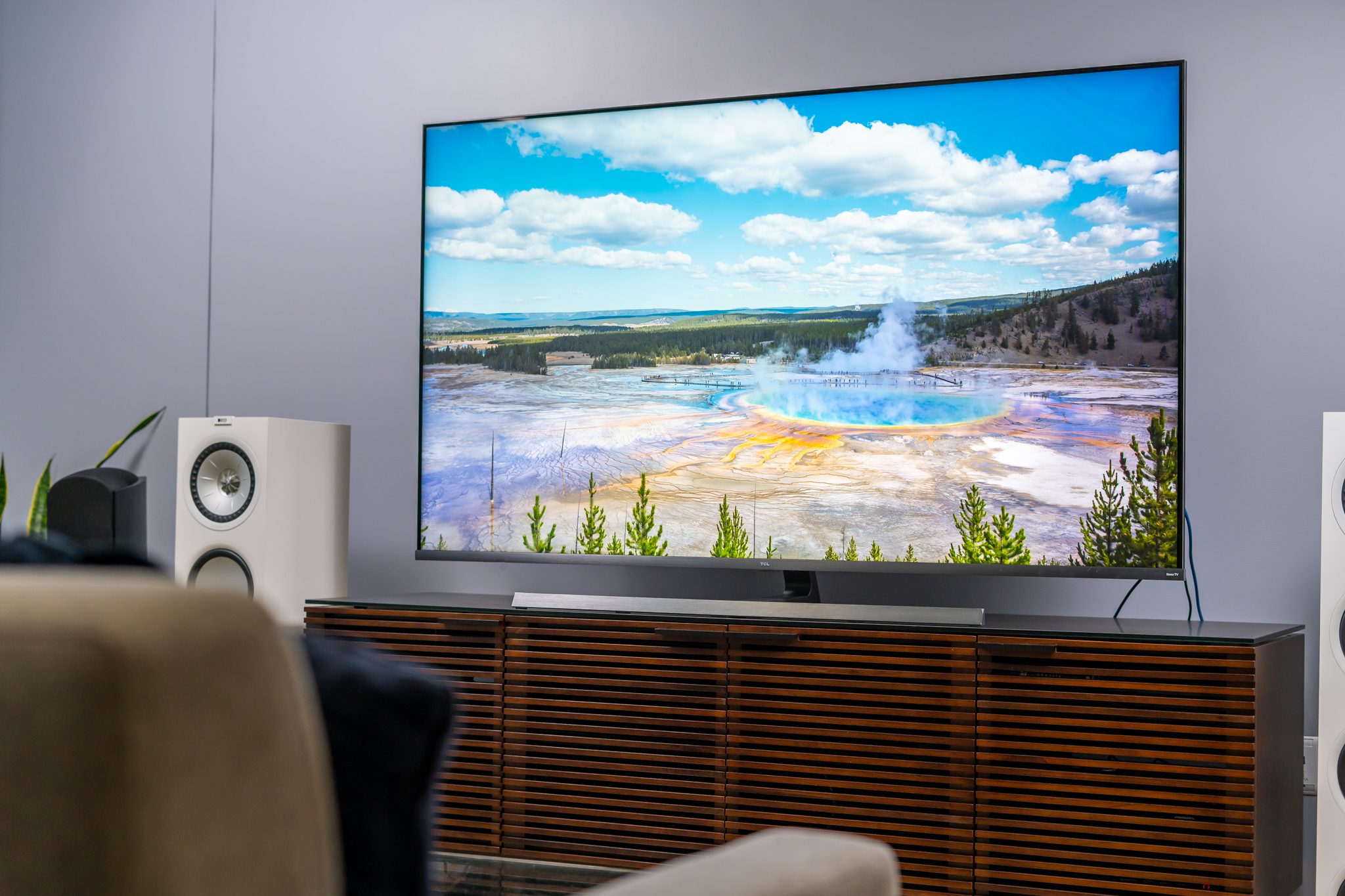
The TCL 8-Series TV’s stand-out feature is its black levels, which should be the envy of every other TV maker. And that might be the most important news. Because whether you have a real interest in purchasing this TV, or you’re just curious to hear how good it is, this TV redefines the LED/LCD TV tech category, and it can only mean others will follow suit. Yes, it is that good.
Our Take
The TCL 8-Series creates a new class of television. It’s a trailblazer, and a remarkable TV in its own right. Standing right alongside the best models from Sony, Samsung, and Vizio, the TCL 8-Series is a landmark achievement for TCL, which improves by leaps and bounds every year. It should come as no surprise I’m adding it to our list of the Best TVs in 2019.
Is there a better alternative?
The Samsung Q90R is a better choice for gamers thanks to its variable refresh rate and auto low latency mode, while the Sony X950G might scratch a cinephile’s itch a bit better than the TCL 8-series. Also, the LG C9 OLED is an outstanding option for those not concerned with burn-in or extreme brightness. If you’re looking at a 75-inch model, however, the TCL 8-Series is the most sensible choice on the market due to its significantly lower price.
How long will it last?
This TV should last well into the next 4-5 years before new technologies leave it behind. My only concern here is the lack of HDMI 2.1 inputs and the features that come with them. This is not an important consideration right now, but it might be in the next couple of year or so.
Warranty
TCL offers a one-year warranty against defects in materials or workmanship to the original owner of the television if purchased from an authorized retailer.
Should you buy it?
Yes. The TCL 8-Series is a fine product and stands right up there with the best TVs you can buy this year.
Alternatively, if you’re concerned about price, you can also check the best 4K TV deals on the market.