Amazon Alexa has long been one of the most popular smart home platforms, as it offers a robust suite of hub devices (like the Echo Show 8) and supports hundreds of third-party products. Hubspace, by comparison, is much more niche. The platform was only compatible with a handful of devices when it first rolled out, but now its library is closing in on 100 supported products.
But what exactly is Hubspace, and how does it compare to Amazon Alexa? More importantly, which one is best for your smart home? There are a lot of similarities between the two — and Hubspace even offers support for Alexa, making it more appealing than you may first think.
Here’s a closer look at Amazon Alexa and Hubspace to help you decide.
What is a smart home platform?

A smart home platform is a network that allows you to control all your devices. From a single app, you can activate all the controls for supported gadgets like smart locks, smart shades, smart lights, and more. You can also set up automations that run multiple devices at once — for example, unlocking your door and turning on the lights in your living room. Many smart home platforms are powered by a smartphone app or a hub device such as a smart display or smart speaker. Some also support voice commands.
In essence, a smart home platform pulls all your smart devices into a single location, giving you easy access to them without switching around from app to app.
Hub devices
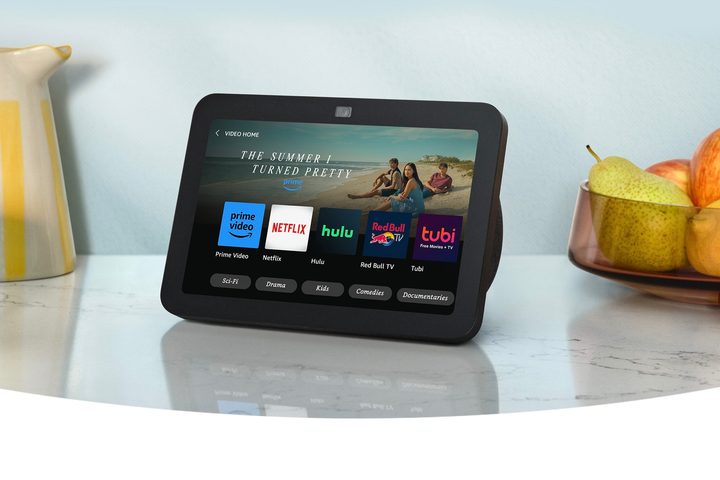
Amazon sells a variety of first-party hubs for Alexa. This includes the Echo Studio, Echo Dot, and Echo Pop, as well as a multitude of Echo Show smart displays. The collection is seeing constant updates, and with prices that range from $40 to $200, there’s something for every budget.
Beyond first-party devices, several third-party hubs also work with Alexa, including the powerful Sonos Era 100. That gives you plenty of flexibility when choosing a hub for your smart home.
Home Depot’s Hubspace does things a bit differently. There’s not a single product in its lineup that serves as a hub. In fact, there’s not a single smart speaker or smart display that works with Hubspace.
However, the platform makes up for it with support for both Amazon Alexa and Google Home. This essentially turns Hubspace into a secondary app that can be powered by another smart home platform of your choice. That does mean you’ll need to go through another setup process to get it running with those services, but it’s great that Home Depot thought to include the versatility.
Winner: Amazon Alexa
Compatible devices

The number of products that work with Amazon Alexa is staggering. Smart displays, smart speakers, smart locks, smart thermostats, smart kitchen appliances, smart lights — if there’s a smart home category, there’s probably a device in the class that works with Alexa. As mentioned above, Amazon also makes a long list of first-party smart devices, most of which are well-reviewed and popular with users.
It’s a different story for Hubspace. While Home Depot has made big strides, Hubspace only works with about 80 products. That’s a much smaller list than Amazon Alexa, and it doesn’t cover nearly as many device categories. Products are largely limited to smart ceiling fans, smart lights, smart locks, and smart switches. Many of these are built to be budget-friendly, entry-level options. The team did reveal a new smart thermostat and security system at CES 2024, but it’s still miles behind Alexa.
Despite this shortcoming, it’s important to reiterate that Hubspace products will also work with Alexa and Google Home. Home Depot built Hubspace to provide a streamlined way for users to get their products installed and to provide a simple way to access their controls. But if you prefer to use Google Home or Alexa, you’re free to do so. That’s not always the case with Alexa products — especially those crafted by Amazon, which are all tailor-made for the platform.
Still — it’s hard to be the massive catalog offered by Amazon.
Winner: Amazon Alexa
Ease of use
Both Amazon Alexa and Home Depot Hubspace are simple to use. Alexa is supported by a robust smartphone app and voice commands and is built directly into products like the Echo Show 8. This gives you plenty of ways to control the action. Its smartphone app is one of the most popular ways to access devices, as it gives you a simple way to set up Routines and get your connected gadgets working together. Home automation is a big part of Amazon Alexa — when used properly, it can streamline a lot of your daily tasks.
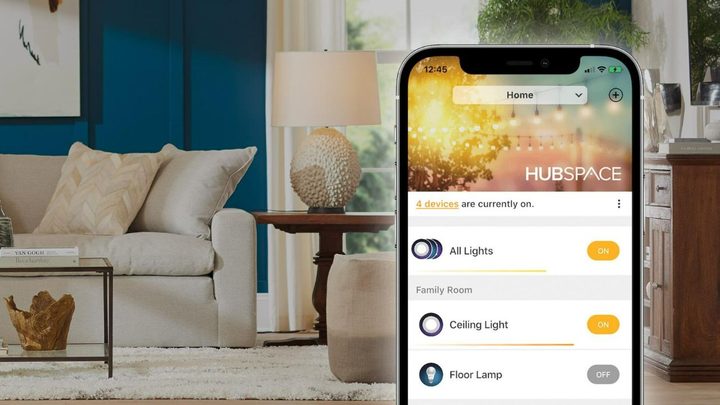
The Hubspace app is just as easy to use as Alexa. Its software isn’t quite as versatile, but you can still control all your devices remotely, group them together for faster operation, and get detailed installation instructions. Depending on the product, you can also set schedules, ensuring your products automatically turn on (or off) depending on your needs.
Winner: Tie
Verdict

Without a doubt, Amazon Alexa is the better smart home platform. Almost everyone will benefit from its massive collection of supported devices, easy-to-use smartphone app, and robust voice commands. Because so many different products work with Alexa, it’s possible to build a well-rounded smart home without ever leaving the ecosystem. It’s also great that it offers first-party hubs, such as the Echo Show 8 and Echo Dot. These give you another way to interact with your smart home outside of your smartphone.
Hubspace, by comparison, has a lot of growing to do. It’s still a great platform — designed around simplicity; it’s an ideal way to dip your toes into the world of smart homes. You won’t find tons of products available for the platform, but with a good smattering of lights, locks, and security systems now available, it’s a solid starting point for newcomers. Best of all, these devices are supported by Google Home and Amazon Alexa — so when you do decide to jump ship to a more robust platform, you won’t have to ditch your current products. Consider giving it a look if Alexa sounds too overwhelming.