
Although not quite as mainstream as robot vacuums, robot lawn mowers are becoming increasingly popular. These nifty devices make it easy to maintain a beautiful lawn without lifting a finger — although you’ll need to make a pretty hefty upfront investment, as robot lawn mowers don’t come cheap.
But how exactly do robot lawn mowers work? Here’s a closer look at these innovative devices so you know what you’re getting into before making a purchase.
The basics of robot lawn mowers
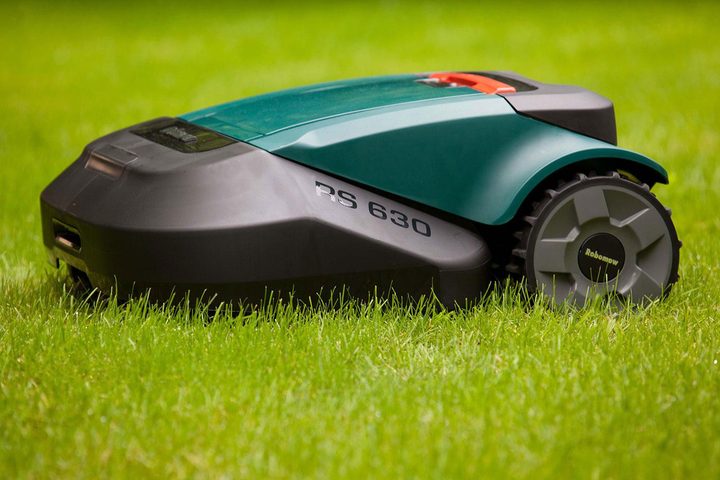
Robot lawn mowers are remarkably similar to robot vacuums. But instead of sucking up pet fur and dust, these powerful gadgets trim your lawn and turn the clippings into finely chopped particles that serve as makeshift fertilizer for your grass. They often come in a rectangular or triangular shape, with three to four wheels and a series of adjustable blades to accomplish cuts of varying heights.
Robot lawn mowers are charged by a docking station, which allows them to run automatically without any input from the user, and they’ll return to the dock when their battery is running low before heading out to finish up their chores. Some also include a rain sensor and will head back to their dock if they detect inclement weather.
Hills can pose a challenge for some robot lawn mowers, as it requires a lot of horsepower to propel these heavy devices up steep inclines. They don’t, however, have issues with uneven terrain, as many of them are designed with a blade and wheels that can modify their performance on the fly to avoid clipping into the ground.
Robot lawn mowers are guided by boundary wires

One of the worst parts of robot lawn mowers is the installation process. Unlike robot vacuums, which automatically map your home, the vast majority of robot lawn mowers require you to install boundary wires. These must be placed (or buried) at the edges of your property to ensure the robot doesn’t wander into your neighbor’s yard — or into your flower bed.
This might not be an issue if you have a small backyard just outside the city, but if you’re sitting on close to an acre, be prepared to be setting down boundary wire for quite some time. If your yard is really large, some products require an additional guidewire to be installed that helps the lawnmower find its way back to the docking station as quickly as possible.
Some robot lawn mowers require a clear view of the sky

Select robot lawn mowers might also make use of GPS navigation skills to maneuver around. However, these require unimpeded access to the sky, and are less than ideal for lots with tree cover. So if your property is largely located under mature trees, you might want to think twice before springing for certain types of robot lawn mowers.
Requirements like this are typically listed on the store page — be sure to check these closely if your worried about a robot lawn mower’s performance.
Robot lawn mowers run on their own
While there’s certainly a lengthy setup process for robot lawn mowers, the positives typically outweigh the drawbacks. After your installation is finalized, you’ll be treated to an immaculate yard year-round without having to get your hands dirty. Many models also offer an impressive level of customization, allowing you to choose how often they cut the grass, how low they trim the grass, and which regions of your yard they’re responsible for.
So, if you don’t mind the upfront cost or labor, a robot lawn mower might be a great addition to your home.


