Ring today announced several new products that promise to boost the security of your home and neighborhood during Amazon’s Fall September 2021 event. More than just a convenient video doorbell, Ring is venturing deeper into the home security market with a new Wi-Fi-based home security system, a new virtual security subscription service for existing Ring cameras, and customizable alerts that let owners configure to their needs.
Ring Alarm Pro
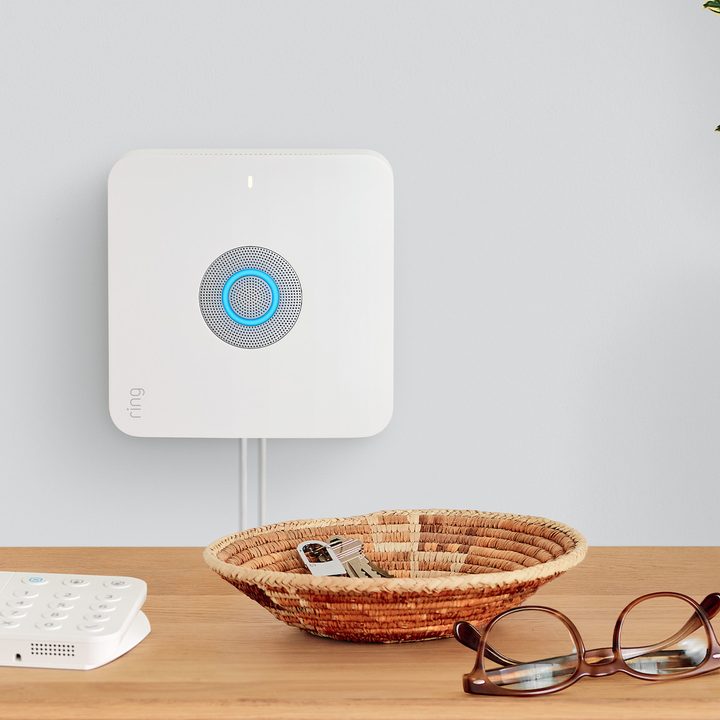
Ring’s no stranger in the DIY home security system space, offering its solutions against competitors like SimpliSafe, Blue by ADT, and Google Nest. Its latest offering is the Ring Alarm Pro, an advanced home security system that monitors your entire home for a variety of emergencies in addition to intruders. The system is powered by a Ring Alarm base station that connects Ring cameras and optional sensors to alert you to smoke, leaks, and more. The Ring Alarm Pro can record and store video from its camera onto a microSD card with a Ring Protect Plan, available for $20 per month, which effectively brings local storage to Ring’s cameras — a feature that’s long overdue.
More than just for security, the Ring Alarm Pro base station doubles as a true mesh Eero Wi-Fi 6 router. The router serves as the central hub for all connected Ring cameras and sensor systems. It also covers your house with a Wi-Fi connection that everyone can use. Is your wired internet down? Don’t worry. Your home is still protected. Thanks to the device’s backup LTE connectivity and battery power, the Ring Alarm Pro even works when the internet is offline.
It’s not often you find devices that serve two functions, so adding Wi-Fi 6 functionality into a home security system base is genius. The Ring Alarm Pro is available for pre-order now with prices starting at $250.
Ring Virtual Security Guard

Don’t want to watch your home security 24/7? Then let Ring’s new Virtual Security Guard system do it for you. The subscription service ties into your Ring outdoor cameras and allows a third-party security company to monitor your premises on your behalf. Whether it’s a delivery man with a package or a stranger on your doorstep, the security company will respond to the alert and contact you immediately. The company can also communicate with the person on the property and call emergency services as needed.
To protect privacy, homeowners can add and remove cameras to the Virtual Security Guard on demand. The camera system is accessible only when motion is detected. Agents working for the remote security company can only view the live video stream after an event is triggered. The service will launch with Rapid Response as the security company, but Ring plans to expand the service to include other security providers in the future.
Custom Event Alerts

Timely alerts are essential to keeping tabs on your home, especially when at work or on vacation. Thanks to the latest update coming to Ring doorbells and cameras, owners can now customize their alerts to their specific needs. These custom event alerts go far beyond detecting an intruder or looking for a package. They allow an owner to train the camera to identify when an object, such as a garage door, is in a specific state.
The system then will alert the owner when the state has changed. For example, owners can train the camera to monitor the garage door. When the garage door is opened or closed, the cameras will detect this change and alert the user. This feature can be used with garage doors, fence gates, and other objects that can move. It’s yet another feature that helps to provide users with meaningful alerts.