  1. Home
  2. Mobile
  3. Legacy Archives

Apple iPhone 4S vs Samsung Galaxy S II: Spec showdown

Add as a preferred source on Google
galaxy-s-ii-iphone-4s
Image used with permission by copyright holder

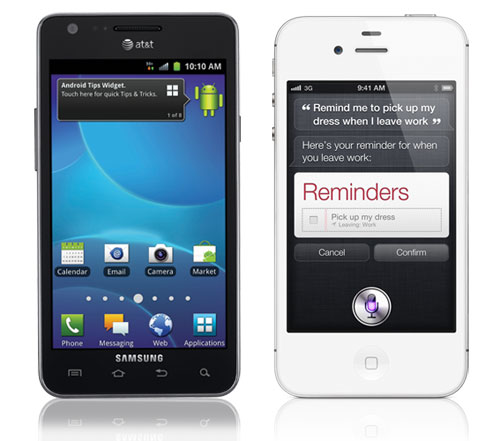
Apple just unveiled the new iPhone 4S, it’s newest addition to the most-popular smartphone line in the US. While demand for the device sits at an all-time high, Apple faces stiff competition from a growing array of high-end Android handsets. The iPhone 4S won’t be available until October 14, when it ships in the US, Canada, UK, France, Germany, and Japan. An additional 22 international markets will receive the device on October 28. So we haven’t yet had the chance to get our hands on the device. But let’s take a look at how the technical specs of the iPhone 4S stack up next to those of our favorite new Android smartphone, the Samsung Galaxy S II.

Apple iPhone 4S vs Samsung Galaxy S II
iPhone  4S  Galaxy S II
Price (with contract) $199 to $399 $199.99
OS iOS 5 Android 2.3 (Gingerbread) w/ TouchWhiz 4.0
 Processor  Apple A5 (dual-core) Samsung Exynos (dual-core)
 Display  3.5-inch 960×640 IPS 4.3-inch 800×480 SAMOLED+
Dimensions 115.2 x 58.6 x 9.3 (mm) 129 x 66 x 8.9 (mm)
Weight 140g 117g
Cellular  CDMA/EV-DO Rev. A/GSM/HSPA GSM/HSPA+
Max. speed 14.4Mbps down/5.8Mbps up 21.1Mbps down
Wi-Fi 802.11 b/g/n (single-band) 802.11 b/g/n (dual-band)
 Rear camera 8-megapixel AF w/ LED flash 8-megapixel AF w/ LED flash
 Front camera VGA 2-megapixel
 Video capabilities
 1080p at 30fps 1080p at 30fps
Internal storage  16GB/32GB/64GB 16GB
Mini SD No Yes (expands storage up to 48GB)
Max. battery life  8 hrs talk/6 hrs browsing 3G/10 hrs video/40 hrs music 8 hrs talk
 Construction Glass w/ aluminum band Plastic
Recommended Videos

*For this comparison, we pitted the iPhone 4S against AT&T version of the Galaxy S II. T-Mobile and Sprint versions have a few different specs, but are more or less the same phone inside. The same model of the iPhone 4S is available on AT&T, Verizon Wireless and Sprint

Andrew Couts
Features Editor for Digital Trends, Andrew Couts covers a wide swath of consumer technology topics, with particular focus on…
Snapchat Planets: What’s the order, and what do they mean?
Snapchat Planets turns your best friends list into a solar system, and yes, your orbit says a lot
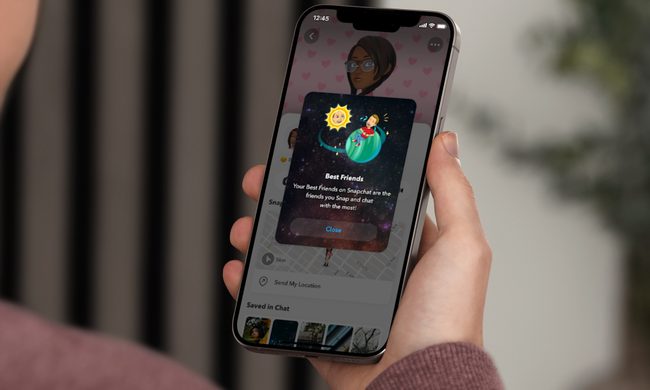
Snapchat Planets being shown on the Snapchat app on iPhone.

Snapchat is already packed with little symbols that can be weirdly hard to decode. You have streaks, emojis, badges, scores, Best Friends, and if you use Snapchat Plus, a tiny solar system that shows where you sit in someone’s closest-friends list.

The feature is called Friend Solar System, though most people just call it Snapchat Planets. It takes your position in a friend’s Snapchat orbit and turns it into a planet. From Mercury to Neptune, these celestial bodies signify how close a person is to you.

Read more
How to use WhatsApp Web
We'll show you how to use WhatsApp on your desktop or laptop
WhatsApp Web

As one of the most popular messaging services, you’ve already heard of WhatsApp. From its humble beginnings in 2009—two years before Apple introduced iMessage—to its acquisition by Facebook (now Meta) in 2014, WhatsApp has become the dominant messaging platform around the globe.

In recent years, it's grown even more potent with new features like video messages, self-destructing voice messages, the ability to edit sent messages, and more. We even finally got an WhatsApp iPad app in May 2025.

Read more
What is WhatsApp? How to use the app, tips, tricks, and more
From setting it up to mastering hidden features, here is your complete guide to WhatsApp.
WhatsApp app store listing open on iPhone

There's no shortage of messaging apps out there. The past decade has given us more options than we know what to do with, largely because smartphones demanded something better than plain old SMS.

Both the App Store and the Play Store are packed with apps that promise to revolutionize the way we communicate. Most of them didn't make it. The truth is, a messaging app is only as good as the number of people using it, and most apps never cross that threshold.

Read more